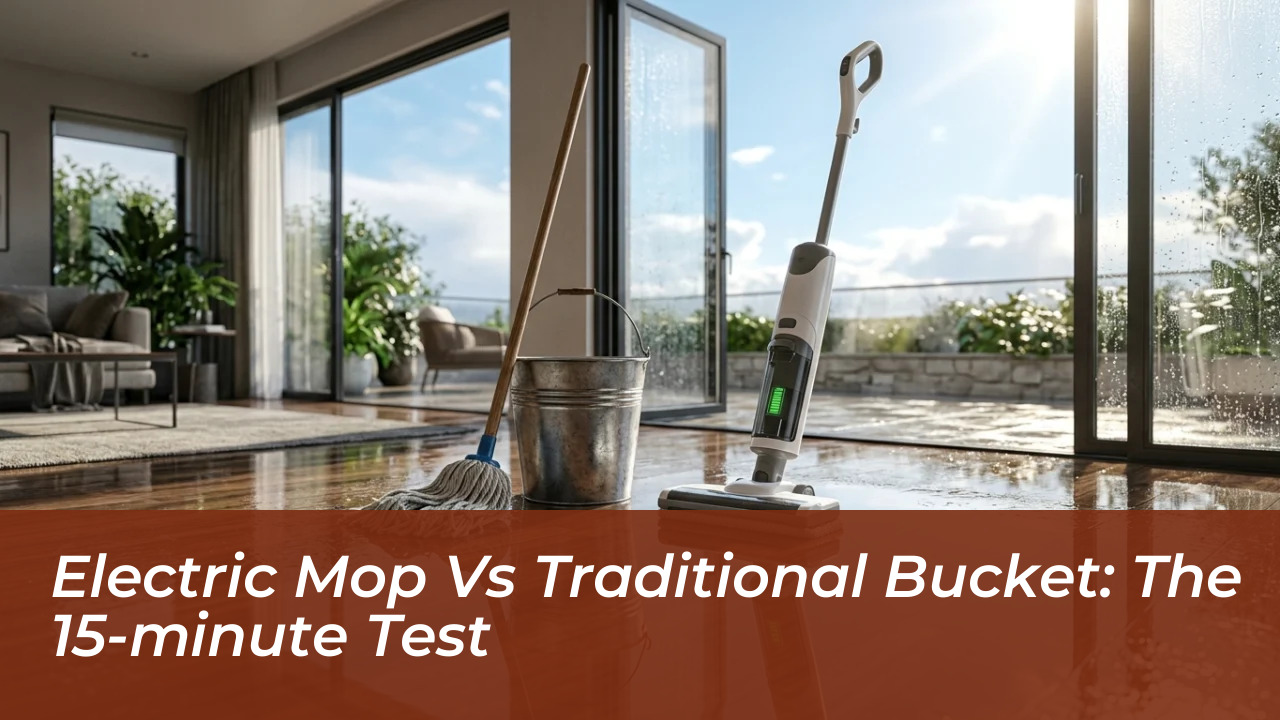

Switching from a traditional bucket to an electric mop slashes hard floor drying times from 40 minutes down to just 15, while preventing dirty water from being recycled across living areas. In direct testing on laminate flooring, cordless powered cleaning lifted stubborn dirt and grease noticeably faster than conventional manual scrubbing.
Hard floors rank among the most frequently used and heavily contaminated surfaces in any household. Between daily dust, footwear mud, and kitchen spills, maintaining clean surfaces demands regular upkeep. Vacuuming first remains an essential step, yet the secondary wet wash often presents homeowners with wet floors and cumbersome equipment. The standard domestic routine relies on a mop head submerged into hot water mixed with chemical floor wash. However, growing interest in automated domestic appliances has propelled cordless electric floor cleaners into mainstream retail across the UK.
The Engineering Shift: How Powered Scrubbing Operates
The test evaluated the Philips One Up 5000, a cordless hard floor cleaner engineered to handle grease, sticky grime, and fine particulates across laminate and sealed hard surfaces. The appliance arrives largely assembled, requiring the user only to extract the main liquid chamber and fill it with warm water.
Unlike standard mops that depend on user-applied downward pressure, the battery-powered unit uses a rotating, flat cleaning pad. Pressing a handle button disperses cleaning solution from an integrated cartridge, while an illuminated power switch activates the drive motor with a low acoustic hum. The primary mechanical advantage in advanced floor systems is the total isolation of spent liquid, preventing dirty runoff from being redistributed over cleaned surfaces.
Battery performance showed consistent longevity under domestic trial conditions. Across more than a month of continuous weekly usage, the unit did not require a single recharge cycle. The operational trade-off remains physical weight: the internal motor, battery cell, and fluid tank make the machine slightly heavier in the hand than a hollow-handle conventional mop, though its smooth floor glide balances out the added bulk.
The Two-Chamber Cleanliness Difference
A long-standing flaw of standard floor cleaning lies in liquid recontamination. In a traditional bucket, clean soapy solution is compromised the moment a soiled mop head is plunged back inside. The electric system circumvents this issue through twin-chamber mechanics. The device stores clean water internally and continuously extracts the dirty residue directly off the rotating head, depositing it into an isolated wastewater cartridge.
Emptying this separate reservoir down the sink completes the post-wash maintenance, while the detachable microfiber pad goes straight into a standard domestic washing machine.
Head-to-Head Testing: Traditional Bucket vs Electric System
To establish baseline performance, a manual comparison was carried out using Flash Multipurpose Cleaner Liquid Lemon. In accordance with product dilution instructions, 60ml (two capfuls) of cleaner was combined with five litres of warm water in a standard domestic mop bucket. The one-litre concentrate retails for £2.25 at UK budget retailer Heron.
The manual method created immediate lather and left a noticeable citrus fragrance. However, liquid volume delivery on laminate remained heavy, leaving excessive surface dampness that took 40 minutes to air-dry completely. Conversely, the controlled fluid dispensing of the Philips One Up 5000 left a minimal water film, allowing the same floor space to dry in approximately 15 minutes.
Performance Comparison Overview
- Drying Duration: 15 minutes (electric) vs. 40 minutes (traditional bucket)
- Wastewater Management: Dual-chamber isolation vs. single bucket recirculating dirt
- Pad Maintenance: Machine-washable detachable pad vs. manual head rinsing
- Chemical Application: Integrated dosed cartridge vs. manual dilution in 5L water
- Physical Maneuverability: Motor-assisted glide (heavier) vs. lightweight manual wand
Upfront Investment vs. Long-Term Usability
Cost remains the most pronounced barrier when comparing manual tools with automated appliances. The tested Philips One Up 5000 is stocked by UK retailers including John Lewis and Argos for £150. Shoppers navigating the floor-care aisle encounter various alternatives across the price spectrum:
- Kärcher EWM 2: A dedicated cordless electric wiping mop listed at £139.
- Shark Classic Steam Mop: A plug-in heat alternative available discounted from £64.99 down to £44.99.
- Standard Manual Mop and Bucket: The entry-level option using off-the-shelf liquid floor cleaners.
While the initial expense of automated floor care is substantially higher, the recovery of dirty water, 25-minute reduction in drying time, and elimination of heavy bucket refills make the investment appealing for busy homes. Choosing the right floor-care tool depends heavily on your budget, flooring materials, and how quickly you need footpaths to dry after washing. Upgrading to powered floor tools offers a noticeable hygiene advantage by keeping soiled liquid completely isolated from clean cleaning solution.
Share your experiences with us: Have you made the switch to an electric mop, or does the classic bucket and disinfectant still work best for your home? Leave your thoughts in the comments below.