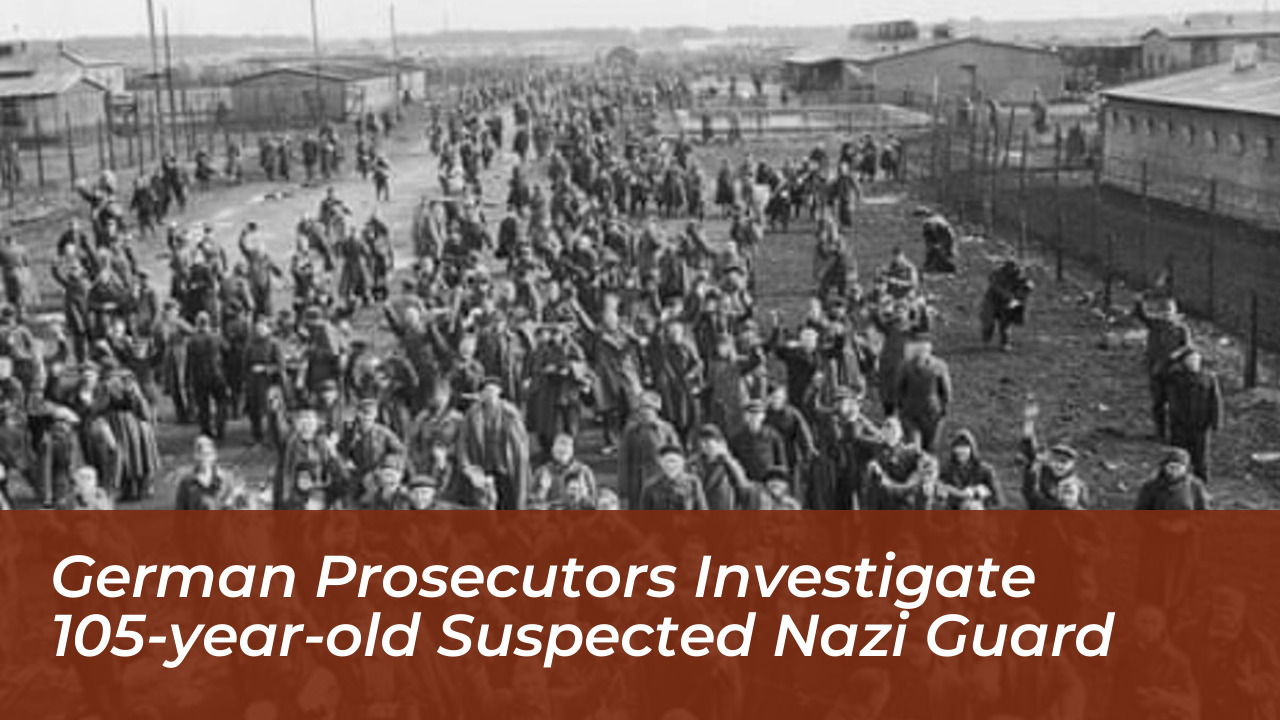
German public prosecutors in Dortmund are actively investigating a 105-year-old man on suspicion of acting as an accessory to multiple murders during World War II. The suspect allegedly served as a guard at the Stalag 326 VI K prisoner-of-war camp located in the Senne region of North Rhine-Westphalia, Germany. This proceeding highlights an ongoing judicial effort by German state prosecutors to hold accountable the remaining individuals linked to the Nazi regime before time runs out completely. Modern legal frameworks regarding accessory liability make these late-stage investigations possible, shifting the focus from individual battlefield actions to systemic complicity within detention facilities.
- The Investigation into Stalag 326 VI K
- Grim Realities of Stalag 326 VI K
- Legal Precedents Enabling Modern Nazi Trials
- The Race Against Time and Institutional Challenges
- Understanding the Broader Historical Context
- Frequently Asked Questions
- Why are German prosecutors investigating a 105-year-old man now?
- What specific charges does the suspect face?
- What conditions defined Stalag 326 VI K during World War II?
- How did the John Demjanjuk case change German legal interpretations of complicity?
The Investigation into Stalag 326 VI K
The legal inquiry launched by Dortmund public prosecutors stems directly from extensive files provided by the Central Office for the Investigation of National Socialist Crimes in Ludwigsburg. Investigators are meticulously examining the centenarian suspect’s role as a guard at the massive prisoner-of-war camp situated in the Senne region. While historical records confirm his assignment to the facility, prosecutors must now establish whether his daily duties directly contributed to the unlawful deaths that occurred within the perimeter.
This investigation runs parallel to other recent efforts targeting aging camp personnel across Germany. For instance, investigators examined a second Senne guard as part of the same regional inquiry. However, that second suspect passed away at the age of 99 before formal indictments could be brought before a criminal court. Dortmund public prosecutor Sonja Frodermann and her team continue to manage these delicate procedures, balancing the demands of justice with the stark realities of advanced human aging.
Grim Realities of Stalag 326 VI K
Official records preserved by the local camp memorial site detail the massive scale of human suffering at the Senne facility. Between 1941 and its liberation by advancing American troops in April 1945, the camp registered between 180,000 and 200,000 Soviet prisoners of war. Detainees endured extreme hardship, including severe malnutrition, nonexistent medical care, abysmal sanitary conditions, and grueling forced labor that pushed human endurance past absolute limits.
Historians estimate that out of the 5.3 to 5.7 million Soviet soldiers taken into German captivity throughout World War II, between 2.3 and 3 million perished. At Senne, tens of thousands of victims succumbed to disease, starvation, and systematic mistreatment enforced by military leadership. While Soviet prisoners formed the vast majority of the camp population, records indicate that prisoners of war from France, Poland, Serbia, and Belgium also suffered imprisonment within the complex.
Stalag 326 VI K operated as one of the largest logistics and detention hubs for enemy combatants in western Germany. Prisoners frequently faced forced labor assignments in surrounding industrial and agricultural sectors where survival rates remained exceptionally low. Memorial authorities continue to preserve the site today to educate the public about the horrific conditions enforced throughout the Nazi Stalag network.
Legal Precedents Enabling Modern Nazi Trials
The current investigation into the 105-year-old suspect builds upon transformative judicial precedents established over the past fifteen years. For decades, prosecutors struggled to convict low-ranking camp personnel unless direct, individual acts of murder could be proven beyond a reasonable doubt. The judicial framework shifted dramatically with the 2011 conviction of John Demjanjuk, a former guard at the Sobibor extermination camp.
German courts convicted Demjanjuk of being an accomplice to the murders of more than 28,000 individuals, despite a complete lack of evidence showing he personally killed anyone. This verdict permanently lowered the legal threshold for establishing complicity. Prosecutors no longer needed to tie a specific guard to a specific murder. Instead, proving that a suspect worked within a designated extermination or detention facility where mass atrocities occurred became entirely sufficient for an accessory charge.
This new legal interpretation paved the way for several subsequent landmark cases. In 2022, a court sentenced Josef Schütz, a 101-year-old Sachsenhausen guard, to five years in prison. Later that same year, the Stutthof trial concluded with the conviction of former camp secretary Irmgard Furchner. More recently, Dortmund prosecutors opened an inquiry into a 100-year-old former guard stationed at another regional PoW camp in Hemer, demonstrating that these investigations remain an active priority.
The Race Against Time and Institutional Challenges
Investigators face immense logistical and biological hurdles as they pursue justice eighty years after the conclusion of World War II. Advanced age, physical frailty, and cognitive decline frequently derail judicial proceedings before judges can reach a final verdict. For instance, Josef Schütz passed away at age 102 while his defense team actively appealed his sentence. Similarly, an alleged Sachsenhausen guard died in April 2025 before facing charges for alleged complicity in over 3,300 deaths.
Despite these obstacles, the German legal system maintains no statute of limitations for murder or accessory to murder. This absence of time limits allows investigations to proceed decades after the historic events took place. Memorial sites, archivists, and specialized historians play a vital role in preserving fragile documents, transport lists, and guard rosters to support these final judicial actions before living witnesses are gone.
Understanding the Broader Historical Context
Comprehensive historical evaluations reveal that accountability mechanisms extended far beyond high-ranking military commanders into the lower administrative ranks. Modern prosecutors rely on transport lists and daily administrative logs to piece together the specific duties assigned to individual guards decades ago. These archival documents serve as the primary foundation for establishing institutional guilt and individual complicity.
Historians emphasize that studying these late-stage proceedings offers crucial educational insights into how bureaucratic structures facilitate state-sponsored violence. Public awareness campaigns tied to these trials ensure that younger generations understand the systemic nature of wartime atrocities. Authorities remain committed to pursuing these archives until every accessible historical record is thoroughly examined and verified.
Frequently Asked Questions
Why are German prosecutors investigating a 105-year-old man now?
German authorities pursue remaining Nazi-era suspects regardless of advanced age to fulfill legal obligations regarding war crimes. The Central Office for the Investigation of National Socialist Crimes in Ludwigsburg forwarded the preliminary inquiry to Dortmund prosecutors after uncovering archival evidence linking the man to Stalag 326 VI K.
What specific charges does the suspect face?
The centenarian suspect faces allegations of acting as an accessory to multiple murders due to his active service as a camp guard during World War II, where thousands of prisoners died from systemic abuse and neglect.
What conditions defined Stalag 326 VI K during World War II?
Stalag 326 VI K was a major Nazi prisoner-of-war camp located in the Senne region of Germany. Between 1941 and 1945, the facility imprisoned up to 200,000 Soviet soldiers and other nationalities, tens of thousands of whom died from starvation, forced labor, and disease.
How did the John Demjanjuk case change German legal interpretations of complicity?
The 2011 Demjanjuk ruling established that working as a guard in a camp designed for mass killing constitutes complicity in murder, eliminating the previous requirement for prosecutors to prove direct participation in a specific individual homicide.