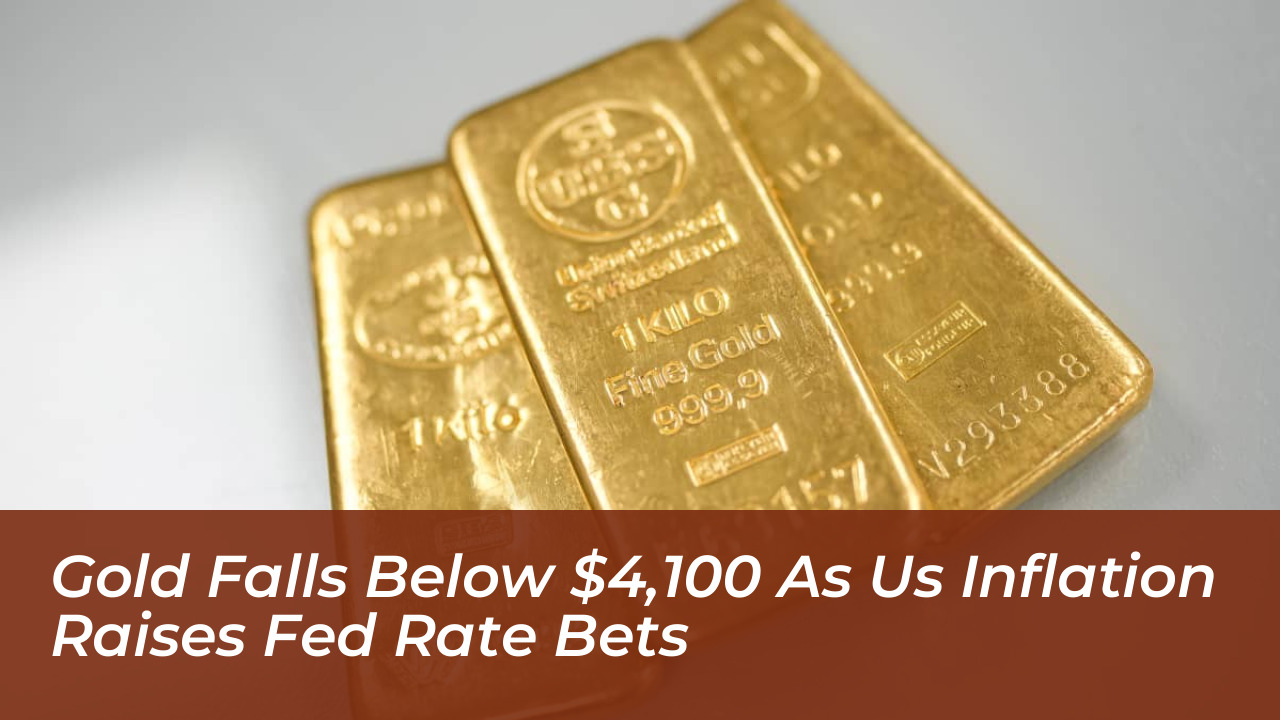

Gold prices dropped more than 1% in U.S. trading on Wednesday. Stronger-than-expected inflation data increased market expectations of another Federal Reserve interest rate hike in October. Higher Treasury yields and a stronger U.S. dollar heavily weighed on the precious metal. Meanwhile, silver suffered steeper losses amid a broad sell-off across commodities.
Spot gold fell 1.5% to $4,093.03 an ounce, reaching its lowest level since October 7, according to data from CNBC. Meanwhile, U.S. gold futures for December delivery declined 1.5% to $4,115.50 an ounce. Kitco reported spot gold near $4,098.80 late in U.S. trading, down $61.30, or 1.47%.
Stronger Inflation Data Sparks Fed Rate Hike Concerns
The downturn in precious metals was triggered by the U.S. Consumer Price Index (CPI) report released by the Labor Department’s Bureau of Labor Statistics. The index rose 0.6% in September, accelerating from August’s 0.4% increase. Annual headline inflation reached 3.7%, exceeding the 3.6% consensus forecast among economists.
Core inflation excludes volatile food and energy components. It increased 0.3% on a monthly basis and 2.6% annually. Energy prices proved to be a major driver. Gasoline prices surged 9.1% in September and 34.2% over the past year.
“At this point it portends that the Fed is more likely to raise interest rates,” said David Meger, director of metals trading at High Ridge Futures. He pointed to consumer price index data that has remained stubbornly above central bank targets. “As a result, we’ve seen the dollar rise and pressure added to the gold market.”
Shifts in Market Expectations and Yields
Following the inflation release, CME Group’s FedWatch tool showed that the probability of a U.S. interest rate hike at the Federal Reserve’s October 28 meeting climbed to nearly 40%. This is up sharply from roughly 20% to 22% before the data came out. Markets are also pricing in a roughly 90% probability of an increase by December.
The 10-year U.S. Treasury yield rose toward 5.3% before easing to the 5.27% area. The U.S. dollar index climbed about 0.4% to 0.7%, hovering near an 18-month high. A stronger greenback and higher yields make non-yielding bullion more expensive and less attractive to holders of other currencies.
Broader Commodity and Equity Market Impacts
Silver suffered heavier losses than gold during Wednesday’s trading session. Spot silver tumbled around 5.3% to 6.2%, trading near $55.41 to $56.28 an ounce, its lowest price since late July. Other precious metals also declined. Platinum dipped 3.5% to $1,604.20 an ounce, and palladium fell 2.7% to $1,095.41 an ounce.
Equities faced downward pressure as well. North American stock indexes closed sharply lower as the inflation report triggered selling across technology and other rate-sensitive shares. The S&P 500 dropped 1.1% to 7,718.94, marking its worst daily performance since July. The Nasdaq Composite sank 1.9% to 26,692.87.
Meanwhile, oil prices advanced following geopolitical developments in the Middle East. These events included an attack on a Saudi Aramco administrative building in Dhahran by Iran-backed Houthi militants. Brent crude rose to $106.06 a barrel and West Texas Intermediate (WTI) advanced to $95.09. This kept supply-risk premiums intact and added further fuel to broader macroeconomic inflation concerns.