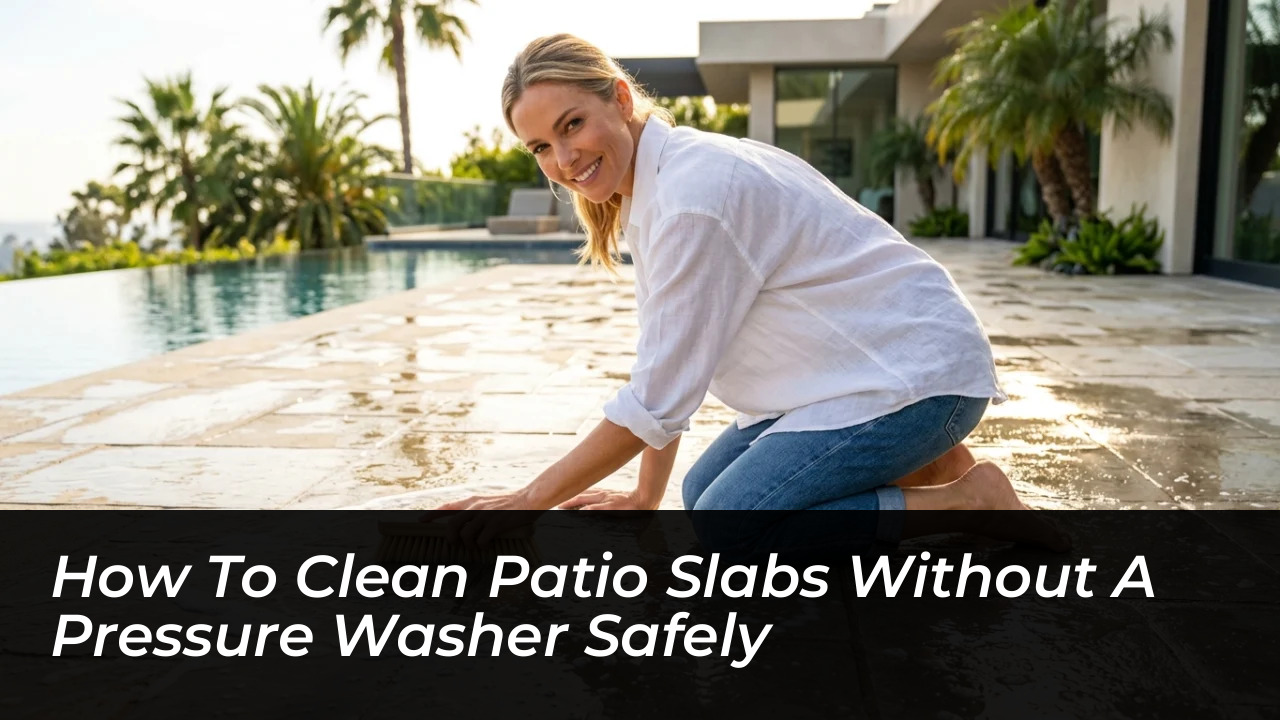
You can completely restore dirty pavers and flagstones using simple household mixtures, a stiff deck brush, and standard garden hose pressure. Skipping heavy machinery eliminates the risk of gouging soft stone, blasting away critical polymeric sand, or shattering aging mortar joints. With the right dwell time and mechanical agitation, manual cleaning lifts embedded algae and grime just as effectively as high-pressure water.
Homeowners often assume intense pressure is the only path to a spotless backyard surface. That assumption frequently leads to chipped concrete edges and loose slabs that wobble underfoot.
Why Power Washing Often Destroys Patio Slabs
High-powered water jets deliver immense force directly into the microscopic fissures of masonry materials. Concrete slabs, limestone, and sandstone are porous materials that weaken when subjected to concentrated hydraulic blasting. Over time, that water forces open hairline cracks, paving the way for freeze-thaw damage.
The damage extends deep beneath the surface as well. High pressure inevitably strips the jointing sand out from between slabs, allowing seeds to settle in and rainwater to pool beneath the sub-base. The most common mistake homeowners make with outdoor paving is using high-pressure spray tips that blow out polymeric sand joints and strip the natural protective face of the stone. Manual restoration avoids every one of these structural hazards while keeping your patio flat and stable.
Essential Tools and Cleaning Solutions
Effective manual washing relies on chemistry and friction rather than brute mechanical force. Selecting the right solution depends on whether you are tackling general dirt, grease stains, or heavy biological growth.
- Warm Water and Mild Dish Soap: Perfect for regular upkeep and lifting greasy barbecue splatters without altering soil pH around your lawn.
- Oxygen Bleach Powder: A gentle, color-safe alternative to standard chlorine that lifts stubborn moss, mildew, and black algae without killing nearby garden beds.
- White Vinegar Solution: An acidic spot treatment mixed 1:1 with warm water, ideal for lifting white efflorescence mineral deposits. Note that this should never be used on -sensitive limestone or marble.
- Stiff-Bristle Deck Brush: A synthetic or wire-free natural bristle broom on an extension pole to maximize leverage without scratching stone coatings.
Gathering the proper tools beforehand prevents you from walking over wet, slippery detergent with muddy footwear midway through the process.
Step-by-Step Guide to Clean Patio Slabs by Hand
Working methodically prevents detergent from drying prematurely on hot surfaces. For the best outcome, tackle the job on an overcast day when the sun will not evaporate your wash water before it breaks down grime.
1. Clear and Dry-Sweep
Remove all furniture, planters, and fire pits. Use a stiff outdoor broom to sweep away loose leaves, twigs, surface dust, and dry grit.
2. Clean Out the Joints
Pull emerging weeds and scrape out rooted moss from between the slabs using a dedicated joint scraper or dull putty knife.
3. Pre-Wet the Slabs
Spray the entire area lightly with a standard garden hose. Pre-wetting prevents porous stone from instantly absorbing your cleaning chemical before it can break down surface grime.
4. Apply and Agitate
Pour your chosen cleaning mixture across a small, manageable section. Use your stiff deck brush to scrub vigorously in small circles, paying special attention to corners and high-traffic pathways.
5. Allow Dwell Time
Let the solution rest on the stone for 10 to 15 minutes to dissolve embedded stains, but do not let it dry out completely. Add a light mist of water if the surface starts drying.
6. Rinse Thoroughly
Wash away all soap residue using the garden hose set to a concentrated jet spray setting. Work from the highest slope down toward drainage points to avoid pushing dirty slurry back over clean slabs. Once rinsed, inspect the joints to ensure no substantial amounts of leveling sand washed away during the manual scrubbing phase.
Comparing Your Manual Cleaning Options
Selecting the correct cleaning agent ensures you remove grime without permanently etching or staining your paving material.
| Cleaning Solution | Best Use & Surface Safety |
|---|---|
| Dish Soap & Warm Water | Ideal for light maintenance, grease spots, and everyday grime; completely safe on all concrete and natural stone. |
| Oxygen Bleach Solution | Targets deep biological stains, moss, and lichens; safe for surrounding vegetation when flushed thoroughly. |
| Diluted White Vinegar | Breaks down stubborn efflorescence on standard concrete; dangerous on natural limestone, travertine, and marble. |
| Baking Soda Paste | Works as a non-abrasive poultice for isolated food or beverage spills; safe across all exterior stone slabs. |
Post-Cleaning Joint Sand Restoration
Even with careful manual scrubbing, minor amounts of joint sand can migrate. After the patio dries completely over 24 to 48 hours, inspect every crevice between your slabs.
Pour fresh polymeric sand or kiln-dried jointing sand directly over the slabs. Use a clean, dry, soft-bristle broom to sweep the grains diagonally across the joints until filled, then tap lightly with a broom handle to eliminate air pockets.
Take time to inspect your patio stone before reaching for heavy machinery that could cause permanent structural damage. A simple stiff broom and safe cleaning solution will preserve your outdoor living space for years to come.
Frequently Asked Questions
Can I use regular household bleach on my patio slabs?
It is generally recommended to avoid standard chlorine bleach. Chlorine can discolor natural stone, damage surrounding grass and flower beds, and run off into local soil ecosystems. Oxygen bleach is a much safer, color-safe alternative.
How often should I manually clean my outdoor stone patio?
A thorough cleaning once or twice a year-typically in mid-spring and early autumn-is sufficient to prevent deep grime and slippery organic growth from taking over your paving stones.
Will vinegar permanently ruin my limestone patio?
Yes. Vinegar is acidic and will chemically etch calcium-based stones like limestone, travertine, and marble, leaving dull, rough patches behind. Stick to mild dish soap or baking soda for these sensitive natural materials.
What causes white powdery stains on concrete pavers?
That powdery white substance is called efflorescence. It occurs when soluble salts within the concrete or sub-base are carried to the surface by moisture and left behind as the water evaporates.
Do I need to seal my patio after manual washing?
Sealing is optional, but applying a breathable stone sealer after your patio dries completely will help repel water, minimize future oil stains, and significantly slow down algae and moss regrowth.