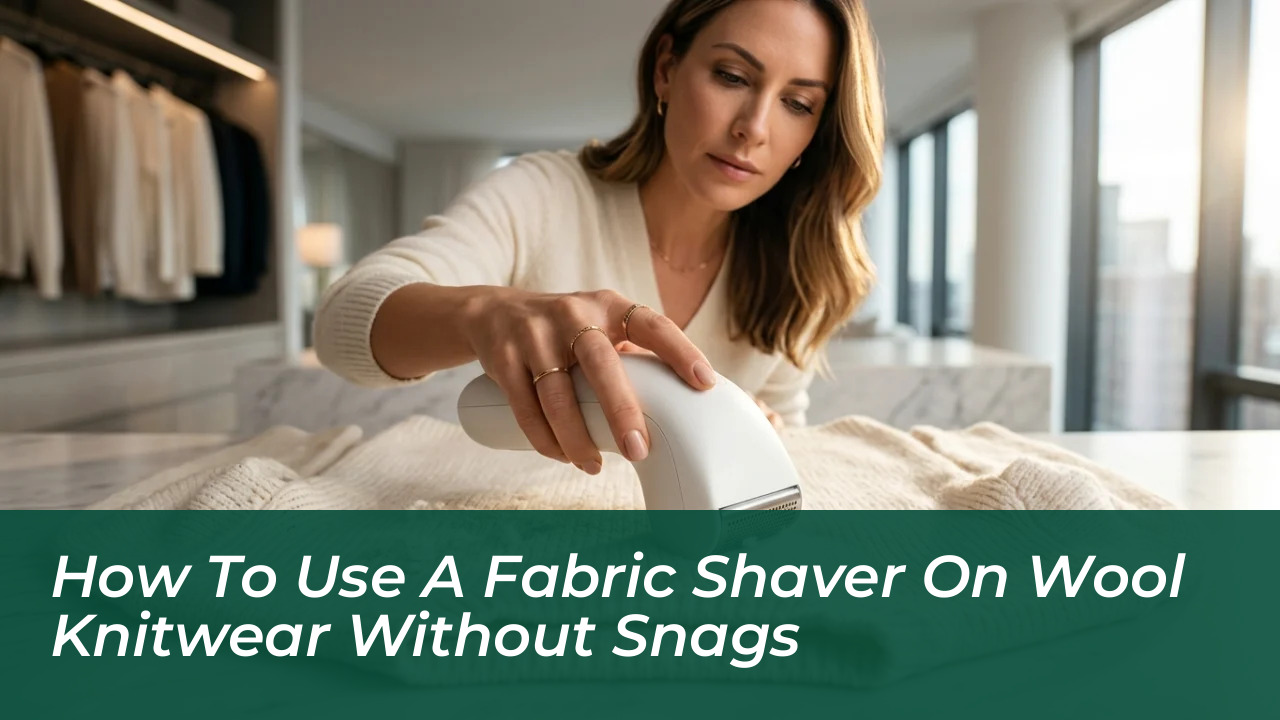
To safely run an electric fabric shaver across delicate wool knitwear without slashing the yarn, smooth the garment across a hard, flat surface and glide the device with zero downward pressure. Pressing the shaver head directly into soft bedding or an uneven lap forces underlying wool loops upward through the foil guard slots, pulling structural threads straight into the spinning blades.
Pilling occurs naturally when friction causes loose fiber ends to tangle into tiny balls on sweaters, cardigans, and scarves. While depilling restores a crisp, fresh finish, the boundary between shaving away surface fuzz and punching a hole in high-end merino or cashmere is razor-thin. A single hasty pass over a wrinkle can sever the core knit structure. Protecting your favorite cold-weather staples comes down to understanding your tool and mastering garment tension.
The Physics of Blade Guards and Knit Tension
An electric defuzzer operates much like a rotary beard trimmer. A high-speed rotating blade sweeps beneath a perforated metal screen, slicing through stray fibers that poke through the mesh holes. When used on a taut, flat textile, only elevated pills enter the cutting chamber. Trouble begins when the underlying fabric bunches or sinks under hand pressure. Wool knits feature flexible, interlocking loops that easily push into the metal apertures if you compress the garment against soft surfaces like a mattress or sofa cushion.
The single biggest oversight consumers make is treating a defuzzer like an iron. Pressing down instantly forces structural loops through the safety foil into the cutting path. Once a structural thread is clipped, the entire stitch unravels under tension. Taking the time to build a firm workstation ensures that only detached, matted fuzz meets the cutting edge.
Preparation Steps Before Powering On
Rushing straight to shaving without prep work almost always leads to snagged wool. Taking two minutes to set up your work area eliminates hazards.
- Select a firm, rigid surface: Spread your sweater across a wooden dining table, a clean countertop, or a smooth wooden cutting board. Avoid padded ironing boards unless you lay a firm backing board underneath.
- Smooth out wrinkles by hand: Gently flatten the garment from the center outward along the natural grain of the knit. Any hidden ridge or folded seam creates an elevation that the blade guard will strike.
- Check for loose threads: Inspect the area for snagged loops or unraveled yarn ends. Tuck any structural snags through to the inside of the garment using a needle before shaving so the machine cannot catch them.
- Set your height guard: If your fabric shaver includes an adjustable spacer ring, twist it to its highest clearance setting first. You can always lower the depth once you test the knit’s tolerance.
Step-by-Step Technique for Wool Knits
Once your workspace is ready, turn on the unit and listen to the motor pitch. A healthy motor hums steadily. A drop in pitch signals that lint is clogging the chamber or that the foil is encountering heavy resistance.
Mastering the Circular Motion
Rest the metal foil lightly against the fabric surface so it barely skims the top fibers. Move the shaver in small, controlled circular strokes rather than sweeping back and forth in rapid straight lines. Circular passes catch pills from multiple angles without pulling the yarn along its horizontal rows.
Keep your free hand anchored nearby, holding the surrounding fabric flat and smooth to prevent the suction of the rotating blades from lifting the material. Work across the garment section by section. Empty the lint collection bin frequently, as an overfilled reservoir causes lint buildup behind the blades, which forces the motor to drag and snag.
Handling Seams, Ribbing, and Complex Textures
Sweater seams, armpits, cuffs, and ribbed collars require special handling. These areas contain thick, irregular layers of overlapping yarn that stick up higher than the surrounding flat knit.
- Armpits and side seams: Turn the garment slightly to isolate the seam, flattening the seam allowance flat against the table with your fingers. Skim parallel to the stitching rather than across it.
- Cable knits: Cable patterns feature raised, three-dimensional ridges that easily catch on flat blade foils. Tilt the shaver slightly to address only the apex of each cable, or use a handheld sweater comb for high-relief designs.
- Cuffs and waistbands: Slide a solid object, such as a sturdy piece of cardboard or a small wooden roller, inside the cuff to create an unyielding curved surface while keeping the knit taut.
Common Myths vs. Textile Reality
Improper defuzzer advice abounds, often leading to ruined garments. Understanding proper textile care prevents unnecessary damage to delicate woolens.
- Myth: Pushing the shaver down removes pills faster.
Reality: Pressure bends knit loops into the blades. Light contact protects structural threads. - Myth: Using disposable razors works just as well.
Reality: Exposed manual razor blades lack a protective foil barrier and can sever wool threads with slight slips. - Myth: All wool weights can use the lowest guard setting.
Reality: Fine merino requires higher clearance, while dense boiled wool can tolerate closer blade access. - Myth: Shavers weaken the entire garment over time.
Reality: Removing surface pills stops tangles from pulling healthy fibers out of the yarn core.
By relying on a disciplined, featherlight touch, you extend the life of delicate woolens and keep them looking pristine season after season. Take your time with every section and let the spinning blades do the work without forcing them down. Proper garment maintenance saves money and keeps your favorite knitwear out of landfills.
Frequently Asked Questions
Can a fabric shaver cut a hole in a wool sweater?
Yes. A hole can form if bunched fabric, a loose loop, a seam ridge, or an unsupported thin area reaches the spinning blades behind the foil guard. Always use a rigid, flat surface and zero downward pressure.
Should I shave my sweater while wearing it?
Never shave a garment while wearing it. Body curves, movement, and soft underlying tissue create uneven tension and bunching, which drastically increases the risk of slicing a hole through the fabric.
How do I know when it is time to stop shaving a knit garment?
Stop immediately if the fabric tents upward, a loop enters the guard, the motor pitch changes, or the surface looks thin or glossy. A few pills left behind are much safer than a weakened patch.
Is cashmere safe to treat with an electric fabric shaver?
Cashmere can be shaved only if your device manufacturer explicitly approves it, you use a dedicated delicate guard, and a hidden test patch shows no alteration to the yarn loft or thickness.
How often should I depill my winter knitwear?
Treat fabric shaving as an occasional maintenance step rather than a routine habit. Shave a garment only when visible pilling makes it look untidy, which for most items is once or twice a season.