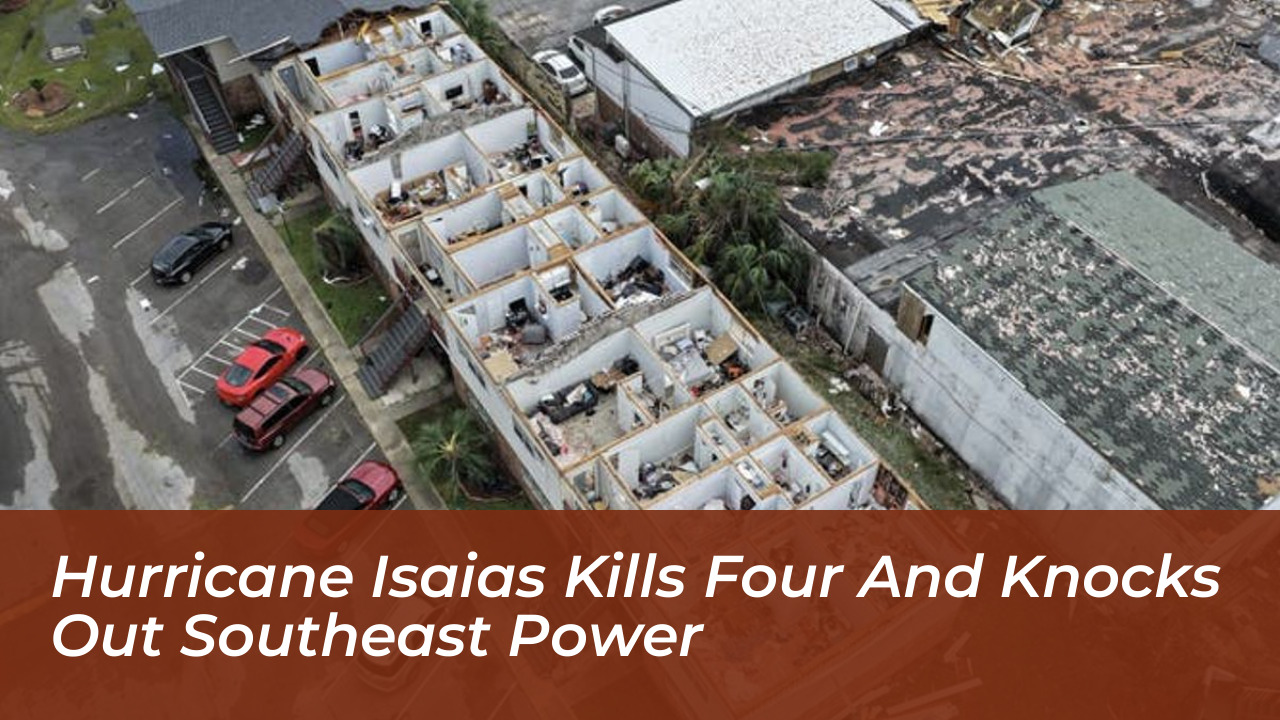

Hurricane Isaias left at least four people dead, damaged buildings and roads, and disrupted electricity across Florida, Alabama, and Georgia after striking Florida’s Gulf Coast near Destin on Friday night, October 9, 2026. The Category 2 storm brought sustained winds of 105 mph before moving inland, where it continued to produce heavy rain, destructive gusts, and flooding.
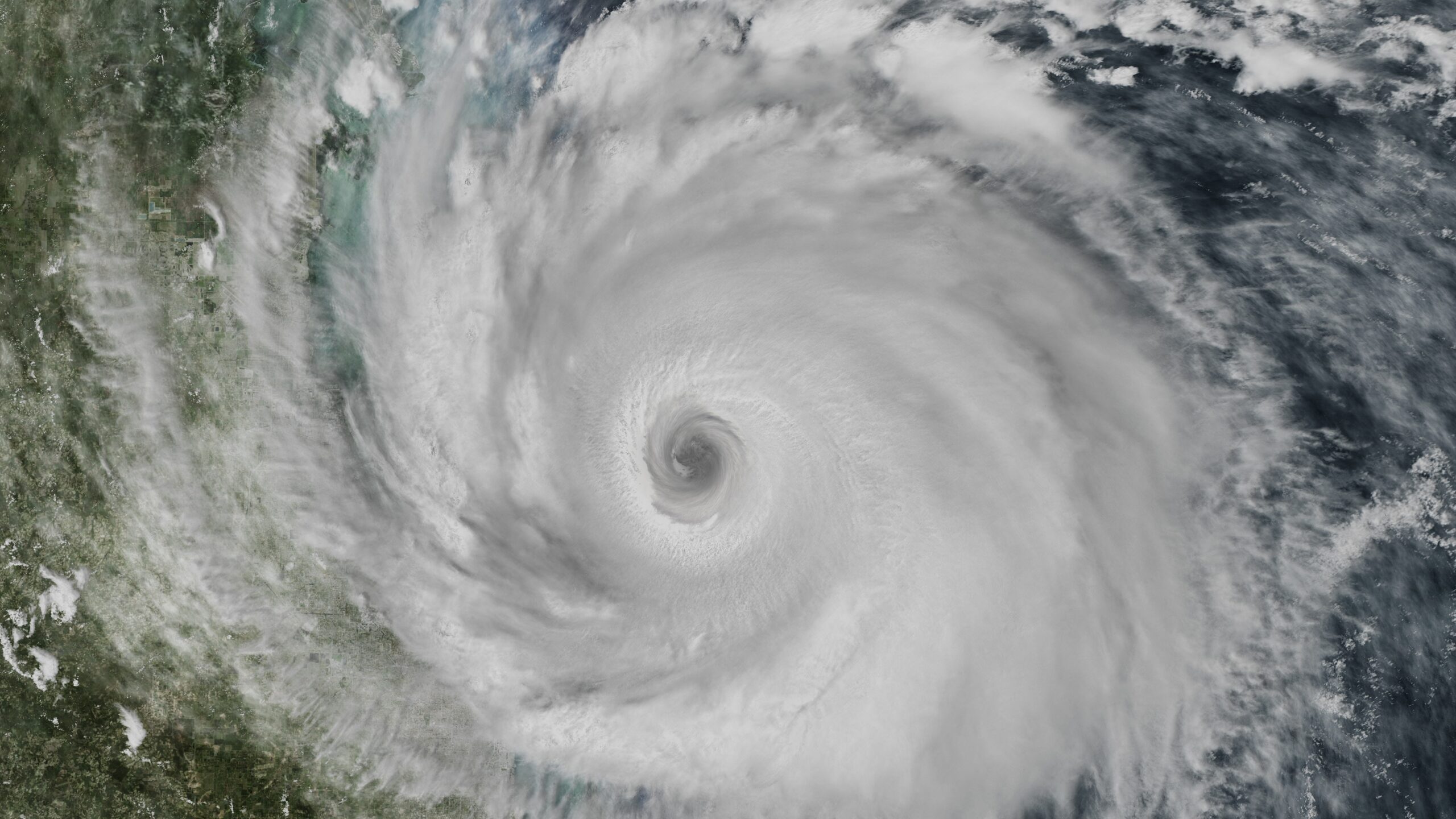
Authorities reported two deaths in Florida and two in Alabama. The damage left hundreds of thousands of electricity customers without service, while fallen trees, disabled traffic signals, and blocked roads created severe hazards across the region. Fox Weather reported that a woman in Florida and a person in Birmingham, Alabama, died when trees fell onto their homes.
In another Florida incident, a man was found dead in a garage following a generator-related incident. Four other people in the same home received treatment for carbon monoxide poisoning after a generator was operated indoors without proper ventilation, according to the Escambia County Sheriff’s Office.
Widespread Power Outages and Regional Impact
By Saturday morning, more than 900,000 electricity customers in Florida, Alabama, and Georgia were without power. That number gradually decreased as utility crews began clearing lines and restoring service. Fallen trees and downed power lines caused widespread transportation disruptions, while heavy rains forced road closures in parts of southern Alabama, including Houston County.
Alabama Governor Kay Ivey stated on Saturday morning that her administration remained concerned about strong winds, heavy rain, and possible spinoff tornadoes. In Pensacola, Florida, local officials reported that strong winds damaged an airport facility and tore the roof off a hotel. Trees and power lines came down throughout the city, leaving residential streets blocked.
Continued Threats of Flooding and Recovery Efforts
Although the storm weakened to a post-tropical cyclone with wind speeds of about 35 mph by Saturday morning, officials warned that dangerous conditions would persist. Heavy rainfall threatened flash flooding across parts of the Southeast.
State officials urged residents to remain cautious as saturated ground and continued rainfall created risks of rising waters. Search and rescue resources remained active across Florida to handle potential emergency rescues. Additionally, Florida Attorney General James Uthmeier warned residents to watch out for predatory contractors seeking to exploit storm victims during property repairs.
Federal Response and Energy Measures
To mitigate supply chain disruptions caused by the storm, the US Energy Department announced it would release up to four million barrels of crude oil from the Strategic Petroleum Reserve as an emergency exchange.
“With this emergency exchange, the Energy Department is acting swiftly to help maintain refinery operations, limit disruptions to fuel supplies, and ensure American families and businesses continue to have access to affordable, reliable, and secure energy,” Secretary of Energy Chris Wright said in a statement.
Frequently Asked Questions
When did Hurricane Isaias make landfall?
Hurricane Isaias made landfall near Destin, Florida, on Friday evening, October 9, 2026, as a Category 2 hurricane.
How many fatalities were reported due to the storm?
At least four deaths were reported-two in Florida and two in Alabama-largely caused by falling trees and a generator-related carbon monoxide incident.
How many customers lost power during the hurricane?
Over 900,000 electricity customers across Florida, Alabama, and Georgia lost power at the peak of the storm.
What federal actions were taken in response to the storm?
The US Energy Department announced the release of up to four million barrels of crude oil from the Strategic Petroleum Reserve to maintain refinery operations and stabilize fuel supplies.