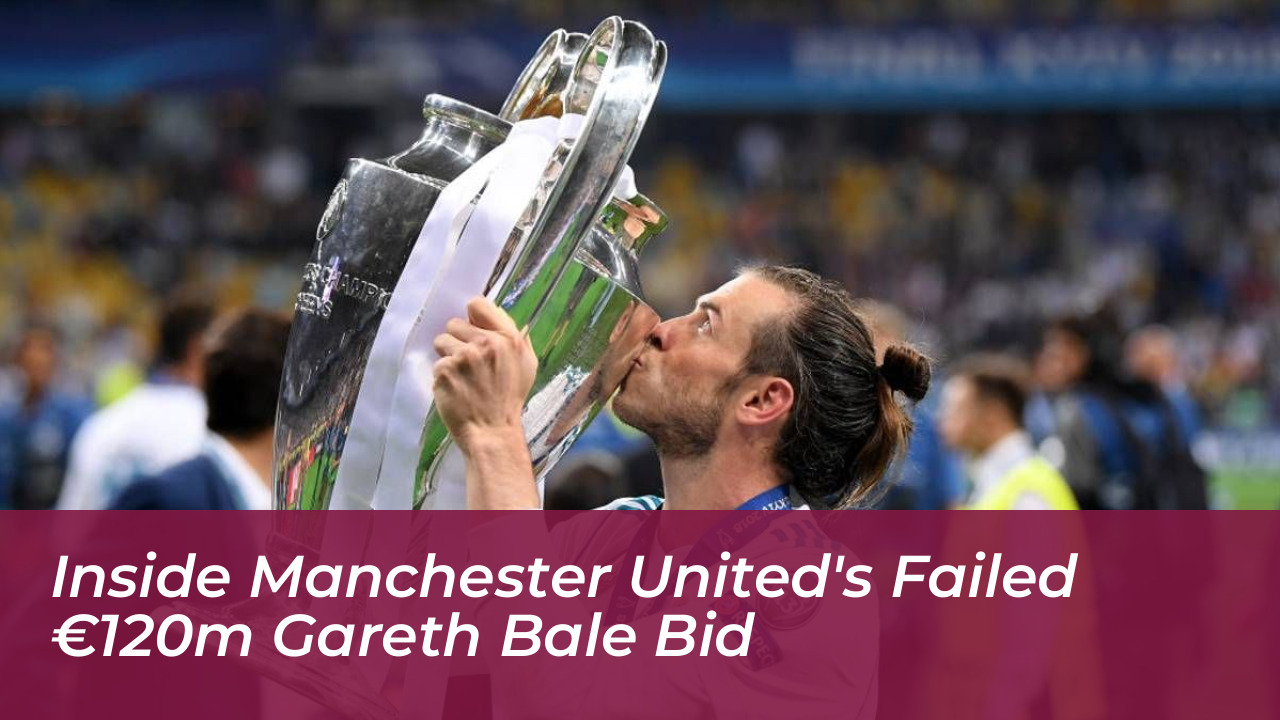
The summer of 2013 stands as a turbulent turning point in English football history. Sir Alex Ferguson stepped down after 27 trophy-laden years at Old Trafford, leaving David Moyes and chief executive Ed Woodward to steer a high-pressure transition period. Behind closed doors, the Red Devils attempted a massive coup to signal their continued dominance. They launched a late, record-shattering 120 million euro bid to hijack Gareth Bale from Tottenham Hotspur to Real Madrid, a staggering financial move that nearly altered the entire landscape of the Premier League.
- Andre Villas-Boas and the Preseason Office Drama
- The Hong Kong Revelation
- The Physio Bed Decision
- Why Gareth Bale Rejected Old Trafford
- The Spanish Dream
- Daniel Levy and the Domestic Rivalry Policy
- Squad Assessment: Why United Desperately Needed Bale in 2013
- The Post-Ronaldo Left Flank Void
- Financial Contrast: The Biggest Bid Never Spent
- Glazer Ownership Spending Anomaly
- The Ripple Effect: Alternative Targets That Missed the Mark
- The Pursuit of Ángel Di María
- Frequently Asked Questions
- Did Manchester United actually offer 120 million euros for Gareth Bale?
- Why did Gareth Bale turn down Manchester United?
- What was the world-record transfer fee paid by Real Madrid in 2013?
- Did David Moyes speak directly with Gareth Bale?
Andre Villas-Boas and the Preseason Office Drama
The Hong Kong Revelation
The transfer saga reached its boiling point while Tottenham Hotspur was thousands of miles away on a preseason tour in Asia. Real Madrid had courted Bale for months, pushing hard to secure the PFA Player of the Year. However, Manchester United entered the fray at the eleventh hour with a proposal that blew the Spanish giants completely out of the water.
Former Spurs manager Andre Villas-Boas revealed the startling details on the Obi One Podcast. Daniel Levy walked into the manager office during the tour with an astronomical proposal from England reigning champions. While the numerical value of the Manchester bid surpassed Real Madrid impending world-record fee, the decision rested entirely in the hands of the player.
The Physio Bed Decision
Villas-Boas walked into the treatment room to prompt Bale final choice. Pulling out a pen, the manager physically wrote both club names down on a physio bed to visualize the career-defining ultimatum for the young Welsh star. Bale had the official offer from Real Madrid, and the massive financial weight of the Old Trafford proposal sitting right beside it.
Despite the immense financial muscle of England champions, Bale chose Spain. He cemented a legacy that eventually included five UEFA Champions League titles. Manchester United walked away empty-handed, beginning a decade-long search for elite wide-attacking stability.
Why Gareth Bale Rejected Old Trafford
The Spanish Dream
Financial compensation was never the stumbling block for Manchester United. Their 120 million euro package easily exceeded the 100 million euro fee Real Madrid eventually paid to break the world transfer record previously set by Cristiano Ronaldo in 2009. Bale himself confirmed the validity of these reports during an appearance on the Stick to Football podcast, admitting that while he spoke directly with David Moyes, his mind was already made up.
Bale childhood aspirations centered squarely on wearing the famous white jersey of Los Blancos. The allure of playing alongside world-class galacticos in Madrid overshadowed any domestic alternative, leaving United helpless despite their record-breaking financial outlay.
Daniel Levy and the Domestic Rivalry Policy
Tottenham chairman Daniel Levy maintained a strict stance against selling elite talent to direct Premier League rivals. Preferring an overseas exit, Levy avoided strengthening a domestic competitor. Observers often draw parallels to this stance with the Harry Kane transfer to Bayern Munich a decade later, where Levy successfully enforced the exact same protective protocol after blocking moves within England.
This logistical and diplomatic preference for overseas exits meant that even if Bale had wavered, the Tottenham board would have actively resisted any deal sending their prized asset to Old Trafford.
Squad Assessment: Why United Desperately Needed Bale in 2013
The Post-Ronaldo Left Flank Void
Manchester United desperation to land the Welsh international stemmed from glaring roster deficiencies. Cristiano Ronaldo departure for Madrid four years prior left a permanent creative scar on the team. Ryan Giggs approached his 40th birthday, Nani suffered through an injury-plagued campaign, and Shinji Kagawa operated centrally rather than providing natural width on the touchline.
Securing a player of Bale caliber would have completely altered the trajectory of David Moyes brief ten-month tenure. Placing an explosive forward alongside Wayne Rooney as a number 10 and a prime Robin van Persie up front gave United the exact ingredients needed to defend their Premier League crown effectively.
Financial Contrast: The Biggest Bid Never Spent
Glazer Ownership Spending Anomaly
The 120 million euro valuation highlights a rare moment of aggressive spending by the Glazer ownership during a vulnerable administrative transition. Manchester United never matched that specific financial outlay for a single winger again, making the failed Bale pursuit a unique statistical anomaly in club history.
| Player Acquired | Year | Reported Fee (GBP) | Approximate Euro Value at Time |
|---|---|---|---|
| Paul Pogba | 2016 | £89 million | €105 million |
| Antony | 2022 | £82 million | €95 million |
| Harry Maguire | 2019 | £80 million | €87 million |
| Gareth Bale (Bid Only) | 2013 | £102 million | €120 million |
The Ripple Effect: Alternative Targets That Missed the Mark
The Pursuit of Ángel Di María
Failing to secure Gareth Bale forced United into reactive squad building over subsequent transfer windows. Executive Ed Woodward scrambled to find alternative marquee solutions on the flanks. The most prominent fallback materialized a year later in the summer of 2014 when the club signed Ángel Di María from Real Madrid for a British record fee.
Much like the failed Bale pursuit, the Argentine star arrived under intense pressure but lacked genuine enthusiasm for the project. Di María endured a difficult campaign in northern England, failing to settle and transferring to Paris Saint-Germain just twelve months later. Had the 120 million euro offer succeeded in 2013, the club might have bypassed the costly cycle of short-term fixes that defined the post-Ferguson era.
Frequently Asked Questions
Did Manchester United actually offer 120 million euros for Gareth Bale?
Yes. Former Tottenham manager Andre Villas-Boas confirmed that Daniel Levy received a late, massive bid matching that exact figure from Manchester United while Spurs were on their preseason tour in Asia.
Why did Gareth Bale turn down Manchester United?
Bale explicitly wanted to play for Real Madrid, whose officials pushed aggressively for his signature. Additionally, a gentleman agreement with Daniel Levy made moving to an overseas club much smoother than joining a domestic rival.
What was the world-record transfer fee paid by Real Madrid in 2013?
Real Madrid paid Tottenham Hotspur approximately 100 million euros, surpassing the previous world-record fee generated by Cristiano Ronaldo transfer from Manchester United in 2009.
Did David Moyes speak directly with Gareth Bale?
Yes. Bale confirmed that he spoke with David Moyes during the summer of 2013, though he maintained that his heart was already set on moving to Spain.