Meta expanded its hardware portfolio at the Meta Connect 2026 event in Menlo Park, California, by introducing the Muse Charm. Chief Executive Mark Zuckerberg showcased the pocket-sized handheld unit during his opening keynote address, designed exclusively to run the proprietary Muse artificial intelligence agent.
- The Engineering and Design of Muse Charm
- Hardware Architecture and Tactile Design
- Core Technical Specifications
- Under the Hood: Muse AI Agent and Virtual Machine Architecture
- Privacy Protocols and Secure Virtual Machines
- Autonomous Task Execution
- Integration Across Meta Hardware Ecosystem
- Smart Glasses and Virtual Reality Enhancements
- Market Strategy, Pricing, and December Launch Timeline
- Competitive Landscape and Industry Reception
- Global Hardware Supply Chain and Expansion Plans
- Developer Ecosystem and Third-Party Extensions
- Frequently Asked Questions
- What is the primary function of the Muse Charm?
- Does the Muse Charm require a smartphone connection?
- When will the Muse Charm be available for purchase?
- How does the device handle user privacy and data security?
- Can the Muse Charm make traditional phone calls?
The compact gadget operates independently without pairing with a smartphone, featuring built-in 5G connectivity and a localized interface. This release targets consumers seeking immediate, screen-based AI access on the go, following the explosive rollout of the Muse mobile application in early September. App analytics firm Apptopia reported that Muse secured 642,000 daily active users in the United States during its first 12 days, surpassing ChatGPT benchmarks from a similar timeframe.
The Engineering and Design of Muse Charm
Measuring small enough to fit on a keychain, the Muse Charm features a 2-inch OLED touchscreen and a physical fingerprint sensor located in the corner of the device. Users tap the biometric sensor to initiate real-time voice interactions instantly, eliminating the need to unlock a phone or launch a separate software application.
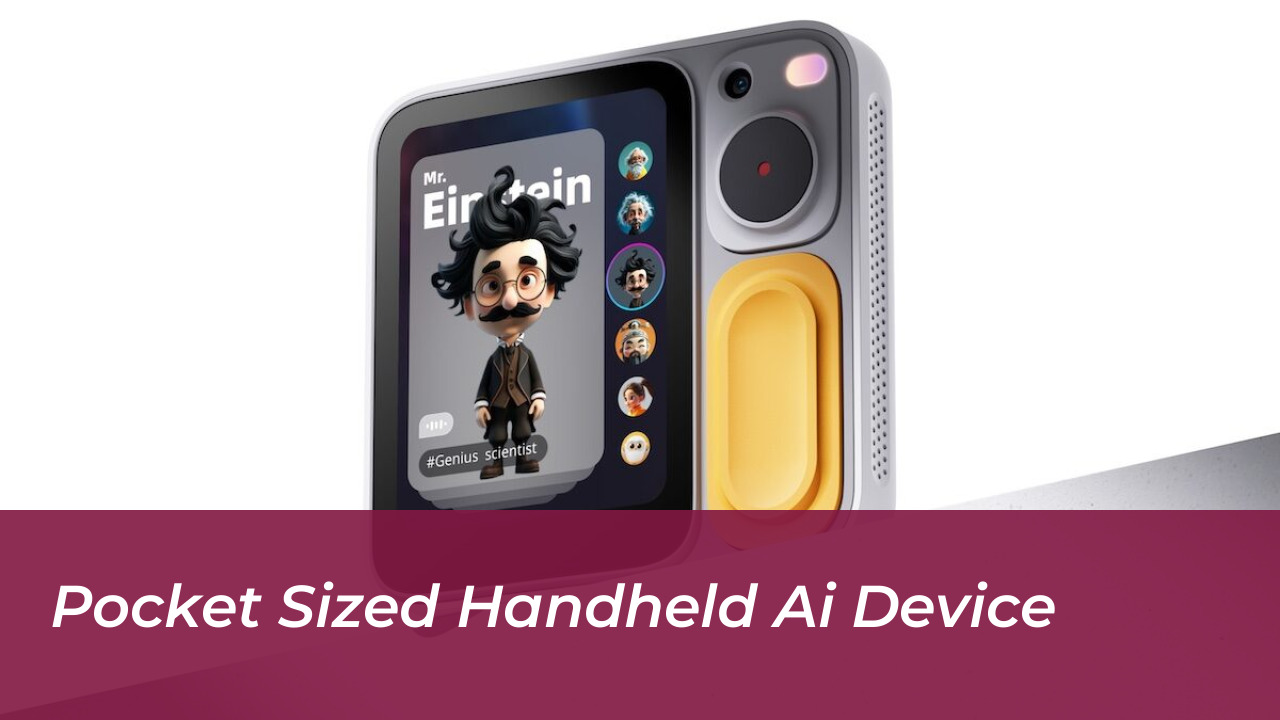
Developed under the direction of Meta’s design lab, led by former Apple design chief Alan Dye, the pocket-sized unit emphasizes tactile engagement. Industry analysts compare its form factor to nostalgic consumer electronics, though it packs advanced micro-components.
Hardware Architecture and Tactile Design
- Engineered under the direct supervision of Meta design executives to blend nostalgic consumer hardware styling with advanced micro-components.
- Emphasizes tactile physical engagement through dedicated buttons and a responsive biometric scanner.
- Features a standalone 5G modem ensuring users can access the Muse agent anywhere without relying on Wi-Fi tethering. Note that the device does not support standard cellular phone calls.
Core Technical Specifications
The hardware acts as a physical access point for the broader Muse ecosystem, which also operates across iOS, Android, web browsers, and macOS applications. Below is a breakdown of the core specifications powering the device.
| Component | Specification |
|---|---|
| Display | 2-inch OLED touchscreen with custom character visualization. |
| Connectivity | Built-in 5G cellular modem for independent cloud access. |
| Biometrics | Corner-mounted fingerprint sensor for rapid voice session initiation. |
| Processing | Powered by the Muse Spark model running through the Muse Secure Virtual Machine architecture. |
| Power Supply | Battery configuration designed for all-day wearable and pocket portability. |
Under the Hood: Muse AI Agent and Virtual Machine Architecture
The intelligence driving the device relies on Muse Spark, which Meta identifies as its most capable foundational model to date. To safeguard user data, Meta routes all queries through the Muse Secure VM, a dedicated virtual machine that isolates user files and interaction logs.
The agent executes complex multi-step tasks in the background. For example, it coordinates calendar schedules, drafts emails, and handles financial checkouts via Link built by Stripe. The payment gateway generates a one-time-use virtual card, keeping primary financial credentials hidden from third-party merchants.
Privacy Protocols and Secure Virtual Machines
Later in the year, the company plans to introduce Muse Confidential VM, employing end-to-end encryption secured by keys held exclusively by the end user. This ensures that even Meta cannot inspect encrypted data streams.
Autonomous Task Execution
Background processing allows the device to manage heavy workloads without draining battery life or requiring active screen time. Users simply issue a voice command, and the underlying AI agent coordinates external services independently.
Integration Across Meta Hardware Ecosystem
The Muse Charm is part of a broader hardware refresh announced at Connect 2026. Meta also updated its Ray-Ban Meta smart glasses and unveiled new virtual reality headsets equipped with IMAX Enhanced certification.
On the virtual reality hardware front, Muse integrates directly into the operating system, replacing layered menus with multimodal commands driven by a combination of eye-tracking, hand gestures, and voice inputs. This creates a unified assistant experience across all form factors.
Smart Glasses and Virtual Reality Enhancements
- For smart glasses wearers, software updates upgrade audio responses from brief text-to-speech snippets to conversational, context-aware dialogues.
- Users can customize the persona, appearance, and voice profile of their assistant simply by describing desired traits.
- Operating system level integration in headsets removes the need for traditional menu navigation.
Market Strategy, Pricing, and December Launch Timeline
Meta scheduled the Muse Charm for a commercial release by December, targeting the peak holiday shopping season. While pricing has not been officially finalized, industry analysts project a cost comparable to premium smartwatches.
The monetization model centers on high-volume accessibility. Meta offers the core Muse experience free of charge for standard token consumption, while implementing small transaction fees for advanced third-party API executions and automated commercial tasks. Connect integrations with major retailers like Walmart and Best Buy allow the agent to process retail transactions directly within third-party environments.
Competitive Landscape and Industry Reception
The launch of a dedicated handheld AI device invites direct comparisons to alternative hardware experiments, such as the Rabbit R1 and Humane AI Pin. While competitors struggled with high latency and limited functionality, Meta leverages its massive existing social infrastructure and established developer APIs.
Market analysts note that over 95 percent of early Muse adopters are active Facebook users, and 63 percent utilize Instagram, providing Meta with an immediate distribution advantage. By integrating hardware directly with WhatsApp and native operating systems, the company avoids the friction that hindered standalone gadget startups.
Global Hardware Supply Chain and Expansion Plans
Manufacturing partnerships span across key technology hubs in Asia to ensure stable inventory levels ahead of the winter holiday rush. Meta coordinates component sourcing carefully to avoid previous logistical bottlenecks seen across the consumer electronics sector.
Regional distribution strategies prioritize North American and European markets initially before scaling outward to international territories. Local carrier partnerships will offer bundled data plans to simplify the activation process for everyday mobile buyers.
Developer Ecosystem and Third-Party Extensions
Meta provides software development kits that empower independent programmers to build custom applications for the Muse platform. These developer tools open up specialized workflows ranging from enterprise asset tracking to creative media editing.
Early adopter studios report seamless API integration, allowing their proprietary software to respond to multimodal voice commands seamlessly. This open marketplace approach ensures long-term utility well beyond basic assistant tasks.
Frequently Asked Questions
What is the primary function of the Muse Charm?
The Muse Charm serves as a dedicated, pocket-sized hardware gateway to Meta’s Muse AI agent, allowing users to interact via voice and a 2-inch screen without needing a smartphone.
Does the Muse Charm require a smartphone connection?
No. The device features built-in 5G connectivity, enabling it to operate independently on cellular networks without being tethered to a phone or Wi-Fi router.
When will the Muse Charm be available for purchase?
Meta scheduled the product for release by December, aiming to place the device on shelves in time for the holiday shopping season.
How does the device handle user privacy and data security?
Muse runs inside the Muse Secure VM, an isolated virtual machine architecture. Meta is also rolling out Muse Confidential VM to encrypt all data with keys held exclusively by the user.
Can the Muse Charm make traditional phone calls?
No. While the unit includes a 5G modem for data connectivity and AI interactions, it does not function as a traditional cellular telephone for voice calls.