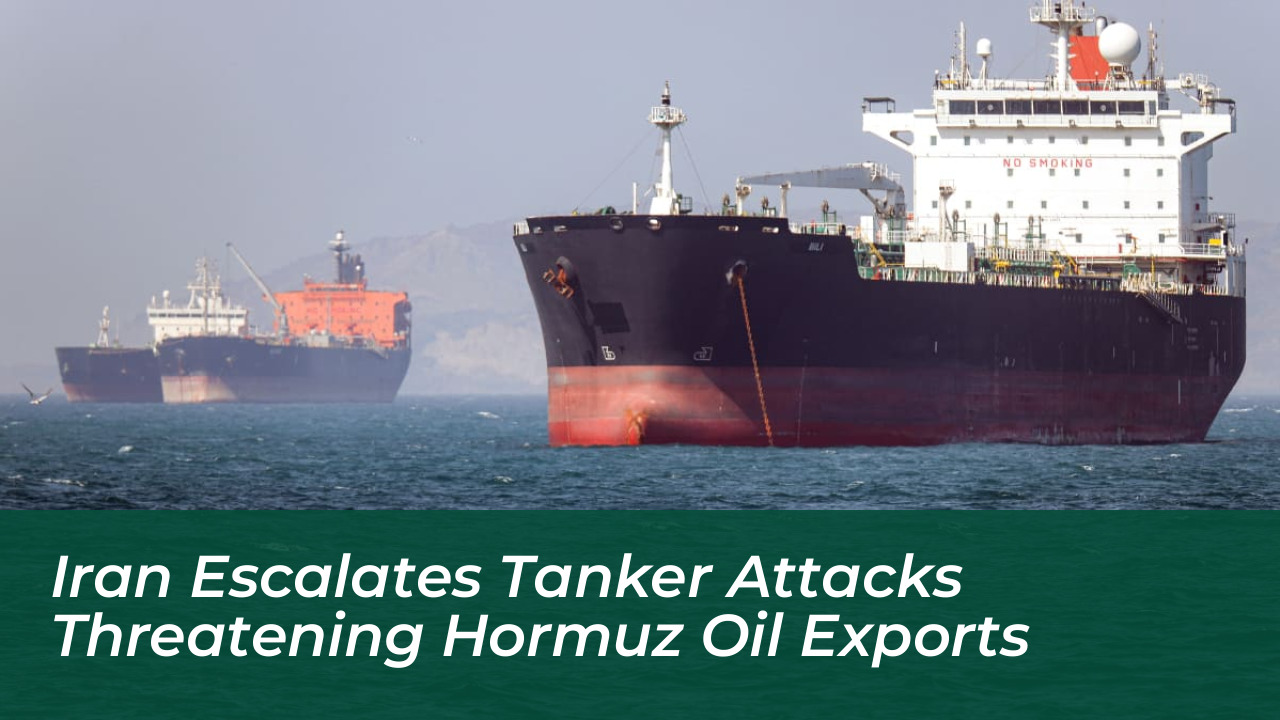


Iran has intensified its military actions against commercial shipping in the Strait of Hormuz, launching a wave of assaults that threaten a fragile recovery in global crude oil exports. Commercial vessels moving through the vital energy corridor are increasingly reliant on a U.S.-protected route running along Oman’s coast to transport oil out of the Persian Gulf, but mounting security threats have pushed maritime risk to severe levels.
According to data compiled by the Joint Maritime Information Center-a coalition of U.S.-allied militaries providing security updates to merchant vessels-nearly 20 commercial ships, predominantly oil tankers, have come under attack over the past month. Michelle Wiese Bockmann, a senior maritime intelligence analyst at Windward, reported that Iran targeted approximately two ships for every 100 vessels crossing the strait during the third quarter.
Surging Attacks and Heightened Maritime Risks
The security landscape in the Strait of Hormuz has deteriorated sharply despite a temporary rebound in regional oil flows. Recent operational data from shipping intelligence service Marisks and the United Kingdom Maritime Trade Operations (UKMTO) highlights a continuous stream of hostile encounters. On October 1, the Kuwaiti-flagged Very Large Crude Carrier (VLCC) MT Kazimah III caught fire after being struck while transiting the strait. Three days later, on October 4, the Liberian-flagged Aframax tanker Lipsi sustained engine room damage following an attack northeast of Oman’s Jazirat Umm al-Fayarin.
Further escalation occurred on Monday, when UKMTO reported five separate maritime incidents. A Panama-flagged tanker was struck by an unknown projectile, resulting in a fire in the engine room and injuring 12 crew members, according to India’s Ministry of Foreign Affairs. Additional incidents involved inbound liquefied petroleum gas (LPG) and crude oil tankers hit by unknown projectiles, forcing crews to battle onboard fires while operating under extreme duress.
Beyond physical projectile strikes, Iran’s Islamic Revolutionary Guard Corps (IRGC) continues to exert aggressive control tactics. UKMTO recorded an incident where an inbound tanker, navigating roughly 11 nautical miles north of Khasab, Oman, was hailed by the IRGC over public radio channels and ordered to turn around immediately or face targeted destruction. The vessel complied with the directive to avoid catastrophic damage.
Impact on Global Crude Flows and Shipping Logistics
Despite ongoing hostilities, Middle East oil exports have experienced a volatile recovery. Provisional figures from Kpler indicate that the seven-day moving average for Middle East crude exports reached 18.3 million barrels per day (bpd) by late September, aligning closely with pre-war baselines. Vortexa similarly estimated a 14-day moving average of 18.6 million bpd.
However, analysts emphasize that these resilient export figures mask significant structural shifts and immense logistical burdens. Approximately 40 percent of current oil exports bypass the Strait of Hormuz entirely, utilizing alternative transport mechanisms such as Saudi Arabia’s East-West pipeline, which pumps crude directly to the Red Sea port of Yanbu. Additionally, market participants have increasingly relied on complex ship-to-ship transfers, where smaller shuttle vessels offload crude onto larger tankers waiting safely outside the immediate conflict zone.
These workaround systems, while effective at maintaining supply volumes, have dramatically inflated operational expenses. Charter rates for moving crude from the Persian Gulf to China have surged as high as $1 million per day per tanker. Shipbrokers estimate that round-trip shuttle runs through Hormuz cost producers between $30 million and $40 million per journey, adding $15 to $20 per barrel before factoring in skyrocketing marine insurance and security premiums.
Economic Fallout and Market Sustainability
The International Maritime Organization (IMO) reports that since July, maritime risks have claimed the lives of at least nine sailors, injured 18, and left three missing. Market experts question how long the current shipping equilibrium can endure without a comprehensive political settlement.
Tamas Varga, an analyst at PVM Oil Associates, noted that while current export flows remain sustainable under specialized routing, any widespread resumption of direct infrastructure or pipeline attacks could quickly destabilize global markets. Brent crude prices have continued to hover just beneath $100 a barrel, reflecting persistent apprehension among buyers regarding delivery reliability and transportation costs.
Speaking at the Energy Intelligence Forum in London, Saudi Aramco CEO Amin Nasser warned that the ongoing disruptions have already erased nearly three billion barrels of global oil supply since the conflict escalated in February. Nasser stressed that rebuilding depleted inventories and fully restoring supply chain stability could take up to two years once freedom of navigation is finally re-established in the critical Hormuz energy corridor.