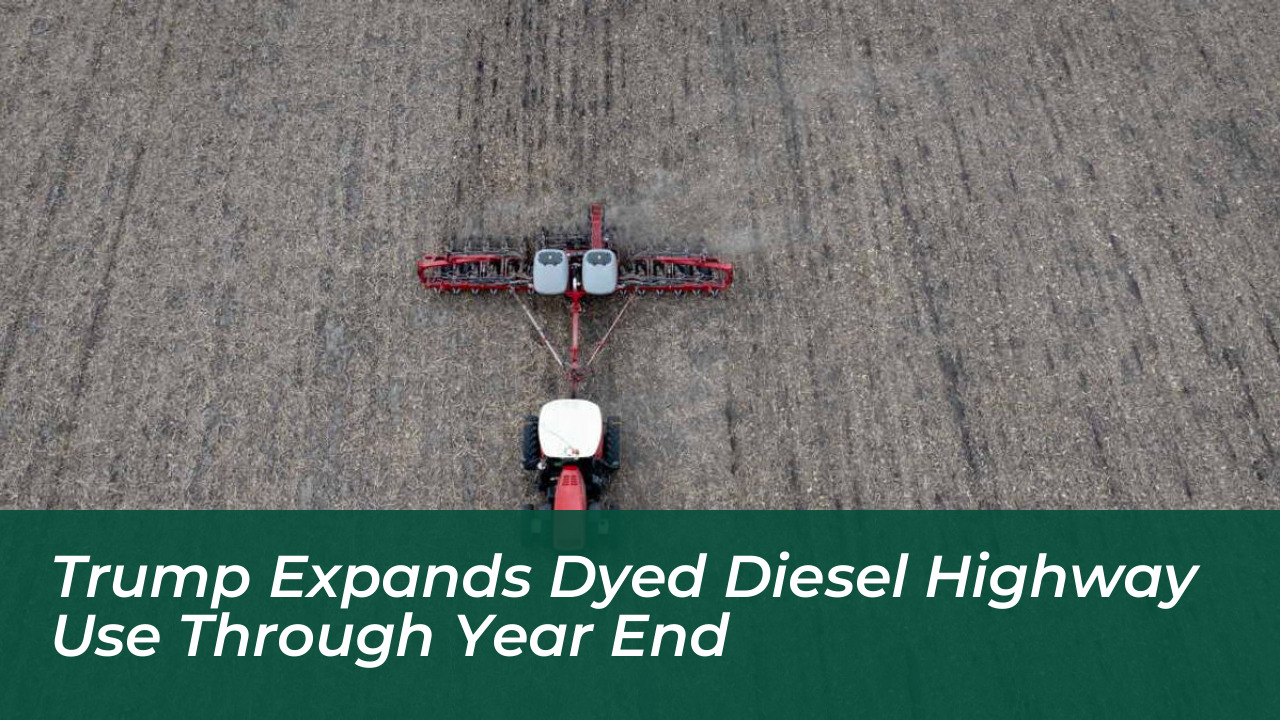


President Donald Trump signed an executive order on October 5, 2026, temporarily allowing tax-exempt dyed diesel on highways through the end of the year. The measure aims to reduce fuel costs for American farmers, truckers, and other diesel users as global supply constraints keep retail prices elevated.
The executive order directs Treasury Secretary Scott Bessent, in consultation with the Secretary of War, to defer the 24.4-cent federal excise tax and associated obligations on on-road dyed diesel without interest or penalties through December 31, 2026. The directive also instructs the Treasury Department to explore pathways to entirely eliminate the requirement to pay the deferred taxes.
Coordination Across Federal and State Agencies
The White House outlined specific responsibilities for various federal departments to ensure the implementation of the temporary policy:
- Department of Transportation: Coordinates with state governments, industry leadership, and labor organizations regarding highway access for dyed diesel.
- Department of Agriculture: Ensures farmers have adequate fuel supplies in high-demand areas and encourages parallel actions from state governors.
- Office of Intergovernmental Affairs: Works with state officials to encourage the adoption of corresponding state tax relief and enforcement waivers.
Before the executive order, red-dyed diesel was restricted strictly to off-road machinery such as farm tractors, construction generators, and heating systems. Because it is exempt from highway excise taxes, the fuel is dyed red to allow law enforcement to detect unauthorized on-road use and issue fines or back taxes.
Potential Financial Savings for Drivers
The federal diesel tax stands at 24.4 cents per gallon. This amounts to roughly $60 in direct savings on a 250-gallon fill-up for a standard long-haul truck. State taxes and fees average an additional 35.5 cents per gallon nationwide. Where state administrations choose to match the federal action by waiving local restrictions and penalties, the White House estimates total savings could exceed $100 per refill.
Several agricultural states had already implemented localized measures to permit dyed diesel use for agricultural and timber transport during the harvest season. These states include Alabama, Arkansas, Indiana, Louisiana, Missouri, Nebraska, North Carolina, North Dakota, Oklahoma, and Texas.
Industry Response and Economic Context
National retail diesel prices averaged $6.32 per gallon in early October 2026. Prices remained near historic highs following geopolitical supply shocks, which included shipping disruptions through the Strait of Hormuz and refinery attacks linked to ongoing conflicts in Eastern Europe and the Middle East.
Agricultural leaders and industry groups offered mixed assessments of the order. American Farm Bureau President Zippy Duvall noted that federal tax relief provides timely support for agricultural haulers during heavy seasonal operations. However, some energy analysts and petroleum experts, such as GasBuddy’s Patrick De Haan, cautioned that the executive order does not directly resolve underlying inventory shortages. They warned it could create a fragmented enforcement landscape across state lines where local bans remain active.
The administration maintains that the policy will alleviate supply chain bottlenecks and lower consumer prices for household goods and groceries. This effort works alongside recent international agreements to release strategic diesel reserves from Europe and expanded hours-of-service waivers for fuel transport drivers.