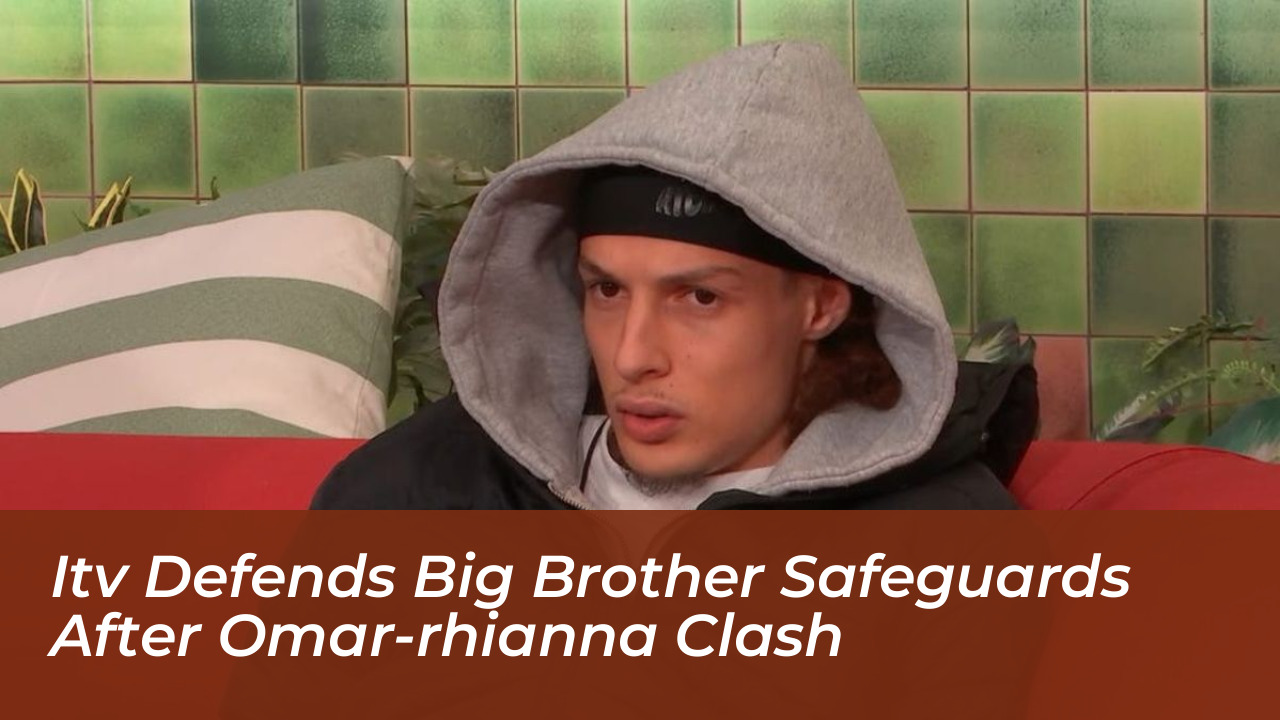

ITV has defended its contestant safeguarding procedures after intense viewer backlash and critical intervention from domestic abuse charity Women’s Aid. The controversy followed a tumultuous clash between Big Brother housemates Omar El Mayer and Rhianna Collins. The disputed interactions, featured in the October 19, 2026, episode, left Collins in tears and triggered public complaints, with many viewers calling for Omar’s removal from the house.
The controversy centers on the strained romance between Omar and Rhianna during the current season. In the October 19 episode, tension boiled over after Rhianna attempted to end their relationship, stating she wanted them to remain friends. Conversations turned heated as Omar accused her of lacking maturity. He instructed her not to cry, demanded she look at him, and told her not to speak about him to other housemates. Later, off-camera remarks captured Omar referring to Rhianna with derogatory language while speaking with fellow housemate Yasmin.
The stressful dynamic prompted producers to intervene during the broadcast, calling Rhianna into the Diary Room to check on her wellbeing. When asked if she was okay, Rhianna admitted, “I’m not that good but I’ll be fine,” adding that she disliked how Omar spoke to her.
Viewers and Former Contestants Call for Action
The broadcast sparked immediate public outcry across social media platforms like X, formerly known as Twitter, with numerous viewers registering official complaints with Ofcom. Several former housemates also weighed in. Millie Jarrett, the first contestant evicted from the series, took to a TikTok live stream to assert that Omar needed to be removed. Chelsey Ammari, Rhianna’s closest confidant in the house, described the episode as an uncomfortable watch. Television personality Dean McCulloch also posted a video stating that the behavior witnessed on screen should not be tolerated under any circumstances.
Women’s Aid Highlights Coercive Control Concerns
The backlash drew a formal warning from domestic abuse charity Women’s Aid. Veronica Oakeshott, Head of External Affairs at Women’s Aid, released a statement highlighting the dangers of normalizing harmful relationship patterns on mainstream entertainment programs.
“The nature of abuse means that it often begins with ‘red flag’ coercive and controlling behaviours like isolating you from friends or repeatedly putting you down, before escalating into other forms of abuse,” Oakeshott stated. She warned that giving a platform to such dynamics risks minimizing survivors’ experiences and presenting abuse as entertainment. She emphasized that production companies hold a fundamental responsibility to ensure contestants remain emotionally and physically safe.
ITV’s Official Response and Safeguarding Protocol
In response to public pressure and criticism from charity organizations, ITV issued a statement detailing the welfare infrastructure governing the reality series. The broadcaster did not announce Omar’s removal from the house.
All Housemates receive Respect and Inclusion training and an extensive briefing from the Big Brother Senior team to prepare them for living in the House and to set out Big Brother’s expectations for appropriate behaviour and language. Housemates are monitored 24 hours a day and any instances of inappropriate behaviour are responded to appropriately. Welfare and safeguarding are prioritised throughout the production, with a dedicated welfare team available to support Housemates before, during and after their time in the House.
As discussions regarding reality TV ethics and contestant duty of care continue to intensify, Big Brother remains broadcast on ITV2 and ITVX, with producers maintaining that continuous monitoring and support teams are actively managing house dynamics.