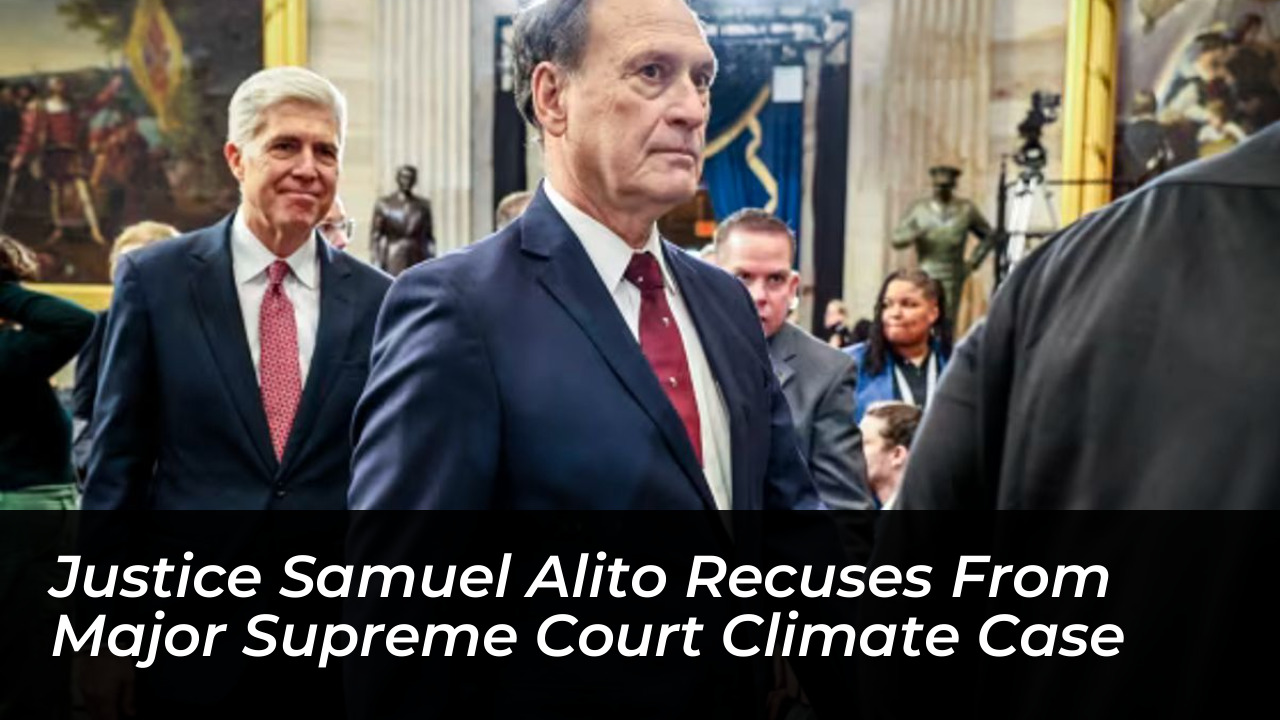
On September 28, 2026, Supreme Court Justice Samuel Alito announced his recusal from Suncor Energy Inc. v. County Commissioners of Boulder County. This decision follows sustained pressure from environmental advocacy groups regarding the Justice’s financial investments in the energy sector.
Background of the Recusal
The Supreme Court clerk notified the involved legal counsel that Justice Alito would no longer participate in the case. The brief notice did not provide a specific reason, stating only that the Justice “has determined that he will not continue to participate in this case.”
Previously, the Court had maintained that recusal was unnecessary. A spokesperson had stated that Alito held no direct financial interest in the primary parties-Exxon Mobil and Suncor Energy-and that his participation complied with existing ethical guidelines.
Pressure from Advocacy Groups
The reversal follows public campaigns by groups such as Consumer Watchdog, which scrutinized Alito’s financial disclosures. Reports revealed that the Justice held investments in energy companies including ConocoPhillips and Phillips 66, in addition to a family mineral lease in Oklahoma. Critics argued that even though these companies were not direct defendants, a ruling on climate liability would impact the broader oil and gas industry, creating a conflict of interest.
Impact on Supreme Court Proceedings
The case, which examines whether state tort law can hold fossil fuel companies liable for climate change, remains on the Court’s docket. With Justice Alito’s recusal, the matter will proceed with the remaining eight justices. The outcome is expected to influence the trajectory of climate-related lawsuits across the United States.
Judicial Recusal Standards
- Individual Authority: Under the Supreme Court’s Code of Conduct, the decision to recuse rests solely with the individual justice rather than a vote by the full Court.
- Financial Standards: Justices must adhere to statutory standards regarding financial interests, though the definition of a “direct interest” remains a subject of public debate.
- Precedent: While Alito had recused himself from previous climate-related proceedings, his initial decision to remain on this specific petition had drawn significant scrutiny.
As the litigation continues, the focus shifts to how the remaining justices will interpret the scope of state versus federal jurisdiction in environmental tort claims, a ruling that could set a national precedent for corporate climate accountability.