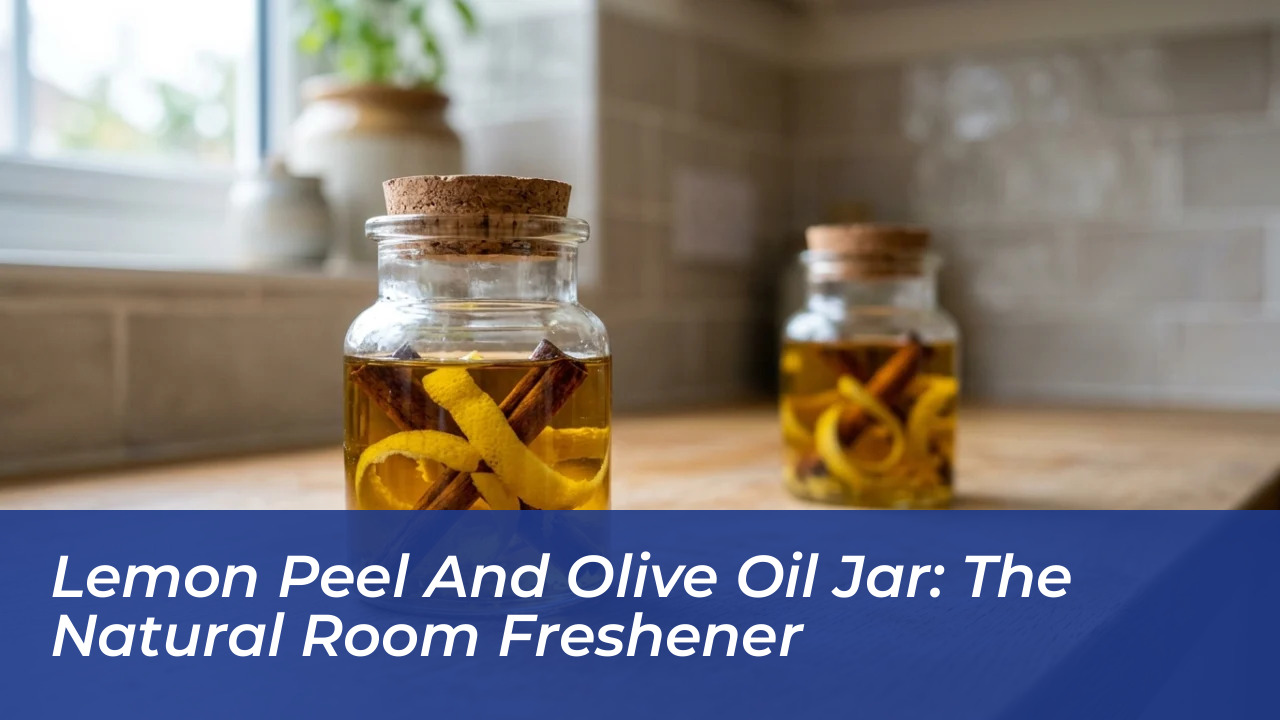

If you see a simple glass jar filled with olive oil, dried lemon peel, and cinnamon sticks sitting on a kitchen worktop, you are looking at a fixative designed to eliminate stale indoor smells without synthetic aerosol sprays. This low-cost, slow-release natural air freshener traps airborne aromatic molecules in liquid fat, releasing a warm citrus fragrance gradually into the room over many hours. Commercial room sprays often rely on synthetic propellants that briefly mask pungent odours before vanishing. This homemade alternative works on basic molecular solubility, transforming everyday pantry scraps into a steady passive diffuser that neutralises lingering cooking odours and stuffiness in enclosed spaces.
The Molecular Science Behind the Three-Ingredient Blend
The effectiveness of this kitchen combination relies entirely on the complementary volatility of three basic plant-derived compounds. Lemon peel concentrates an essential oil terpene known as limonene, which evaporates rapidly into ambient air to deliver a clean citrus note that cuts through heavy food odours. Cinnamon sticks contribute cinnamaldehyde, the primary organic compound responsible for rich, sweet, and warm aromatics.
Left alone in a dry bowl, both limonene and cinnamaldehyde would evaporate rapidly, exhausting their fragrant properties within a short window. The key lies in the fact that these aromatic plant compounds are fat-soluble rather than water-soluble. This allows the carrier medium to regulate how quickly they enter the surrounding atmosphere. Because olive oil is dense, non-volatile, and lipid-rich, it captures these lipophilic aromatic molecules rather than letting them flash off immediately. Acting as an organic fixative, the oil suspends the scent molecules and disperses them into the air at a controlled pace.
Commercial Aerosol Sprays vs. Natural Oil Infusions
Standard household air fresheners frequently introduce artificial perfumes suspended in chemical propellants. In contrast, this kitchen blend uses food-safe pantry staples to achieve continuous evaporation.
- Active Scent Agents: Natural limonene and cinnamaldehyde
- Dispersal Mechanism: Slow fat-soluble evaporation
- Heat Required: None (passive room temperature)
- Base Carrier: Olive oil fixative
A common misconception is that boiling water or open heat is necessary to extract fragrant oils from kitchen herbs and s**ces. Heating speeds up the evaporation process dramatically, but keeping the oil unheated at room temperature ensures the fragrance lasts considerably longer without scorching the delicate aromatic compounds.
How to Assemble the Slow-Release Jar Correctly
Preparing this homemade air freshener requires no cooking, specialised equipment, or complex preservation techniques. Follow these simple steps to set up your natural diffuser:
- Pour a small amount of standard olive oil into the base of a clean, dry glass jar.
- Add fresh lemon peel that has been thoroughly washed and dried to remove surface moisture.
- Insert one or two cinnamon sticks, either whole or cracked into smaller pieces to expose more surface area.
- Allow the mixture to steep undisturbed for at least four hours so the lipid layer absorbs the fat-soluble essential oils.
- Place the jar uncovered in any corner, kitchen area, or enclosed room affected by persistent stuffiness.
If you require a slightly more intense throw in a larger living area, position the open jar near a gentle heat source, such as a mild radiator. You can easily modify the balance of scents by varying the quantity of cinnamon sticks and citrus peel to suit your personal preference.
Why Kitchen-Scrap Scenting Makes Practical Sense
Beyond avoiding synthetic aerosol mists, using raw peels and whole s**ces serves as a practical zero-waste exercise. Lemon rinds that would typically be destined for food waste provide maximum value when stripped of their essential oils first. The solution requires negligible effort to maintain and eliminates the recurring expense of single-use cartridge refills.
By understanding how olive oil locks in fragile plant aromas, you can keep indoor air fresh with nothing more than basic pantry components. Check your kitchen worktops today and set aside your leftover lemon rinds to test this gentle infusion method.
Frequently Asked Questions
How long does the lemon peel and olive oil air freshener last?
The jar will continuously release a subtle fragrance for several weeks as the oil slowly allows the fat-soluble terpenes to evaporate at room temperature.
Do I need to heat the olive oil to release the scent?
No heating is required. Keeping the mixture at room temperature prevents the delicate aromatic compounds from scorching and ensures a longer-lasting, steady scent diffusion.
Can I use other citrus peels besides lemon?
Yes, orange, lime, or grapefruit peels work well and contain similar essential oil terpenes like limonene that provide fresh citrus notes.
Why use olive oil instead of water?
Aromatic plant compounds are fat-soluble rather than water-soluble. Olive oil acts as a dense, lipid-rich fixative that captures and controls the release of scent molecules over time.
Is this method safe for pets?
Because it relies on natural, food-safe pantry ingredients without synthetic aerosol propellants, it avoids many of the harsh chemicals found in commercial room sprays.