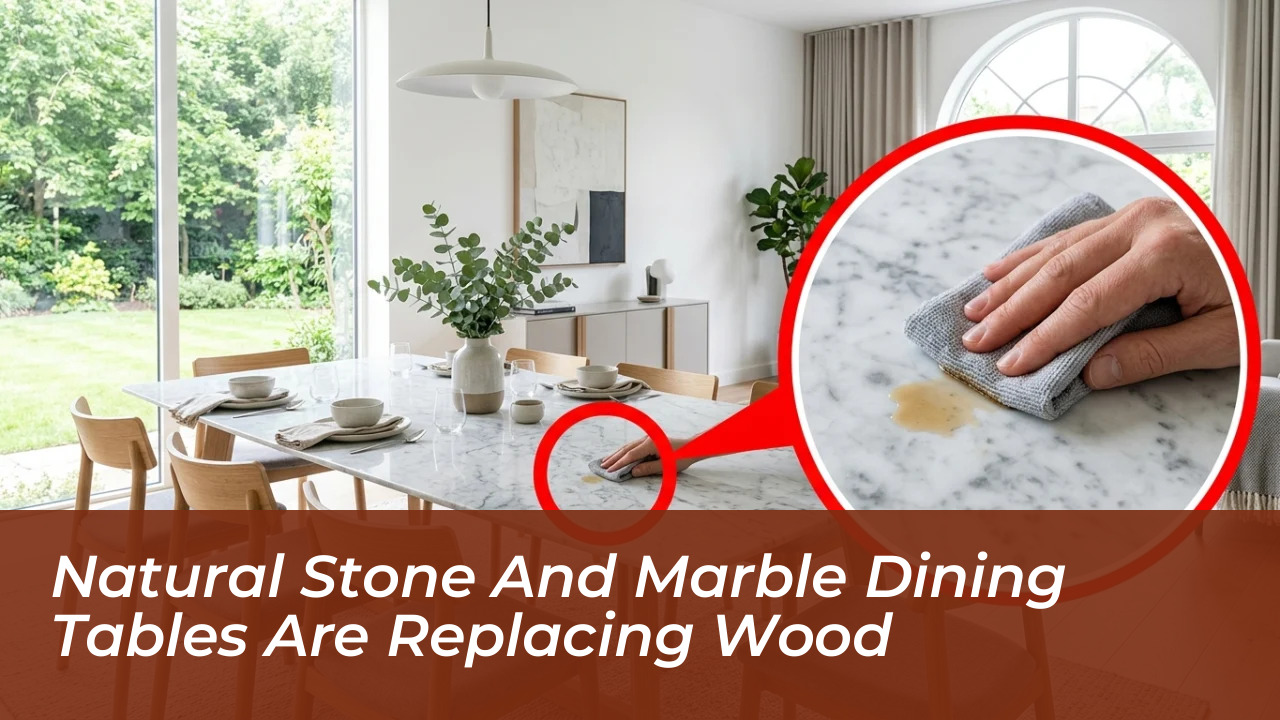

Marble and natural stone dining tables are replacing traditional timber as the primary statement piece in modern dining rooms. These surfaces offer organic textures, unique mineral veining, and earthy tones that create an elevated aesthetic without the need for excessive decor. Because no two slabs are identical, a stone table serves as an architectural focal point, marking a shift away from conventional wood furniture toward geological materials.
Why Natural Stone Surfaces Are Taking Over
Natural stone provides immediate visual authority. Subtle tonal variations allow the table to act as a centerpiece, enabling the rest of the room to maintain a clean, minimalist look. Lighter marble slabs pair well with bright, open spaces, while charcoal or black stones anchor contemporary interiors. Muted beige and gray options offer a timeless, subtle quality.
While hardwood is not disappearing, designers are increasingly pairing wood chairs with mineral surfaces to create textural contrast and visual depth.
How to Style a Mineral Dining Table
Integrating a stone table requires balancing its cool surface with complementary textures and seating:
- Light stone with upholstered seating: Pair pale surfaces with beige upholstery for a serene, light-filled atmosphere.
- Dark marble with metallic accents: Match dramatic veining with metal chair legs or lighting fixtures for a sleek finish.
- Warm tones with timber: Balance earthy mineral tops with light wooden chairs to maintain organic warmth.
- Sculptural bases: Choose central pedestals or sculptural legs to emphasize the table’s architectural presence.
Incorporating curved dining chairs helps soften the harsh lines of a stone table, adding organic flow to the room.
Durability and Maintenance
Natural stone is not impervious to wear. Marble is a porous material that is vulnerable to household spills. Acidic substances, such as lemon juice or vinegar, can etch or dull an unsealed surface. Spills should be wiped away immediately, and owners should verify with the manufacturer whether a protective sealant is required.
Key Material Considerations
- Material Sensitivity: Marble requires rapid cleanup of spills and periodic sealing to prevent staining.
- Structural Weight: Solid stone is exceptionally heavy, requiring robust bases and careful floor placement.
- Composite Alternatives: Engineered stone mimics natural patterns while offering higher resistance to stains and scratches.
- Base Architecture: Support structures must be engineered specifically to handle the significant weight of stone slabs.
Frequently Asked Questions
Are natural stone and marble dining tables durable?
Natural stone is heat-resistant and long-lasting, but it is porous. It can scratch or etch if left unsealed or exposed to sharp objects and acidic liquids.
How often should a marble dining table be sealed?
To maintain stain resistance, marble tables typically require sealing every six to twelve months, depending on usage.
Can natural stone tables be repaired if damaged?
Unlike wood, stone damage like deep etching or chips usually requires professional restoration services to grind and polish the surface.
Are quartz and sintered stone good alternatives to marble?
Yes. Engineered stones offer the look of natural marble with superior resistance to stains and scratches, requiring less maintenance.
How do you style a heavy marble table without making the room feel cold?
Balance the stone’s coolness by incorporating warm wood accents, upholstered seating, soft textiles, and ambient lighting.