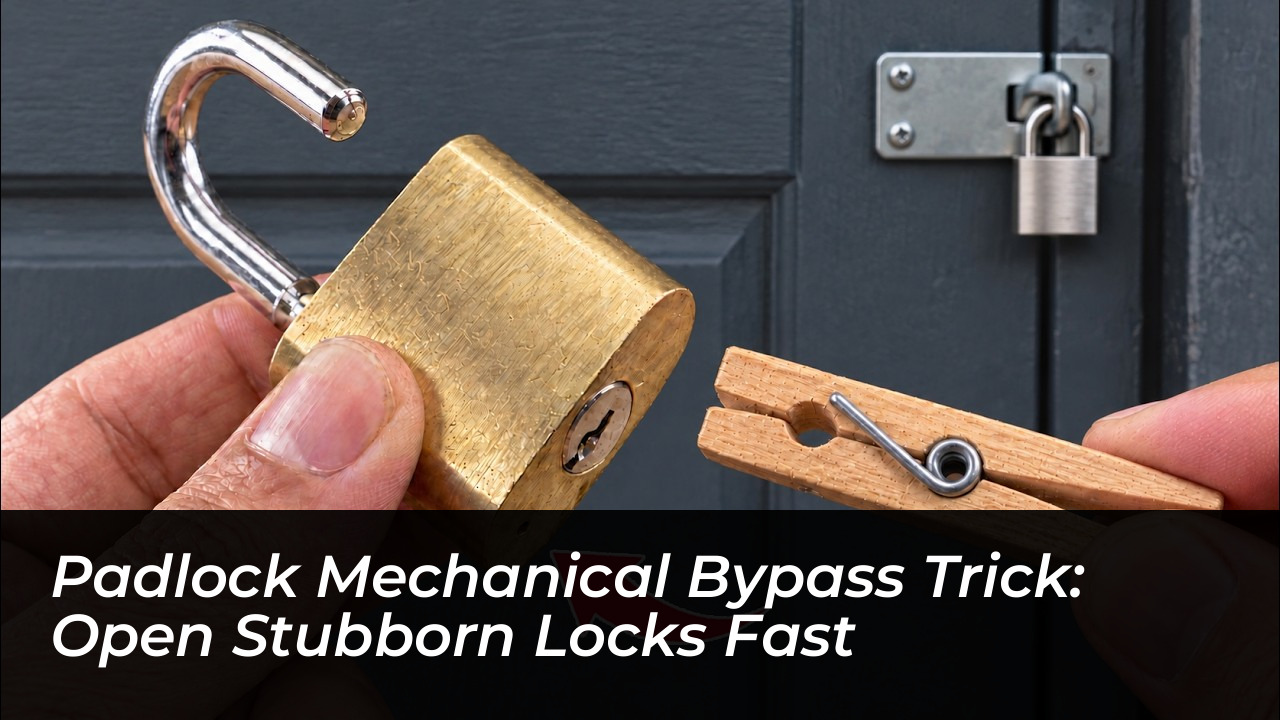

Opening a standard pin-tumbler padlock without its original key relies on exploiting tiny mechanical tolerances to align internal spring-loaded pins along the shear line. When an unexpected lockout strikes a shed, toolbox, or garden gate, mastering this straightforward mechanical bypass can restore access without resorting to bolt cutters or brute force. Every year, thousands of homeowners across the United Kingdom misplace utility keys, leading to unnecessary property damage. Yet the internal geometry of a basic cylinder or brass padlock reveals why non-destructive entry is often far simpler than most realize. A demonstration of this mechanical behavior reveals how quickly standard locking pawls yield when correct leverage is applied.
The Hidden Anatomy Behind the Mechanism
To successfully open a lock without the correct key, you must understand what happens inside the core when a key slides into place. Standard pin-tumbler mechanisms rely on two sets of tiny metal pins: driver pins situated at the top, and key pins positioned directly beneath them. Tiny coil springs push these pins down into the central plug, obstructing rotation. When the correct key enters the keyway, its individual cuts lift the key pins to the exact height required to create a uniform split. This clear horizontal boundary is known as the shear line.
Once every pin pair splits along this threshold, the internal plug turns freely, retracting the shackle or deadbolt. When a key is missing, external tools must mimic this precise alignment or bypass the locking pawls entirely. Understanding these internal dynamics bridges the gap between destructive brute force and efficient, non-destructive entry methods.
Two Practical Ways to Bypass a Lock
Depending on the style and build quality of the lock guarding your outbuilding or luggage, two non-destructive methods dominate emergency bypass techniques:
- The Shimming Method: Designed specifically for low-security padlocks with spring-operated locking latches. A thin, curved piece of pliable metal-often fashioned from an aluminum drinks can or commercial shim-is slid down the crevice of the shackle to retract the internal catch.
- Tension and Raking: Applied directly to the cylinder keyway. A tension wrench applies a subtle rotational force to the plug, while a pick gently rakes across the pins, catching each binding pin on the sheer ledge until the cylinder turns.
Spring-latch padlocks with visible play in the shackle are remarkably susceptible to shimming because their internal pawls are held merely by spring pressure rather than deadlocking ball bearings.
Step-by-Step: The Classic Shackle Shim Technique
For a garden shed padlock or storage locker, a shackle shim offers the cleanest route to entry without destroying the housing. Follow this step-by-step procedure to execute the bypass safely:
- First, identify which side of the shackle contains the internal locking notch. In entry-level padlocks, this is typically located on the inner curve of the heel or toe of the metal loop.
- Next, curve a thin metal collar around the shackle leg and push it down firmly into the body.
- As you rotate the collar toward the latch, apply firm downward pressure on the shackle to relieve friction against the pawl.
- The thin metal pushes the spring-loaded latch inward. With the catch retracted, the shackle pops open instantly.
UK Legal Realities and Essential Safeguards
While bypassing locks is an invaluable DIY skill, context and location dictate legality across the UK. Under Section 25 of the Theft Act 1968, possessing articles intended for use in the course of burglary or theft-known colloquially as “going equipped”-carries severe criminal penalties. You should only ever attempt to bypass locks that you personally own, located on your own private property, or where you hold explicit written consent from the owner. Attempting DIY entry on rental properties or communal fixtures can lead to disputes or breach of tenancy agreements.
Safety also demands careful handling. Thin bypass metals feature sharp edges that can slice fingers, and forcing improvised tools into a keyway can snap metal fragments inside, permanently destroying the lock.
How to Fortify Your Property Against Bypass Tricks
Discovering how easily an entry-level lock can be compromised often prompts an urgent re-evaluation of home security. Padlocks rated for everyday sheds and gates frequently offer minimal resistance against determined bypass attempts. The Master Locksmiths Association recommends upgrading perimeter security with hardware tested to robust standards, such as British Standard BS EN 12320 or Sold Secure certifications.
High-grade security padlocks resist standard bypass methods through specific engineering defenses:
- Dual Ball-Bearing Locking: Replaces spring-loaded latches with hardened steel ball bearings that cannot be pushed back by shims.
- Anti-Pick Spool Pins: Internal driver pins shaped like cotton reels that create false sets and bind unpredictably when raked.
- Closed Shackle Designs: Shrouded steel bodies that expose only a tiny fraction of the shackle, preventing shim entry and bolt-cutter access.
When security matters, investing in a high-tolerance cylinder ensures that rapid DIY bypass techniques remain ineffective for legitimate emergency lockouts on your own utility hardware. Understanding mechanical vulnerabilities helps you identify weak points around your home before an opportunist does. Save this guide to keep essential mechanical knowledge to hand whenever an unexpected lockout threatens your day.