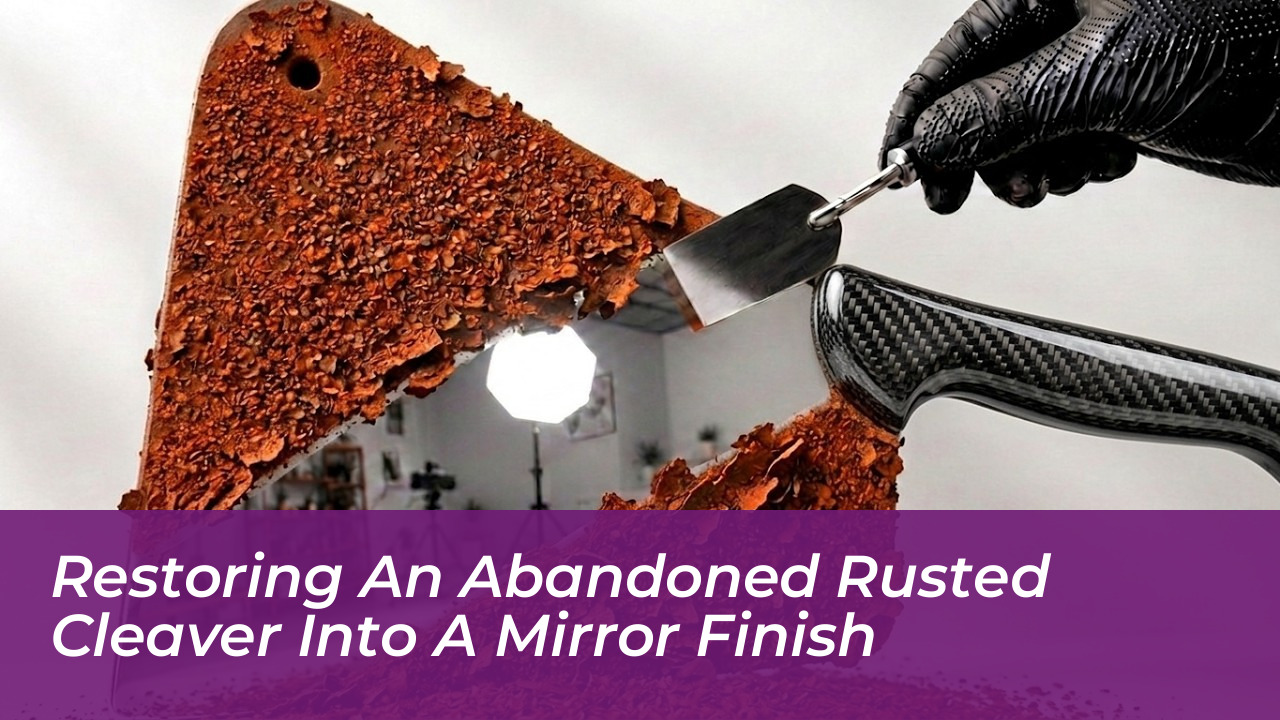

Pushing an antique carbon steel cleaver past functional sharpness into an optical mirror finish looks spectacular, but it permanently alters how the blade behaves against raw food. Achieving that pristine reflection demands stripping away decades of heavy iron oxide, levelling deep corrosion pits, and progressing through abrasive grits until the metal resembles liquid chrome. For hobbyists and workshop enthusiasts across the UK, rusty cleaver restoration has evolved from simple tool maintenance into an obsessive art form. Yet crossing the line from practical tool rehabilitation to hyper-polishing brings surprising technical compromises alongside the breathtaking visual payoff.
The Hidden Physics of Iron Oxide and Salvageable Steel
Before any blade can take a shine, you must confront the destructive chemistry of red rust. When moisture and oxygen penetrate unprotected high-carbon steel, flaky hydrated iron oxide eats into the surface, forming jagged micro-caverns that standard wire brushing simply cannot cure. Salvaging an old butcher’s cleaver requires distinguishing between surface corrosion and terminal structural pitting. If deep rot has compromised the eye or tang, the tool becomes unsafe for heavy impact work; if the spine remains solid, the core steel retains its legendary toughness.
The initial clearing stage strips back this crust without softening the steel’s temper through several vital techniques:
- Mechanical descaling: Utilizing rotary tools, wire wheels, or abrasive discs removes loose scale without generating excessive surface heat.
- Chemical pacification: Weak acids or targeted rust converters dissolve the oxide layer deep within microscopic fissures.
- Initial thickness assessment: Measuring the remaining blade stock confirms whether the cleaver can withstand rigorous re-profiling.
The Relentless Progression Towards a True Mirror
A true mirror finish contains zero visible scratches, even under direct inspection lighting. Reaching this standard requires strict discipline, shifting from coarse 80-grit abrasives to level pitting all the way through to ultra-fine liquid suspensions. Skipping a single grit stage ruins the entire piece. Every consecutive pass must entirely erase the scratch pattern left by the previous abrasive, working diagonally across the blade face to highlight lingering imperfections.
The Critical Polish Breakdown
The journey from raw metal to liquid reflection demands three distinct compounding phases. The first phase uses aggressive cutting compounds alongside firm buffing wheels to remove 2,000-grit sanding marks. Next, intermediate jeweller’s rouge or aluminium oxide compounds smooth the microscopic peaks into a semi-gloss sheen. Finally, diamond pastes or micro-fine finishing compounds, often paired with high-speed rotary polishers, burnish the steel until light reflects without optical distortion.
Failing to control motor speed during this final push presents a catastrophic risk: friction heat. Excess friction can draw the temper out of hardened carbon steel, leaving a dazzlingly shiny edge that rolls or chips the first time it meets a joint of beef.
Where Perfection Collides with Practical Utility
When a cleaver reaches showroom-grade reflectivity, kitchen performance shifts unexpectedly. While the tool looks like an ornamental centrepiece, its cutting dynamics change dramatically. Traditional cleavers often feature a rough forged texture or satin brush finish for a functional reason. A high-mirror blade face creates immense surface tension against wet vegetables, raw meat, and root crops, causing sliced ingredients to stick flat against the metal through vacuum adhesion.
, maintaining an optical polish on carbon steel demands relentless vigilance. A single slice through an acidic onion or tomato initiates immediate patina formation, staining the reflective surface with dark greys and purples within seconds unless washed and dried instantly.
Key Takeaways for Blade Restoration Enthusiasts
- Pushing restoration to the absolute aesthetic extreme creates a showpiece that demands white-glove handling rather than hard kitchen service.
- Finding the right balance between rust removal and surface texture determines whether your restored blade lives on a magnetic display board or on the chopping block.
- Proper oiling with food-grade mineral oil remains essential to protect polished bare steel from atmospheric moisture in British kitchens.
Have you ever restored an old tool and ended up taking the finish much further than originally planned? Share your restoration experiences below.