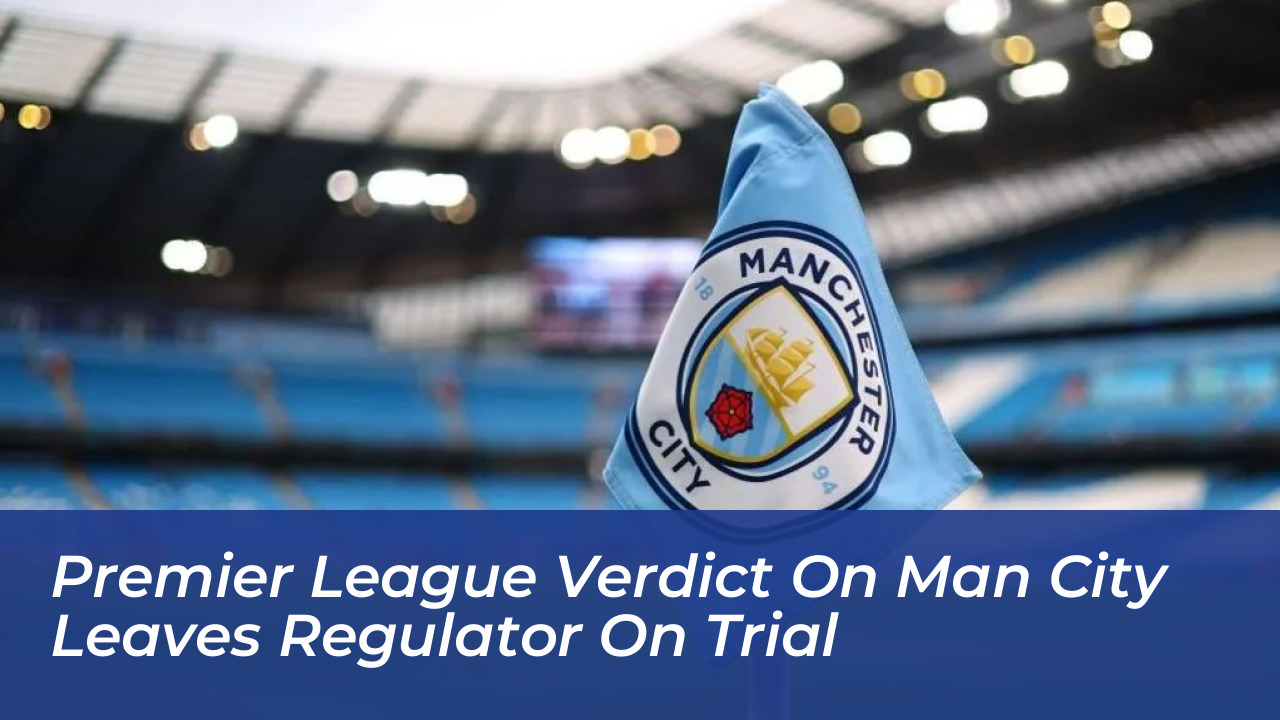
The Premier League has secured the landmark verdict it spent years pursuing against Manchester City, yet the tortuous road to this decision has left English football’s governing body facing intense scrutiny. While an independent commission found the reigning powerhouse guilty of sweeping financial rule violations, the handling of the case has exposed a regulatory framework struggling to govern an elite landscape warped by state-backed sovereign wealth.
Due to high traffic on this story, please verify you are not a bot to instantly unlock the remaining content. Takes only 5 seconds!
Verify & Continue ReadingFollowing a multi-year investigation initiated in December 2018 and a subsequent 42-day hearing that concluded in December 2024, an independent commission confirmed that Manchester City were found guilty of multiple charges. These included breaking financial rules over a nine-season span, orchestrating “sham” commercial contracts to artificially inflate revenues by more than £900 million, filing inaccurate accounts, and breaching duties of cooperation.
The Anatomy of the Verdict and the £900m ‘Sham’ Contracts
The redacted 40-page core decision detailed how Manchester City utilized disguised funding schemes between the 2009-10 and 2017-18 seasons. According to the commission, the club arranged inflated sponsorship deals where commercial partners only paid a fraction of the stated fees, while the remainder was covered by the Abu Dhabi United Group (ADUG), the investment vehicle owned by Sheikh Mansour bin Zayed Al Nahyan.
Additionally, the independent panel concluded that the club hid operating expenses worth roughly £70 million and deployed circular arrangements regarding player image rights through entities like Fordham. The commission noted that witnesses called on behalf of the club gave evidence that was false in key respects, writing that some testimonies were “untrue and so had been dishonest.”
Premier League Chief Executive Richard Masters described the outcome as the most significant disciplinary case in the competition’s history. “The core decision establishes the facts of what happened at Manchester City during this period,” Masters stated. “It details how the club systematically broke Premier League Rules for nearly a decade.”
Manchester City’s Defiant Response and Immediate Appeal
Despite the comprehensive nature of the findings, Manchester City immediately pushed back against the verdict, confirming plans to appeal ahead of the Friday deadline. The club argued that the opinion contains clear material errors of law, principle, and fact, deeming the current decision unsafe.
In an official statement, the club asserted: “Manchester City FC is both disappointed and surprised by the opinion of the Premier League Commission that has been published today. The club is innocent of the accusations made by the Premier League and a comprehensive body of irrefutable evidence exists in support of all of its positions, relating to this case.”
Chief executive Ferran Soriano reportedly told employees in a video message that the verdict stemmed from a regulatory framework driven by a conspiracy theory. As City pursue formal appeal avenues, any immediate sporting sanctions-such as a potential points deduction or expulsion-are placed on ice, prolonging the administrative limbo surrounding England’s top flight.
Why the Premier League’s Own Conduct Is Now on Trial
While the Premier League celebrates a vindication of its regulatory powers, legal analysts and rival clubs note that the process itself has cast a long shadow over the competition. Taking nearly three years to reach a verdict after formal charges were filed in February 2023 has highlighted systemic delays in how English football disciplines its wealthiest participants.
Critics point out that an entire generation of football-encompassing 17 years, multiple title races, and iconic moments involving challengers like Liverpool and Arsenal-has passed under an existential cloud. The delayed accountability raises fundamental questions about whether existing regulatory structures possess the speed, transparency, and teeth required to police state-owned clubs effectively.
Moreover, broader geopolitical implications have surfaced. Reports from outlets like Bloomberg highlighted governmental sensitivities regarding how protracted legal battles involving Gulf-backed institutions impact international diplomatic relations between the United Kingdom and the United Arab Emirates.
What Lies Ahead for English Football
As the independent commission moves toward a separate sanctions hearing, the fallout will continue to reverberate across domestic football. If upheld, the anticipated penalties could fundamentally alter the sporting hierarchy of the Premier League, reshaping relegation battles and championship title distribution retroactively.
Yet, regardless of whether Manchester City face severe sporting punishments or manage to overturn aspects of the commission’s findings on appeal, the core debate has shifted. The verdict has answered what happened behind closed doors at Eastlands for nearly a decade, but it has simultaneously forced English football to ask a harder question: whether its current regulatory model is fit to survive the modern era.