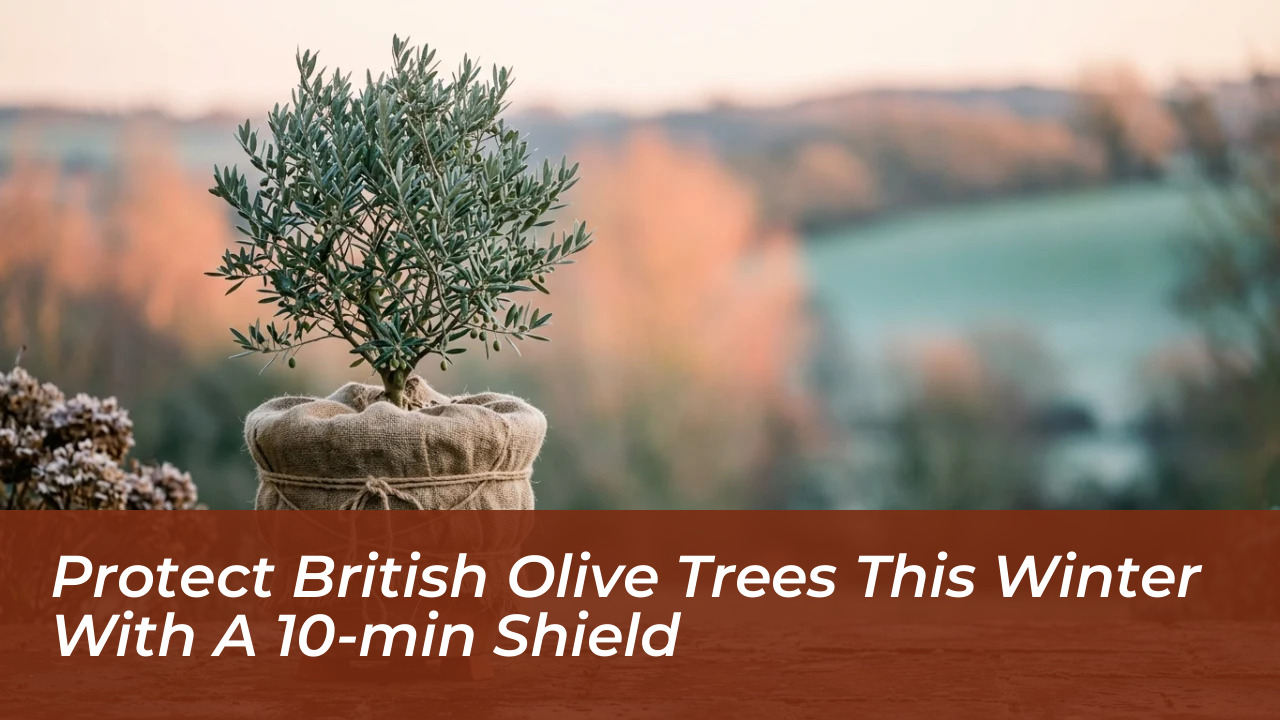

The single greatest hazard facing your container-bound olive tree through a damp British winter is not freezing air, but saturated compost that freezes solid and destroys the root system from within. While established in-ground trees can withstand brief drops towards minus ten degrees Celsius, the root ball of potted olive trees sits entirely vulnerable behind thin layers of terracotta or plastic. Leaving a container flat against sodden stone flags when the first hard frost descends can end years of vigorous growth in a matter of days.
Horticultural guidance from the Royal Horticultural Society confirms that while Olea europaea can endure moderate cold snaps, cold and stagnant moisture is a lethal pairing. The water trapped around the roots expands as ice crystals form, bursting delicate cell walls and suffocating the plant before early spring ever arrives.
Why UK Frost Hits Container Specimens Far Harder Than Ground Soil
Gardeners across England, Scotland, and Wales frequently assume Mediterranean olive trees require tropical heat to thrive. In truth, these trees experience crisp mountain winters in their native habitat, but open ground acts as a massive thermal heat store that insulates root networks. In a pot, that thermal buffer disappears entirely.
A potted root system sits above ground level, directly exposed to howling polar winds and sub-zero air on all sides. When sub-zero temperatures linger over several consecutive days, the potting medium freezes through to the core, cutting off moisture absorption and creating severe drought stress in frozen conditions.
The Essential Three-Step Defence for British Patios
Safeguarding your specimen does not require expensive specialist equipment or an insulated glasshouse. Executing three precise adjustments as autumn fades will carry the tree through the harshest UK winter storms.
1. Elevate to Eliminate Waterlogging
Before applying a single layer of insulation, you must fix the drainage beneath the pot. Heavy British winter rainfall quickly turns compacted potting grit into an icy swamp if water cannot escape freely from the base holes.
- Install pot feet: Place three or four terracotta or rubber pot feet under the container to lift the base at least two centimetres off the paving.
- Clear drainage pathways: Check that fallen leaves and silt have not plugged the primary drainage hole.
- Remove saucers immediately: Never leave drip trays beneath outdoor containers between October and April, as collecting water guarantees frozen roots.
2. Insulate the Container, Not Just the Foliage
Gardeners often waste time wrapping the silvery evergreen canopy while leaving the root ball bare. The roots are the true Achilles heel of potted olive trees during prolonged cold snaps.
Wrap the entire perimeter of the pot in multiple layers of bubble wrap or heavy-duty hessian sacking, securing the material tightly with garden twine. For maximum thermal protection, pack an outer sleeve of chicken wire with dry straw or shredded bracken around the pot exterior. This barrier creates an air pocket that slows down freezing cycles, preventing frost from penetrating deep into the centre of the root core during sudden overnight plunges recorded by the Met Office.
3. Manage Canopy Fleece with Precision
The crown of an olive tree is remarkably tough and benefits from full winter sun, meaning you should not keep the leaves smothered in fabric throughout the entire cold season. Leaving thick covers on for months traps damp air, attracting mould and shedding healthy leaves.
- Reserve fleece for extreme forecasts: Only wrap the foliage in breathable horticultural fleece when local alerts predict sustained drops below minus five degrees Celsius or prolonged freezing rain.
- Never use clear polythene: Plastic sweating against leaves scorches foliage during sunny winter mornings and breeds fungal disease.
- Remove wraps during mild spells: As soon as temperatures climb back above freezing, open or remove the crown cover to restore airflow and natural light.
Positioning and Winter Watering Discipline
Relocating your pot to a microclimate within your garden drastically shifts the odds of survival. Shift the container against a warm, south- or west-facing brick wall of your house, which absorbs heat during daytime hours and radiates it back into the plant overnight. A spot beneath the overhanging eaves of your home provides an added bonus: it shields the compost from constant drenching downpours.
Watering requires strict discipline during the dormant season. Keep the compost on the drier side of damp, watering only sparingly once every three to four weeks if the compost feels bone-dry two inches beneath the surface. Never feed the tree with nitrogen-rich fertilisers during autumn or winter, as soft new growth will blacken and die at the first touch of frost.
Frequently Asked Questions
Can olive trees survive winter in the UK?
Established ground-planted olives in a sheltered, south- or west-facing position can survive most UK winters without significant damage. Container-grown olives require their containers moved against a sheltered wall in November and wrapped in insulating material during hard frosts.
Do olive trees need to come inside in UK winters?
In southern England in a sheltered position, container-grown olives can overwinter outdoors with proper root protection. In northern England and Scotland, moving containers to an unheated greenhouse, conservatory, or sheltered porch significantly increases survival rates.
Should I water my olive tree in winter?
Watering should be minimal during winter. For potted trees, ensure the soil does not dry out completely, but avoid waterlogging. Reduce watering significantly to once every few weeks, as the tree’s growth slows down during dormancy.
Should I prune my olive tree in winter?
It is best to avoid pruning olive trees in winter. Pruning should be performed in late spring (April to May) when the risk of hard frost has passed, preventing fresh cuts from sustaining frost damage.
How do I know if my olive tree has frost damage?
Signs of frost damage include brown, curled, or dropped leaves, and in severe cases, bark splitting. Avoid pruning immediately; wait until spring to assess and remove damaged branches as new shoots may still emerge.