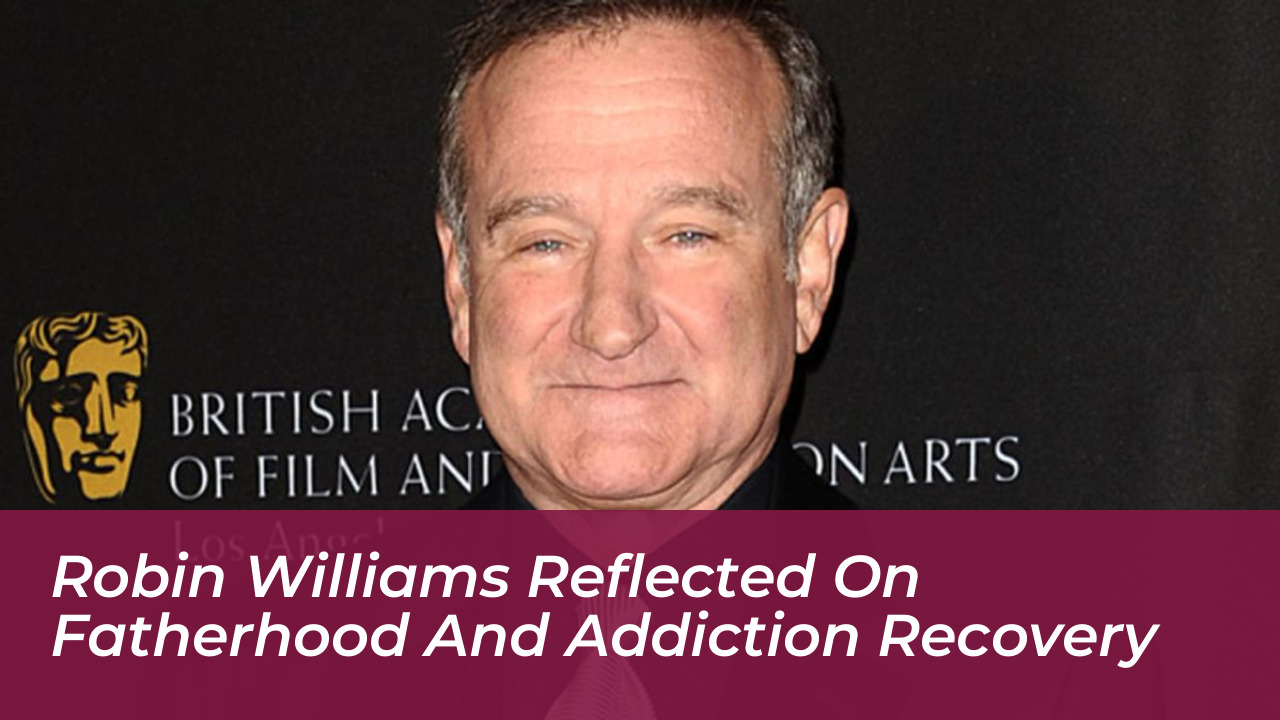

During a candid 2009 appearance on the Today Show, legendary actor and comedian Robin Williams opened up about the deep complexities of parenting, personal growth, and his ongoing journey with addiction recovery. While promoting his comedy film World’s Greatest Dad, Williams reflected on his experiences as a father of three. He explained why he never viewed himself as a perfect parent and emphasized the continuous effort required to raise children while maintaining his own sobriety.
Williams, whose celebrated career spanned television, stand-up comedy, and critically acclaimed film roles-including Mork in Mork & Mindy, the Genie in Aladdin, and his Oscar-winning turn as therapist Sean Maguire in Good Will Hunting-offered a grounded perspective on a life often defined by extraordinary talent. Rather than presenting an idealized version of family life, Williams acknowledged that raising children demands daily commitment, self-awareness, and a willingness to confront personal flaws.
The Intersection of Fatherhood and Sobriety
For Williams, the decision to achieve and maintain long-term sobriety was deeply intertwined with his responsibilities as a father. Early in his career during the late 1970s and early 1980s, Williams struggled with intense substance use amid the high-pressure entertainment culture of the era. A profound turning point arrived in 1982 following the fatal drug overdose of his close friend John Belushi at the Chateau Marmont.
Witnessing that tragedy, combined with the impending birth of his eldest son, Zak, acted as an immediate wake-up call. Williams noted that the fear of losing control made it impossible to continue his lifestyle. Knowing he could not be a reliable father while struggling with addiction, he stopped using substances cold turkey and subsequently maintained approximately two decades of continuous sobriety.
Navigating Relapse and the Reality of Long-Term Recovery
Williams’ journey also illustrates the challenging and non-linear nature of addiction recovery. In 2003, while filming Insomnia in remote areas of Alaska, the actor experienced a relapse with alcohol. He later described how isolation and emotional vulnerability contributed to his return to drinking, noting that addiction can quietly lie in wait even after many years of successful maintenance.
In subsequent interviews, Williams spoke openly about the slippery slope of rationalization that led to his relapse. He emphasized that what starts as a seemingly small decision can quickly escalate. By confronting his setback, seeking professional treatment in 2006, and taking proactive steps to reinforce his recovery in 2014, Williams demonstrated that relapse does not erase previous progress. Instead, it highlights the ongoing need for vigilance, support, and mental health care.
The Whole Person Beyond Addiction
Medical experts and family advocates note that Williams’ life and tragic passing in August 2014 involve important layers beyond his history with substance use. Following his death, an autopsy revealed he had been living with undiagnosed Lewy body disease, a progressive neurodegenerative disorder that impacts memory, movement, thinking, and behavior. His widow, Susan Schneider Williams, later highlighted the severe neurological and psychiatric symptoms he experienced in his final months.
Williams’ transparent discussions on parenting, vulnerability, and the daily work of recovery continue to offer valuable lessons. His story underscores that achieving long-term sobriety and being a dedicated parent require honesty, community support, and the courage to seek help when facing life’s toughest challenges.
Frequently Asked Questions About Robin Williams
1. What substances did Robin Williams struggle with?
Robin Williams publicly discussed his struggles with and alcohol, particularly during the late 1970s and early 1980s as his career in entertainment was rapidly expanding.
2. What motivated Robin Williams to get sober initially?
The 1982 fatal overdose of his friend John Belushi served as a major wake-up call. Additionally, the upcoming birth of his eldest son, Zak, solidified his decision to quit substances, as he stated he could not be an effective father and live that lifestyle.
3. How long was Robin Williams sober?
Williams successfully maintained sobriety for approximately two decades before experiencing an alcohol relapse in the early 2000s while filming on location in Alaska.
4. Did Robin Williams return to treatment after his relapse?
Yes. He entered treatment for alcohol-related issues in 2006 and proactively sought professional support again in 2014 to reinforce his ongoing recovery program.
5. Did addiction cause Robin Williams’ death?
No. Toxicology reports following his death in August 2014 did not indicate alcohol or illicit drug intoxication. A subsequent medical examination revealed he was suffering from undiagnosed Lewy body disease, a severe progressive neurodegenerative disorder.
6. What can we learn from Robin Williams’ reflections on fatherhood and recovery?
His openness teaches us that long-term recovery requires ongoing attention, that relapse does not erase past progress, and that true parenting involves embracing imperfection, accountability, and emotional presence.