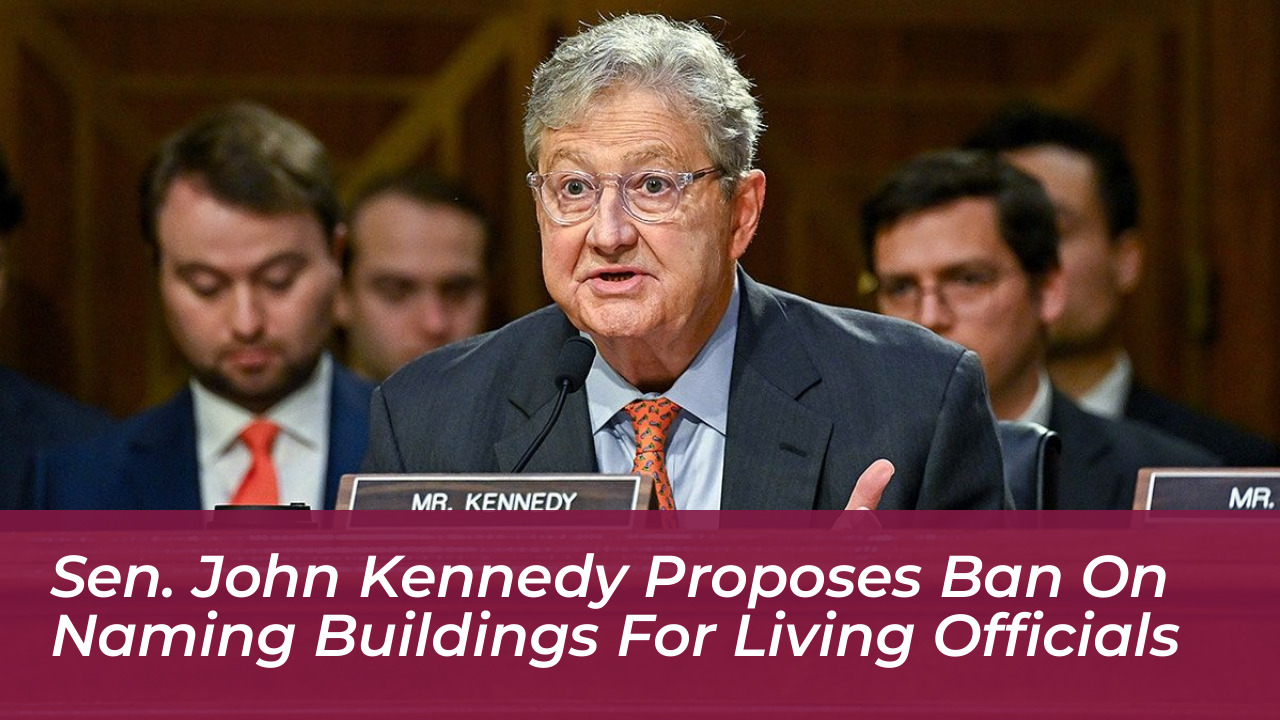
U.S. Senator John Kennedy, R-La., proposed establishing a strict rule on Sunday to prohibit public buildings from being named after living public officials. The legislative push follows ongoing efforts by President Donald Trump to rename several prominent federal landmarks in Washington, D.C., and across the country after himself.
Addressing the broader issue of self-promotion by elected leaders during an appearance on CBS News’ “Face the Nation,” the Louisiana Republican emphasized that government resources should never be utilized for personal publicity.
“The White House sees it differently, but… you can’t spend public money to… promote yourself,” said Sen. John Kennedy.
Debate Over Federal Landmarks and Self-Promotion
Sen. Kennedy’s comments arrived amidst heightened scrutiny regarding government-funded advertisements promoting President Trump, alongside high-profile battles over public property names. The senator suggested that a straightforward national policy would resolve recurring controversies surrounding executive branch renaming pushes.
“I may end up with a sombrero on my head, but I also think we ought to have a rule that no politician can have a building named after him when he’s alive,” Kennedy remarked, alluding to past political clashes.
Drawing on regional precedent, Kennedy noted that a similar policy already exists in his home state. “We have that rule in Louisiana. It works pretty well,” he added.
Legal and Legislative Pushback Against Trump Renaming Efforts
President Trump has attempted to rename or attach his name to multiple high-profile federal buildings since returning to the Oval Office. Most notably, the John F. Kennedy Center for the Performing Arts became the center of a legal storm after a handpicked board voted to add the president’s name to the structure.
Federal judges quickly intervened, blocking the move and ruling that only Congress holds the explicit constitutional authority to rename the center. Consequently, construction workers began removing Donald Trump’s name from the Kennedy Center facade following the federal appeals court decision denying a last-minute emergency appeal.
Similar tensions arose regarding the U.S. Institute of Peace, where the Trump administration added the president’s name last year, prompting former institute officials to file court motions to block exterior changes. Beyond D.C., Trump has floated proposals to rename New York’s Penn Station and Dulles Airport, as well as naming a planned promenade connecting the Lincoln Memorial to the Potomac River the “Trump Promenade.”
Broader Implications for Public Spending
In addition to facility naming rights, Kennedy criticized the allocation of public funds toward personal publicity campaigns, pointing to government-backed ad spots that have aired across multiple networks. While the White House has defended these spots as educational public service announcements promoting national pride and patriotism, critics and lawmakers like Kennedy argue the campaigns cross the line into executive self-promotion.
As discussions continue in Washington, Kennedy’s proposed ban faces an uncertain path in Congress, but it has reignited national debates regarding ethics, accountability, and the boundaries of executive authority over federal public spaces.