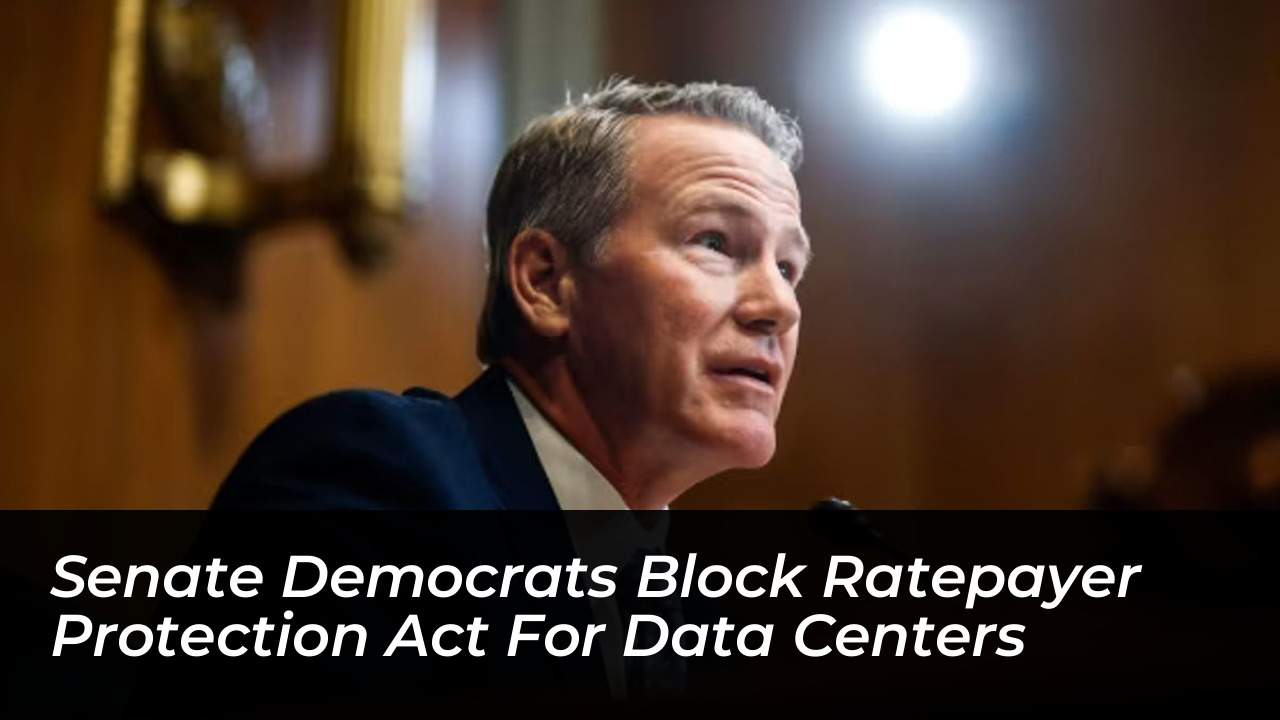
Senate Democrats blocked legislation on Wednesday intended to shield consumers from surging electricity and water costs linked to local data center development. The procedural vote ended 57-43, failing to reach the 60 votes required to overcome a filibuster in the chamber.
The Ratepayer Protection Act aimed to establish a national framework. This framework directed state public utility commissions to ensure high-energy data center developers bear their own utility expenses. The measure previously cleared the House of Representatives by a 417-3 margin two weeks prior.
Led in the Senate by appointed Sen. Jon Husted, R-Ohio, the bill has drawn political attention. Husted is competing in a tight Senate race against Democratic opponent Sherrod Brown. Brown has heavily criticized Husted’s past promotion of data centers while serving as lieutenant governor.
Legislative Intent and Debate
Datacenter construction and electricity consumption have grown rapidly in recent years. This growth is driven by advances in artificial intelligence and other digital technologies. The surge has triggered mounting anxiety among voters. Voters are concerned that utility upgrades-including transmission, generation, and distribution systems-will be funded by everyday households and businesses rather than the tech corporations building the facilities.
Supporters of the bipartisan legislation argued that it offered a necessary safeguard. “It’s clear that big tech should be paying their own way, not passing the cost on to local communities and states – and this bill does that,” Jon Husted said in a floor speech on Wednesday, urging colleagues to pass the measure.
However, Senate Democratic leader Chuck Schumer and other opponents characterized the bill as “toothless” and politically motivated ahead of the November midterm elections. Schumer criticized the legislation for failing to impose strict, binding federal mandates on energy consumption and artificial intelligence development.
Bipartisan Defections and Political Implications
Despite unified opposition from most of the Democratic caucus, four Democratic senators broke ranks to support the measure: Maggie Hassan of New Hampshire, Amy Klobuchar of Minnesota, and both Georgia senators, Jon Ossoff and Raphael Warnock.
The vote placed Senate Democrats in a difficult political position. It forced them to weigh constituent concerns over rising utility bills against their opposition to a Republican-led bill. The legislation was among the final items addressed by the Senate before lawmakers departed for their home states to campaign ahead of the November 3 midterm elections.
Broader Context of Data Center Energy Demands
The debate over the Ratepayer Protection Act highlights an escalating conflict between rapid technological advancement and local resource management. As artificial intelligence models demand unprecedented amounts of computational power, local power grids face immense strain. Public utility commissions across the United States are increasingly pressured to balance the economic benefits of tech investments against the risk of grid instability and inflated consumer utility statements.
While the defeat of the Ratepayer Protection Act stalls federal legislative action on the matter, state-level utility regulators and local governments continue to grapple independently with how to allocate the infrastructure costs demanded by modern data centers.