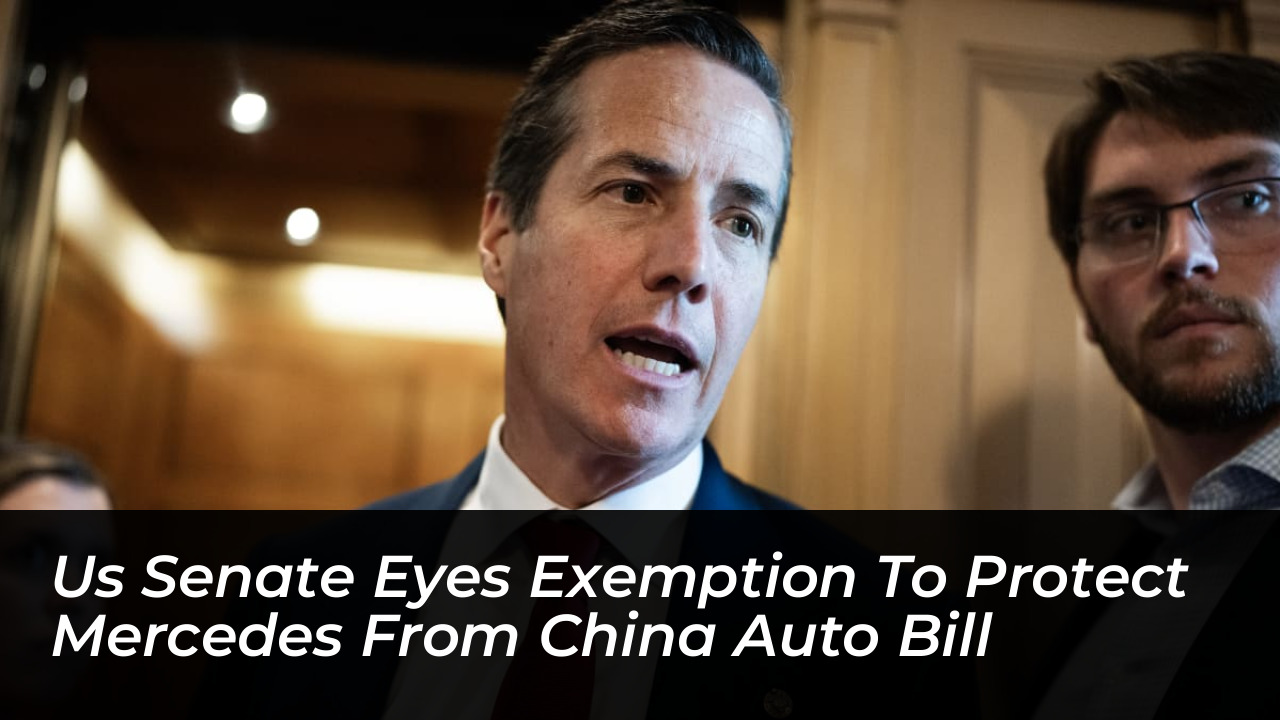
U.S. Senate lawmakers are negotiating to protect German automaker Mercedes-Benz from being banned under a pending Chinese vehicle restriction bill, bill sponsor Senator Bernie Moreno stated on September 29, 2026. The legislation, passed by the Senate Commerce Committee in July as part of the Motor Vehicle Modernization Act of 2026, aims to prohibit companies with over 15 percent Chinese ownership from selling cars domestically.
Mercedes-Benz currently holds nearly 20 percent passive ownership from Chinese entities, placing it directly in the path of the proposed restriction. The two largest individual shareholders are Chinese state-owned automaker BAIC with a 9.98 percent stake, and Geely founder Li Shufu with 9.69 percent. Despite these thresholds, lawmakers are working to ensure the luxury car maker is not forced out of the American market.
Negotiations and Legislative Hurdles
Senator Bernie Moreno, a Republican from Ohio, emphasized that lawmakers have no intention of harming European manufacturing operations in the U.S. “What we’re not going to do, obviously, is ban Mercedes-Benz vehicles in America,” Moreno said, while noting concerns about whether the company can adjust its ownership structure without hurting its corporate standing.
Moreno has sought fast-track approval for the Chinese vehicle bill before the Senate adjourns until November, working through discussions with Senator Rand Paul. Senator Paul has opposed the current wording of the legislation, arguing that it unfairly targets a single manufacturer. “If they take it out of the bill, I told them that the bill can go forward. They need to take it out. A bill shouldn’t directly attack one company,” Paul told Reuters.
Meanwhile, the bill’s co-sponsor, Democratic Senator Elissa Slotkin of Michigan, stated that broader support remains high among Democrats, estimating internal backing at 99 to 1. However, opposition from figures like Paul and scrutiny from other senators have complicated the path to unanimous consent.
Impact on Other Automakers and Workforce
The legislative framework has also raised questions regarding other European brands with ties to Chinese conglomerates. Discussions have evaluated how Volvo Cars-majority-owned by China’s Geely Holding-might continue operating in the U.S. market, potentially through formal authorization and waiver processes. Moreno noted that Aston Martin, which is 17 percent owned by Geely, and British brand Lotus, majority-owned by Geely, could face strict barriers under the current language.
Industry observers and labor representatives have pointed out the immense local footprint of European brands operating stateside. Mercedes-Benz employs more than 10,000 workers nationwide and operates critical manufacturing and assembly plants in Alabama and South Carolina. Barring the company from local sales and manufacturing would deliver a blow to domestic dealership networks and factory employment.
Protectionism vs. National Security Concerns
Proponents of the legislation, including Slotkin and various manufacturing advocates, frame the rules as a crucial measure to protect the American industrial base. They aim to prevent foreign entities from utilizing connected vehicle software to transmit sensitive driver data back to Beijing. Following a 2025 regulatory framework set by the former Biden administration that barred Chinese automakers from the American passenger vehicle market, the new legislative push looks to close secondary ownership loopholes.
However, critics within the Senate, such as Senator Ted Cruz, have alleged that the 15 percent threshold functions as a protectionist tool. During committee markups, Cruz suggested the provision was pushed to inflict commercial pressure on Mercedes-Benz and bolster domestic competitors like General Motors’ Cadillac brand. Despite the ongoing debate, the companion version of the bill in the House of Representatives has gathered over 100 co-sponsors, pushing lawmakers to seek compromise solutions before the end of the legislative session.