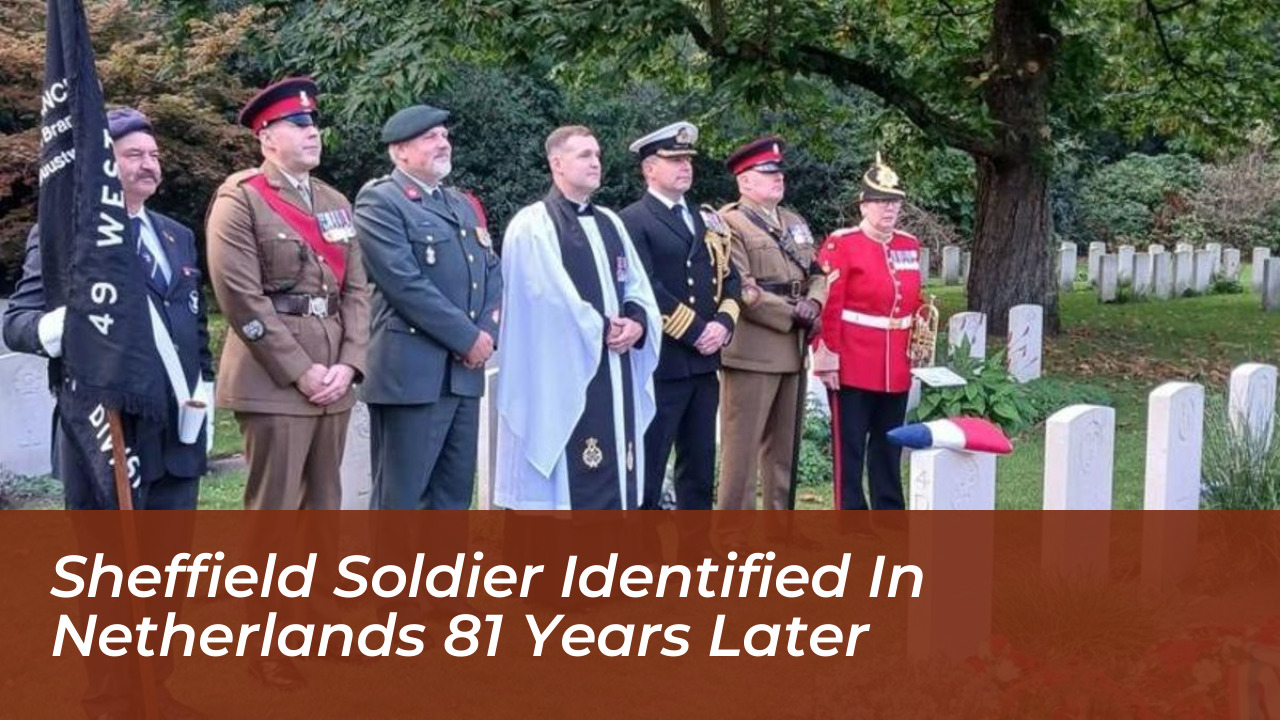


More than eight decades after disappearing during the final months of World War II, a British soldier from Sheffield has finally had his identity restored. Lance Corporal Ronald Smirthwaite, who served with the Hallamshire Battalion, was just 22 years old when he died in the Netherlands in 1945. Following extensive historical research by United Kingdom military investigators, his previously unidentified grave at the Jonkerbos War Cemetery in Nijmegen has been officially marked with his name.
The breakthrough concluded decades of uncertainty for his family and loved ones. Prior to the formal identification, Lance Corporal Smirthwaite had been commemorated on the Groesbeek Memorial alongside other World War II service personnel whose remains could not initially be linked to a known grave.
The Investigation by the ‘War Detectives’
The successful identification was spearheaded by the Joint Casualty and Compassionate Centre’s (JCCC) specialist caseworker team, widely known as the “War Detectives,” operating within the UK Ministry of Defence (MoD). Working in collaboration with the National Army Museum, the team reviewed historical submissions provided by a member of the public and an officer from the Royal Netherlands Army.
Archival military records from the Hallamshire Battalion detailed a fierce military engagement on February 22, 1945. During the fighting, Lance Corporal Smirthwaite was reported missing and initially presumed killed in action. Further investigation revealed that he had actually been captured alive by enemy forces but sustained severe wounds, subsequently losing his life while attempting to escape captivity. His remains were later recovered and buried locally, though administrative errors at the time left him classified as an unknown soldier.
Tracey Bowers, a JCCC caseworker who managed the case, praised the soldier’s background and sacrifice. “Ronald Smirthwaite was a proud Yorkshireman whose life was cut short during the final months of World War II,” Bowers stated. “This rededication service restores his identity, recognises his Yorkshire roots and ensures that future generations understand his ultimate sacrifice.”
A Life Cut Short in Wartime Service
Born in Sheffield, Ronald Smirthwaite enlisted in the British Army on May 4, 1944. He was initially assigned to the General Service Corps and worked as a blacksmith’s striker-a demanding occupation that provided the physical strength required for heavy blacksmithing operations before his deployment to the front lines.
Records indicate that after his death, his body was interred without a personal marker. Eighty-one years later, the Commonwealth War Graves Commission (CWGC) replaced the generic headstone with one bearing his full name and military details.
Polly Brewster, a commemorations case officer at the CWGC, highlighted the significance of the milestone. “We are honoured to have worked with the Royal Netherlands Army, the Ministry of Defence and the National Army Museum to identify Ronald Smirthwaite’s final resting place,” Brewster noted. “Eighty-one years after he fell, and after decades of uncertainty for his family and loved ones, it feels deeply poignant to be able to commemorate him at the site of his grave with a new, named headstone.”
Rededication Ceremony in Nijmegen
A formal rededication service was held at Jonkerbos War Cemetery in Nijmegen to honor Lance Corporal Smirthwaite, bringing together military officials, representatives from the UK and the Netherlands, and CWGC staff to pay their respects.
Padre Paul Garnell, who led the religious service, remarked on the emotional weight of the occasion. “LCpl Ronald Smirthwaite after many years of being an ‘unknown soldier’ is now known and will forever be memorialised and remembered along with his colleagues,” Garnell said. “This has only been possible due to the hard work and dedication by many.”
Military representatives in attendance included Captain Ian Stubbs RN (Defence Attaché), Warrant Officer Class 2 Richard Matkowski from the 4th Battalion The Royal Yorkshire Regiment, and Captain Geert Jonker, Officer in Command of the Royal Netherlands Army’s Recovery and Identification Unit. The ceremony ensured that the fallen Yorkshire soldier received the formal recognition and military honors denied to him for more than eight decades.
Frequently Asked Questions
Who was Lance Corporal Ronald Smirthwaite?
Lance Corporal Ronald Smirthwaite was a 22-year-old British Army soldier born in Sheffield who served with the Hallamshire Battalion during World War II. He was killed in action in the Netherlands in 1945.
How was his identity discovered?
His identity was confirmed through extensive archival research conducted by the UK Ministry of Defence’s Joint Casualty and Compassionate Centre (the ‘War Detectives’) and the National Army Museum, following tips from a member of the public and a Royal Netherlands Army officer.
Where is he buried?
He is buried at the Jonkerbos War Cemetery in Nijmegen, the Netherlands. His headstone has now been officially replaced by the Commonwealth War Graves Commission to display his name.
Where was he commemorated previously?
Before his grave was successfully identified, Smirthwaite’s name was listed on the Groesbeek Memorial among missing World War II personnel with no known graves.
What role did he hold in the Army?
He enlisted in May 1944 and initially served as a blacksmith’s striker within the General Service Corps before joining combat operations with the Hallamshire Battalion.