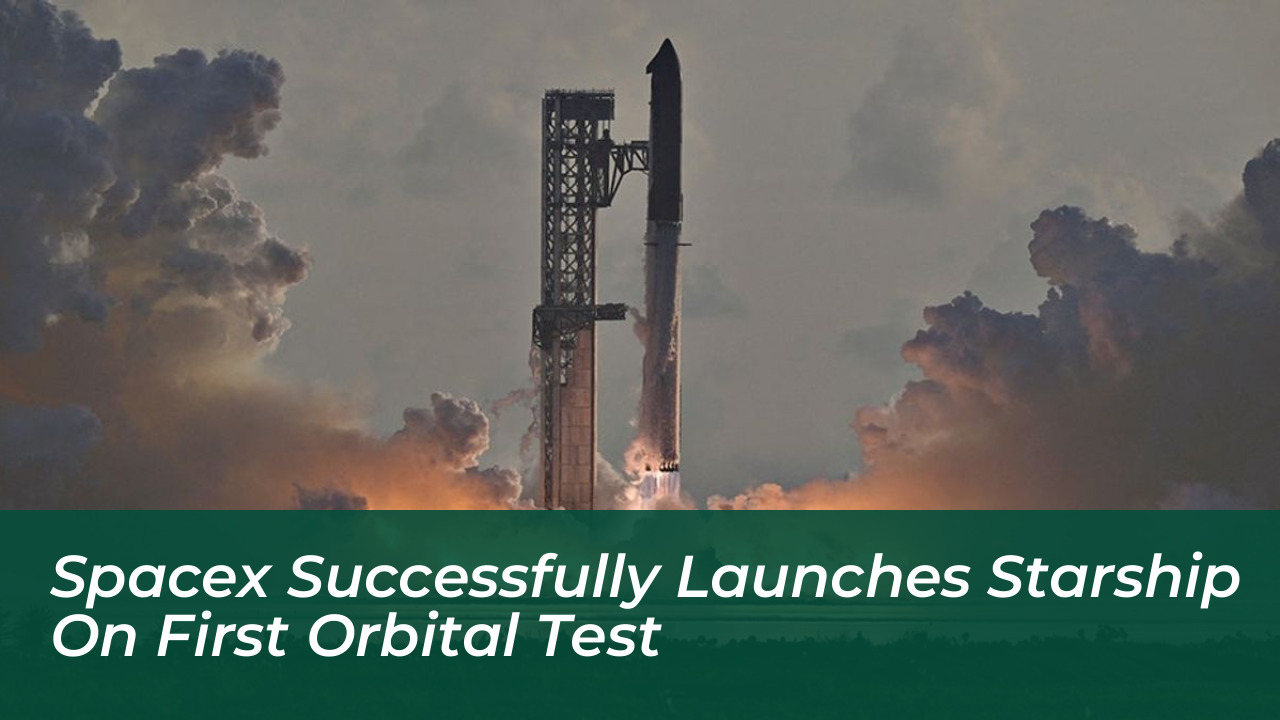
SpaceX launched its massive Starship rocket from Starbase, Texas, on Monday morning, September 28, 2026. This launch marked a monumental milestone by successfully achieving Earth orbit for the first time. The uncrewed mission represents the 14th test flight for the spacecraft. It serves as a vital step toward future commercial payloads and NASA’s Artemis lunar exploration program.
- Overcoming Ascent Complications
- Payload Deployment and Adjusted Mission Profile
- Implications for Commercial Growth and NASA Artemis
- Frequently Asked Questions
- When did Starship launch its first orbital test flight?
- What flight number was this historic mission?
- How many Starlink satellites were deployed on this flight?
- Did the mission experience any technical issues during launch?
- What is the ultimate goal of the SpaceX Starship program?
Liftoff occurred at 7:48 a.m. CT from Pad A at SpaceX’s Boca Chica Beach facility. The Super Heavy booster’s 33 Raptor engines powered the launch. Two and a half minutes into the flight, Starship separated from the booster and pressed onward toward space. Previous developmental flights remained suborbital and concluded with ocean splashdowns roughly an hour after launch. However, Flight 14 aimed to push the envelope by reaching orbital velocities of approximately 17,500 mph.
Overcoming Ascent Complications
The ambitious flight plan faced immediate drama when the spacecraft lost one of its engines during the initial ascent phase. The failure temporarily threatened the mission’s primary objective of reaching orbit.
Flight controllers evaluated the telemetry data for several tense minutes. They determined that the remaining engines were sufficient and the vehicle remained fully operational. Approximately 26 minutes after liftoff, mission control triumphantly announced that “Starship is orbital” following a successful orbital burn.
“Flight 14 marks an extraordinary engineering achievement for our entire team as Starship completes its first orbital test flight,” stated SpaceX Chief Executive Officer Elon Musk. “Reaching orbit brings us one step closer to scaling fully reusable launch systems capable of placing massive payloads, constellation architectures, and human exploration missions into deep space.”
Payload Deployment and Adjusted Mission Profile
The initial flight plan targeted a 10-hour mission featuring six complete orbits around Earth at an altitude of roughly 170 miles (275 kilometers). However, mission managers ultimately decided to shorten the schedule. Following successful orbital insertion, flight teams adjusted the timeline to conclude after three hours.
During its time in orbit, the spacecraft successfully deployed 26 next-generation Starlink V3 satellites. Three of these operational satellites featured specialized cameras designed to capture thermal data on Starship’s heat shield during reentry.
The Super Heavy booster simulated an offshore landing in the Gulf of Mexico rather than returning immediately to the launch tower via mechanical arms. SpaceX opted for cautious data collection. This allowed them to test hardware upgrades, software refinements, and heat shield survivability before attempting full-scale booster catches over land.
Implications for Commercial Growth and NASA Artemis
Achieving orbital capability is critical for SpaceX’s long-term business strategy, upcoming IPO disclosures, and its heavy reliance on Starship to launch larger V3 Starlink constellations. The company is actively expanding its launch infrastructure. It is constructing a second site at NASA’s Kennedy Space Center in Florida and planning a $100 billion facility in Louisiana.
The vehicle is equally vital to NASA’s Artemis program. NASA intends to utilize Starship as a human landing system to transport astronauts to the lunar surface. Upcoming milestones include orbital docking tests with NASA’s Orion capsule alongside competing lunar architectures. These tests pave the way for eventual crewed moon landings and deep-space travel to Mars.
Starship ultimately concluded its inaugural orbital mission with a controlled splashdown in the Pacific Ocean north of Hawaii.
Frequently Asked Questions
When did Starship launch its first orbital test flight?
Starship launched its inaugural orbital test flight on Monday morning, September 28, 2026, from SpaceX’s Starbase facility in Boca Chica, Texas.
What flight number was this historic mission?
This mission marked the 14th full-scale test flight of the integrated Starship vehicle, and the first time it successfully achieved Earth orbit.
How many Starlink satellites were deployed on this flight?
The spacecraft successfully deployed 26 next-generation Starlink V3 satellites while in orbit.
Did the mission experience any technical issues during launch?
Yes, the spacecraft lost one of its engines during ascent. However, flight controllers evaluated the telemetry and determined the vehicle was safe to proceed into orbit.
What is the ultimate goal of the SpaceX Starship program?
Starship is designed to be fully reusable. It aims to drastically lower launch costs while supporting large-scale commercial satellite deployments, NASA’s Artemis lunar landing missions, and eventual crewed flights to Mars.