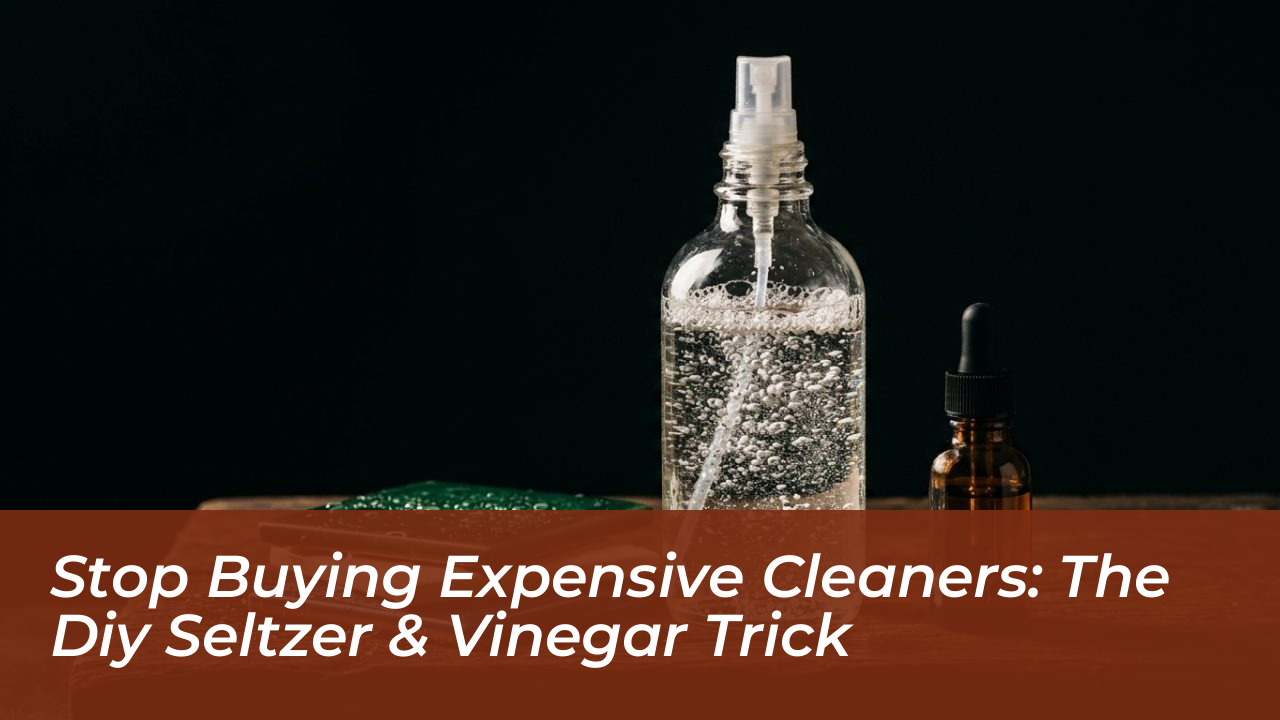

For budget-conscious households looking to trim grocery spending, a simple combination of distilled white vinegar and carbonated water can replace costly specialized tile cleaners for everyday chores, costing just pennies per use. Laboratory evaluations show that this frugal pantry staple mix removes dirt and neutralizes over 97% of target microorganisms when applied immediately, offering a practical way to cut back on commercial cleaning sprays.
Rather than investing in rows of single-purpose chemical cleaners, utilizing basic surface cleaning techniques with staple ingredients delivers measurable results on common materials. However, scientific testing also reveals clear boundaries where DIY solutions fall short compared to traditional disinfectants like bleach.
What Laboratory Research Discovered About the DIY Cleaner
Scientists at the University of Massachusetts Lowell examined how a homemade cleaning blend performed compared against conventional bleach and an environmentally preferable commercial product. The peer-reviewed study, published in the Journal of Applied Microbiology, analyzed surface soil removal alongside antibacterial effectiveness against Escherichia coli and Staphylococcus aureus.
On ceramic surfaces, the homemade formulation outperformed alternatives by removing the highest proportion of grime. Yet on stainless steel, the formula demonstrated marked limitations, removing 59.41% of dirt while commercial alternatives and bleach cleared the 85% industry benchmark.
The vinegar appears to contribute most significantly to both cleaning ceramic and disinfecting evaluated surfaces. When evaluated for antimicrobial power, the fresh solution eliminated more than 97% of tested bacteria across all conditions. Against E. coli, the formula attained a significant reduction of at least 5 log10 on stainless steel and 3.97 log10 on ceramic. By comparison, performance against S. aureus dropped to a 1.90 log10 reduction on steel and 2.71 log10 on ceramic, trailing behind standard bleach.
How to Mix the Three-Ingredient Cleaning Solution
The exact formulation tested in laboratory trials requires only basic measuring tools and inexpensive ingredients mixed right before application:
- 240 milliliters (about 1 cup) of carbonated water or seltzer
- 240 milliliters (about 1 cup) of 5% acidity distilled white vinegar
- 100 microliters of pure tea tree essential oil
For maximum sanitizing strength, prepare the solution immediately prior to use. Researchers discovered that when the mixture sat at room temperature for 24 hours, it lost roughly half of its sanitizing power.
The Real Power Behind the Recipe
When researchers evaluated each ingredient individually on stainless steel, vinegar diluted to 50% was the single component capable of achieving a 5 log10 reduction against E. coli on its own. Diluted vinegar performed nearly identically to the complete three-part blend.
Conversely, tea tree essential oil contributed minimal sanitizing value at the tested dilution and showed little effect against S. aureus. The researchers highlighted that this essential oil carries documented risks of contact dermatitis along with potential endocrine disruption concerns, making the plain vinegar base the true functional asset of the mix.
Performance Comparison: Homemade Mix vs. Conventional Standards
- Ceramic Cleaning: Removed highest proportion of grime among tested options.
- Stainless Steel Cleaning: 59.41% dirt removal (below 85% standard benchmark).
- Action on E. coli: Achieved 5 log10 reduction on steel; 3.97 on ceramic.
- Action on S. aureus: Limited activity (1.90 log10 on steel; 2.71 on ceramic).
- Storage Stability: Loses roughly 50% disinfectant strength after 24 hours.
Important Safety Rules and Surface Limitations
While vinegar and seltzer offer an affordable solution for ceramic tiles and routine glass wiping, users must remain mindful of material sensitivities and chemical safety:
- Never Mix with Bleach: Combining vinegar and chlorine gas-releasing agents creates toxic fumes that can cause severe respiratory distress.
- Avoid Natural Stone: The acetic in vinegar acts as a calcium eater, etching unsealed marble, limestone, granite, and slate.
- Check Your Water: Always use distilled water instead of tap water to prevent mineral scale and extend the shelf life of your mix.
Simple pantry staples can replace expensive specialty bottles for routine ceramic cleaning, cutting everyday grocery spending. However, high-risk sanitizing still demands commercial products, particularly when targeting resistant bacteria or demanding kitchen surfaces.
Frequently Asked Questions About DIY Tile Cleaners
Does seltzer clean better than regular tap water in a DIY spray?
Carbonated water introduces dissolved carbon dioxide, but laboratory formulations mainly utilize it alongside vinegar for its base dilution properties. Plain distilled water serves as a stable alternative that avoids introducing minerals or microbes.
Why does the cleaning solution need to be mixed fresh?
Laboratory testing demonstrated that the tested antimicrobial mixture loses roughly 50% of its sanitizing power when left sitting at room temperature for 24 hours.
Can I use this vinegar and seltzer spray on stainless steel?
While it works well on ceramic tiles, testing shows it removes only 59.41% of dirt on stainless steel, falling short of the 85% industry benchmark achieved by commercial alternatives.
Is tea tree essential oil necessary for disinfection?
No. Research indicates that diluted vinegar provides virtually all of the antimicrobial action against tested bacteria, while tea tree oil contributes minimal sanitizing value and introduces potential skin irritation risks.
What surfaces should be avoided when using vinegar-based cleaners?
Never use vinegar-based sprays on natural unsealed stone surfaces like marble or limestone, as it etches and permanently damages the material over time.