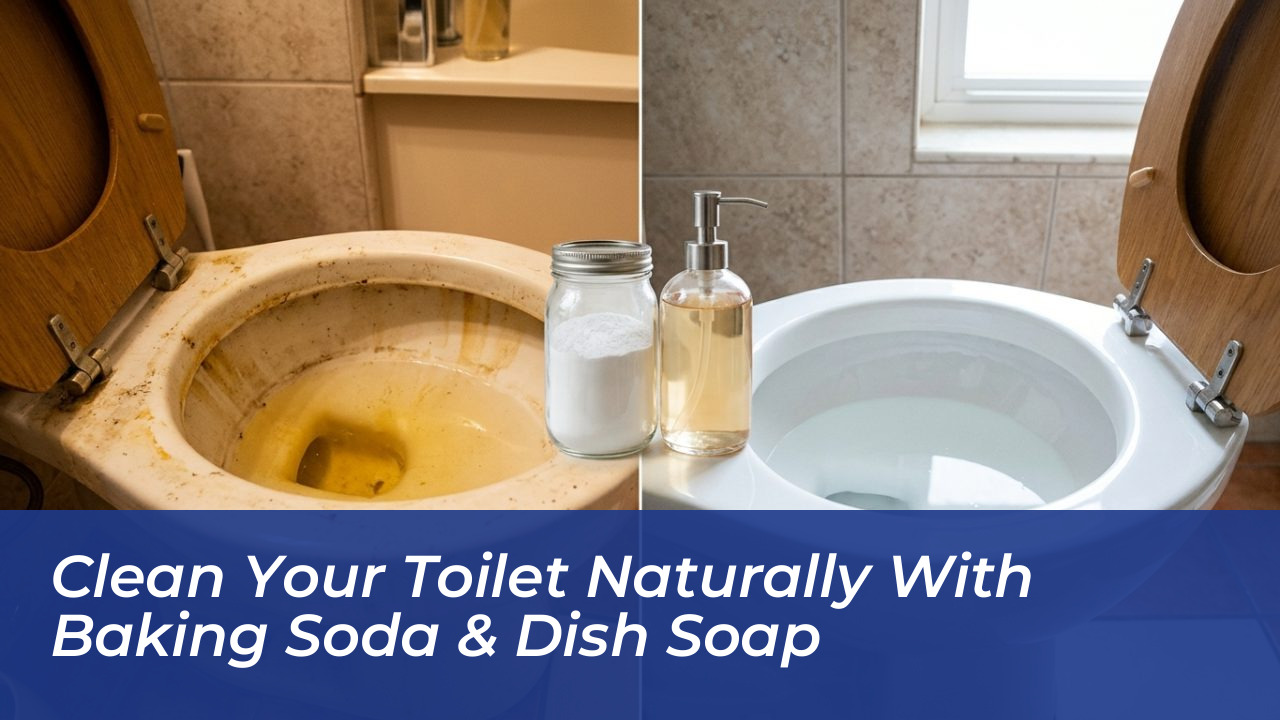

When tackling bathroom chores, heavy commercial chemicals often dominate store aisles, promising quick results through aggressive formulas. Many homeowners are turning to a simpler, low-cost alternative that relies on pantry staples rather than harsh fumes. Sprinkling baking soda directly into your toilet bowl alongside a few drops of dish soap offers an effective way to remove surface residue while protecting your indoor air quality and plumbing.
This straightforward, two-part approach is featured in safer household cleaning guidance from public health and environmental agencies, including the King County Hazardous Waste Program in Washington State. By substituting everyday items for aggressive store-bought concentrates, you can handle regular maintenance without subjecting your home to abrasive chemical odors.
The Chemistry Behind the Scrub: Why Baking Soda and Soap Work
The effectiveness of this method relies on the complementary properties of two common ingredients. Baking soda (sodium bicarbonate) functions as a mild abrasive, actively scrubbing away surface buildup without scratching delicate porcelain or ceramic glazes.
When paired with liquid dish soap, the cleaning dynamic shifts. The surfactants in dish soap bind to greasy residues and loose particulate matter, lifting them away from the bowl’s walls so they can be brushed away easily. Combining a mild abrasive with grease-cutting surfactants helps dislodge stubborn residue without risk to ceramic finishes. Together, they create an inexpensive cleaning paste directly inside the bowl, eliminating the need to prepare pre-mixed solutions in separate containers.
Step-by-Step: How to Clean a Toilet with Baking Soda and Dish Soap
Implementing this routine takes less than two minutes of physical effort. Because you apply the ingredients directly to the bowl, cleanup requires zero secondary wiping or messy sponge handling. Follow these steps for a clean finish:
- Dust the bowl: Sprinkle an even coat of baking soda across the damp interior bowl, targeting visible grime lines.
- Add soap: Squeeze two to three drops of regular liquid dish soap directly onto the dusted porcelain.
- Scrub the surface: Use a standard toilet brush to work the mixture into a gentle scouring lather, focusing on edges where water deposits collect.
- Flush to rinse: Flush the toilet to wash away all loosened particles and soap suds completely.
While this technique handles day-to-day debris, severe mineral scale or deeply embedded hard water rings may still require specialized acidic descalers formulated for heavy limescale removal.
Myth vs. Reality: Does Sodium Bicarbonate Eliminate Odors?
Many consumers assume baking soda neutralizes any bathroom smell on contact. The reality is more nuanced: while it helps control routine odors tied directly to surface dirt and light organic waste, it is not an all-purpose deodorizer for underlying structural problems.
- Light surface grime & mild odor: Baking soda and dish soap scrub.
- Persistent sewer smells: Inspect drain seals and plumbing vent stacks.
- Heavy mineral deposits & scale: Targeted commercial limescale remover.
- Bacterial sanitization: EPA-registered disinfectant product.
Cleaning vs. Disinfection
A sparkling white porcelain surface does not automatically mean a sanitized environment. Cleaning removes visible debris, while true disinfection destroys microscopic pathogens that pose health risks. If someone in your home has been ill, relying solely on mild soap and baking soda leaves viruses or bacteria intact. In those scenarios, pairing regular maintenance with proper room ventilation and targeted disinfectant products remains essential.
Essential Safety Warnings for Mixing Household Cleaners
Just because ingredients are common pantry items does not mean every combination under your sink is safe. Mixing random cleaning agents is a frequent cause of accidental chemical exposure at home.
Never mix chlorine bleach with ammonia or acidic products like vinegar or commercial descalers. Combining these substances triggers a chemical reaction that releases toxic chloramine or chlorine gas, which can cause severe respiratory damage within seconds. Always inspect product labels carefully before using multiple cleaning aids in the same room. By sticking to straightforward, proven combinations like baking soda and gentle dish liquid, you maintain a spotless bathroom while protecting your family from unnecessary hazards.