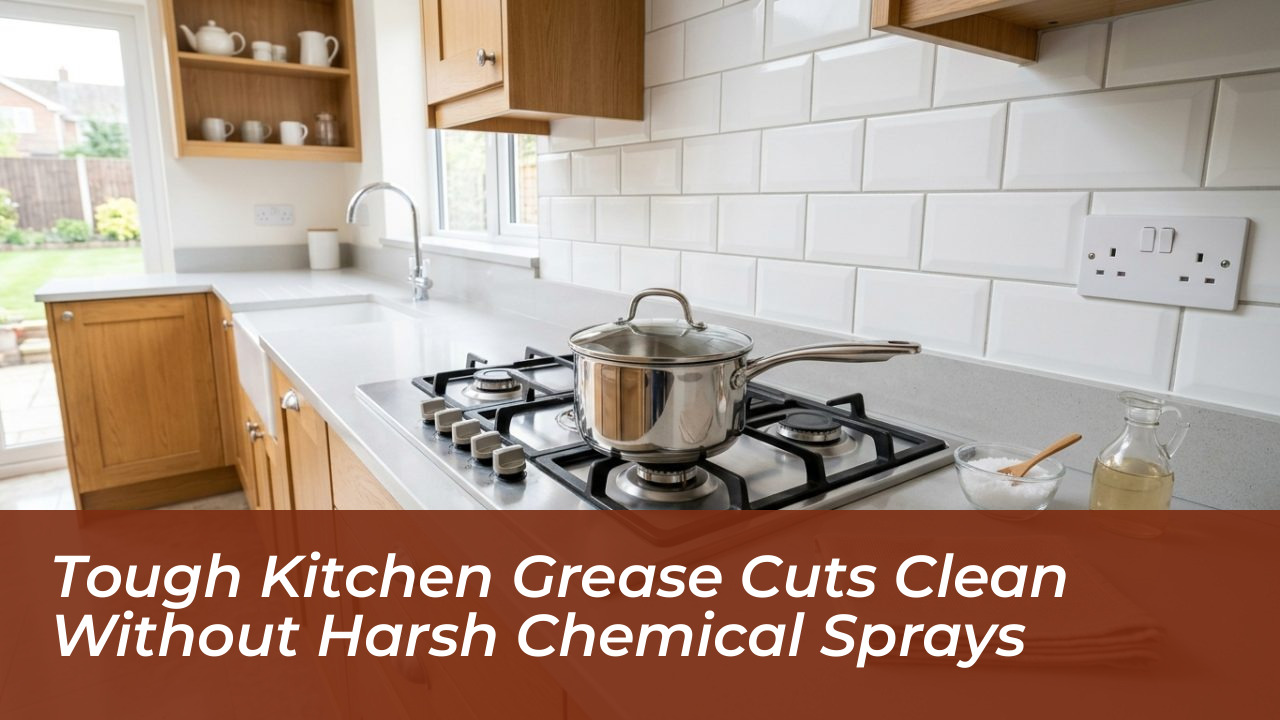

Stuck-on grease on stovetops and cookware lifts away quickly without costly degreasing chemicals by combining two everyday staples: undiluted white vinegar and common table salt. Environmental management and waste reduction programs, including Oregon Metro, highlight this simple pantry pairing as an effective surface cleaner capable of breaking down stubborn lipid layers across kitchen workstations. Rather than relying on industrial solvents, this traditional approach uses basic household chemistry to tackle heavy buildup safely and affordably.
The Chemical Mechanics Behind the Degreasing Action
Store-bought chemical cleaners often rely on aggressive industrial surfactants and solvents to dissolve baked-on oils. In contrast, a homemade vinegar and salt cleaner relies on basic household chemistry to achieve the same result at a fraction of the cost. Commercial distilled white vinegar contains roughly a 5% concentration of acetic , which actively penetrates and loosens fatty chains bonded to metal surfaces.
When you stir in standard table salt, the dissolved sodium chloride ions slightly enhance the acidic action while the undissolved crystalline granules provide gentle, controlled physical abrasion that lifts burnt-on residue without gouging durable cookware. The natural degreasing reaction between acetic and salt breaks down persistent grime on kitchen surfaces efficiently.
Common Misconceptions: Why Adding Water Weakens the Result
A frequent mistake with homemade cleaning recipes is diluting the mixture with tap water in an attempt to make it stretch further. Doing so lowers the acidity of the vinegar below the threshold required to dissolve dense grease layers, turning an effective degreaser into a weak rinse that leaves behind a sticky film. Diluting vinegar with water weakens the concentration significantly, reducing its ability to cut through hardened grease. For heavy buildup, keeping the solution full-strength is essential.
How to Apply the Vinegar and Salt Method Step by Step
Putting this traditional household method into practice requires minimal setup and only a few minutes of contact time. Follow these steps to ensure optimal results without damaging your kitchen equipment:
- Mix without dilution: Pour pure distilled white vinegar into a small container and stir in coarse or fine table salt until you form a loose, gritty paste. Keep water out of the bowl to preserve full acidic potency.
- Run a spot test: Apply a small dab to a hidden or incons**cuous corner of the fixture or appliance to ensure the mixture will not alter decorative coatings or finishes.
- Scrub gently: Dip a soft microfiber cloth or a non-scratch sponge into the mixture and rub the greasy surface in small, circular motions. Let the salt crystals do the scouring without pressing too hard.
- Rinse and dry thoroughly: Wipe away all remaining paste using a fresh cloth dampened with clean water. Dry the surface completely with a clean dish towel to prevent moisture marks or premature surface oxidation.
Surface Safety: What to Clean and What to Avoid
While this natural cleaner works wonders on heavily used kitchen gear, its acidic nature means it is not universally safe for all household finishes. Knowing where to use the paste prevents accidental etching or discoloration.
Safe Surfaces
- Stainless steel sinks, faucets, and countertops
- Exterior bottoms of scorched pots and pans
- Synthetic prep surfaces and cutting boards
Surfaces to Strictly Avoid
- Natural marble and limestone surfaces
- Unsealed granite countertops
- Aluminum or delicate decorative appliance housings
- Surfaces treated with bleach or commercial cleaners
Never combine vinegar with bleach or chlorine-based cleaners under any circumstances. Mixing acids with bleach produces hazardous chlorine gas emissions that cause severe respiratory irritation.
Porous stone counters like polished marble, limestone, and unsealed granite will etch or dull permanently when exposed to acetic . When working around these materials, stick to pH-neutral soaps and save the vinegar-salt remedy strictly for metal sinks, durable pans, and synthetic prep surfaces.
Simple kitchen staples can tackle stubborn household grime just as effectively as specialty sprays when you understand how their properties work together. Always perform a quick spot check before treating wide metal or painted surfaces to protect your finishes. Have you tested this traditional pantry method on your own cookware? Share your favorite natural cleaning routines and tips in the comments below!