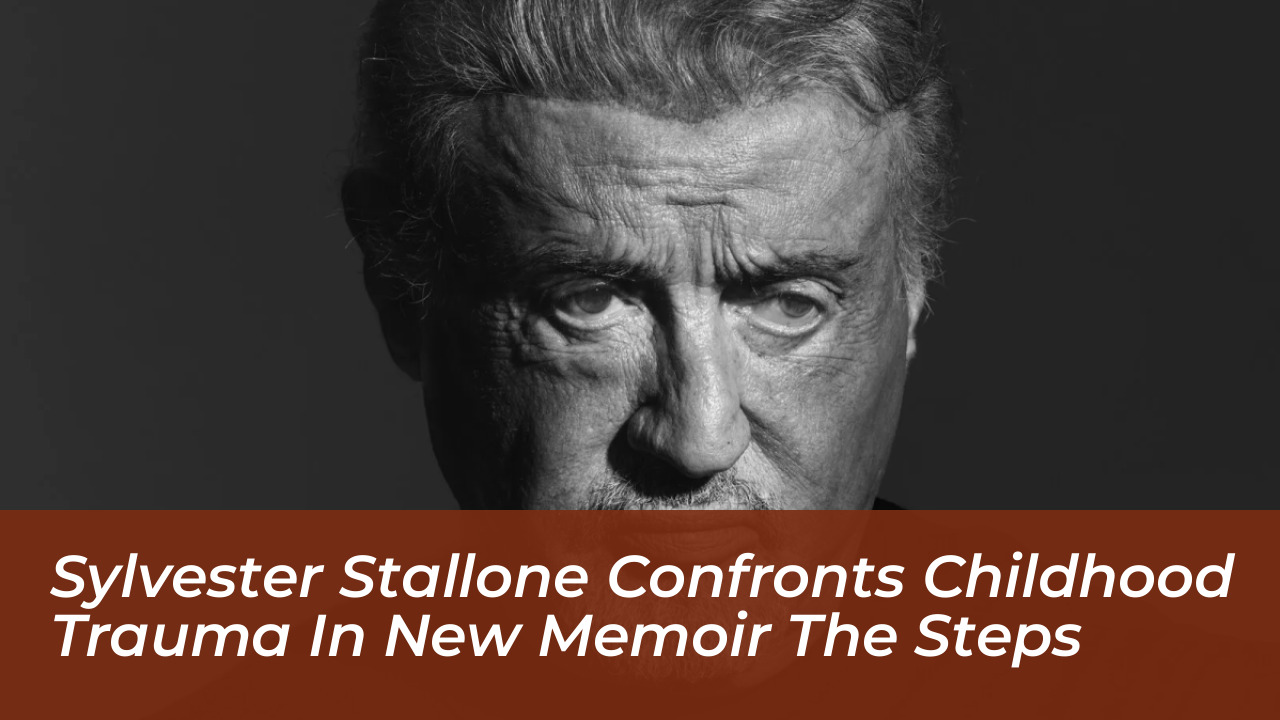
Sylvester Stallone has spent five decades defining modern cinematic masculinity through immortal characters like Rocky Balboa and John Rambo. Behind the sculpted physique, the signature raspy voice, and billions of dollars at the global box office lies a foundation forged in severe childhood trauma. In his raw autobiography, The Steps, published by William Morrow, the Hollywood icon confronts the painful memories, neglectful upbringing, and professional rejections that shaped his relentless drive for stardom. Writing this memoir required a deep psychological excavation, forcing Stallone to revisit old wounds that he spent decades trying to outrun. The book details how a childhood marked by abandonment directly fueled the creation of cinema’s most famous underdog.
- From Hell’s Kitchen to Homelessness: The Turbulent Early Years
- A Turbulent Start in Manhattan
- The Genesis of Rocky and the Universal Human Fight
- Walking the Deserted Streets at Three in the Morning
- Racing, Fighting, and Artistic Integrity
- Unique Analytical Perspectives Explored in The Steps
- The Hidden Costs of Stardom and Family Regrets
- The Chasm Between Screen and Reality
- Reflections on Sage Stallone and Loss
- Navigating Hollywood’s Cruel Erasure and Late-Career Resurgence
- The Wilderness Years of Ageism
- Cornering Producers and Finding New Life
- Conclusion: The Enduring Legacy of Survival
- Frequently Asked Questions
- What inspired Sylvester Stallone to write The Steps?
- Does Stallone address his relationship with his late son Sage in the book?
- How does The Steps differ from standard celebrity memoirs?
From Hell’s Kitchen to Homelessness: The Turbulent Early Years
A Turbulent Start in Manhattan
Born in Hell’s Kitchen, Manhattan, Stallone experienced a turbulent start to life defined by emotional and physical neglect from his parents. They sent him away to live with foster care providers and boarding facilities starting from the age of two. In The Steps, Stallone reveals the shocking psychological toll of this upbringing by quoting a devastating remark from his mother. She told him that any physical defect would have left him exposed on a windowsill to catch pneumonia. This early abandonment created a hyperactive, deeply anxious child who struggled to find a foothold in society.
When he eventually attempted to break into acting as a young adult, Hollywood slammed doors in his face. Casting directors routinely rejected him because of his slurred speech and facial paralysis, the direct result of a botched obstetric forceps delivery that severed a facial nerve. Stranded and homeless in New York City, Stallone slept rough at the Port Authority Bus Terminal. These years of desperation did not break his spirit. Instead, they forced him to pivot toward writing because the industry refused to cast him as a traditional leading man.
The Genesis of Rocky and the Universal Human Fight
Walking the Deserted Streets at Three in the Morning
One of the most compelling sections of the memoir details the agonizing winter nights when Stallone struggled to conceive a breakthrough script. Broke and waiting for a viable idea, he wandered the deserted streets of his neighborhood at three in the morning, wrestling with feelings of professional and personal failure. He realized that his deep frustration stemmed from a simple lack of opportunity. Millions of people live with abandoned dreams simply because no one ever handed them a chance to prove their worth.
This realization shifted his writing philosophy entirely. He decided to stop writing about his specific grievances and focus on the universal human condition instead. Stallone recognized two fundamental constants in human nature: racing against time and fighting everyday barriers. Life functions as a nonstop battle against societal hurdles, personal shortcomings, and economic hardship. This philosophy gave birth to Rocky Balboa, a washed-up debt collector with a good heart and a dream of going the distance.
Racing, Fighting, and Artistic Integrity
When United Artists offered him $350,000 for the screenplay on the strict condition that he hand the role over to a bankable star, Stallone refused. He gambled everything on his own artistic vision. The film was shot on a modest budget of $1 million in just 25 days, went on to gross over $225 million worldwide, and secured the Academy Award for Best Picture. Stallone proved that holding out for creative control is worth the financial gamble.
Unique Analytical Perspectives Explored in The Steps
While mainstream coverage focuses heavily on the nostalgic creation of Rocky, Stallone offers deeper psychological insights that differentiate his book from standard celebrity autobiographies. The memoir explores the neurobiology of resilience, detailing how childhood hyperactivity and neurological trauma from his birth injury forced his brain to adapt. He learned to channel excess energy into hyper-focused creative writing. , the book breaks down the exact financial risks Stallone took, detailing how holding out for artistic integrity nearly left him destitute multiple times.
Another critical theme is the cycle of generational trauma. Stallone explicitly maps out how abusive parenting styles replicate themselves unconsciously in high-achieving adults. This serves as a stark cautionary tale for modern workaholics who sacrifice their families on the altar of career success. By laying bare these psychological mechanics, Stallone transforms his life story into a broader psychological study on survival.
The Hidden Costs of Stardom and Family Regrets
The Chasm Between Screen and Reality
While The Steps celebrates monumental professional achievements, including three multi-billion-dollar film franchises, Stallone refuses to sanitize his personal life. The relentless pursuit of cinematic success exacted a heavy toll on his relationships, most notably with his late son, Sage Stallone. In Rocky V, father and son shared the screen, with Sage’s character bitterly complaining that his father never spent time with him. Stallone confesses in his memoir that the dialogue was entirely autobiographical.
His obsessive work ethic and emotional unavailability, which he inherited in part from his own cold upbringing, created a deep chasm between them. Sage died of heart disease in 2012 at the age of 36. Stallone expresses profound regret over his absence during Sage’s formative years. He acknowledges that his emotional reticence was a direct holdover from the way he was raised, admitting that no amount of box office success can replace lost familial bonds.
Reflections on Sage Stallone and Loss
Revisiting the loss of his son required an unprecedented level of emotional vulnerability from an actor known for playing stoic action heroes. Stallone notes that the toughest fights happen away from the cameras and outside the boxing ring. Acknowledging these failures provides a measure of redemption, even if the past cannot be rewritten.

Navigating Hollywood’s Cruel Erasure and Late-Career Resurgence
The Wilderness Years of Ageism
Stallone’s career was never a linear ascent. The Steps chronicles the brutal reality of Hollywood ageism and industry blacklisting. Following his critically acclaimed performance in 1997’s Cop Land, major studios and talent agencies abandoned him. Fired by his agency and personal managers, Stallone found himself effectively unemployable for nearly a decade. Studio executives informed him that his genre of action cinema belonged to the past. Even his wife, Jennifer Flavin, questioned the wisdom of resurrecting an aging boxer in 2006’s Rocky Balboa.
Cornering Producers and Finding New Life
Stallone ignored the doubters completely. He cornered producer Joe Roth at a New Year’s Eve dinner in Mexico in 2004, handed him a new script, and watched as Roth’s wife wept while reading it. That script revived his career, proving that perseverance matters more than industry approval. This late-career resurgence eventually paved the way for television success with Paramount+’s Tulsa King and prestigious honors like the Kennedy Center Honors.
Conclusion: The Enduring Legacy of Survival
The Steps stands as a definitive statement on survival and resilience. Sylvester Stallone proves that life remains a constant fight from the first breath to the final curtain. By baring his deepest emotional scars, he demonstrates that true strength comes from acknowledging weakness and stepping into the ring anyway. His memoir is not just a Hollywood retrospective, but a masterclass in overcoming insurmountable odds.
Frequently Asked Questions
What inspired Sylvester Stallone to write The Steps?
Stallone wrote the memoir to confront deeply buried childhood trauma and trace how early rejection fueled his cinematic career.
Does Stallone address his relationship with his late son Sage in the book?
Yes, he offers a brutally honest reflection on his past absence and the emotional toll of his obsessive work ethic.
How does The Steps differ from standard celebrity memoirs?
The book blends raw personal confession with deep psychological analysis regarding resilience and generational trauma.