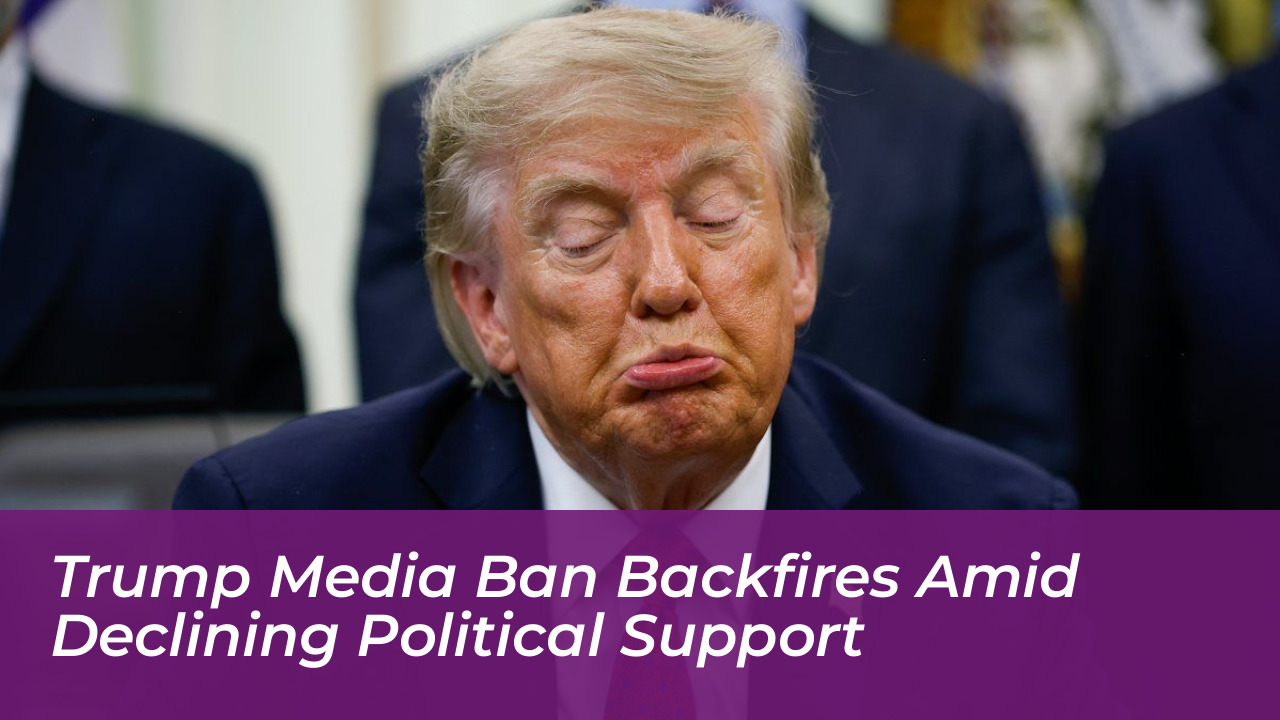
The executive branch attempted to control the narrative by locking out major news organizations, but the strategy immediately triggered a coordinated press blackout. The intersection of media bans, declining political support, and economic pressures exposes deep systemic vulnerabilities within modern governance. While executive information control aims to project strength and suppress dissent, isolating the press ultimately backfires by alienating moderates, provoking judicial pushback, and failing to mask underlying economic anxieties.
- The Anatomy of Exclusion: White House Press Corps Stalemate Systemic Hostilities and Press Room Lockouts
- Coordinated Press Disruption
- The Echoes of Declining Political Support
- Polarization and Evolving Electorates
- The Trap of Narrative Control
- Information Control and Democratic Backsliding
- Shifting Strategies of Press Management
- Economic Anxieties and the Affordability Paradox
- The Kitchen-Table Reality
- Masking Structural Distress
- The Legal Quagmire and Judicial Checkpoints
- Testing the Outer Boundaries of Executive Power
- The Siege Mentality
- Conclusion
- Frequently Asked Questions
- Why did the administration ban major news outlets?
- How did the press respond to the White House restrictions?
- What role does the judiciary play in this conflict?
The Anatomy of Exclusion: White House Press Corps Stalemate Systemic Hostilities and Press Room Lockouts
The relationship between the executive branch and the Fourth Estate has weathered decades of tension, but the modern era of governance has witnessed an unprecedented escalation in structural hostilities. When the administration decided to formally bar major news organizations from White House grounds, it triggered an immediate operational crisis within presidential reporting. Outlets such as CNN, Politico, and MS NOW found themselves locked out of daily briefings and physical press spaces, creating a chilling effect across the entire media apparatus.
Rather than quietly absorbing the exclusion, the broader White House press pool executed a coordinated disruption. Journalists halted rolling coverage across networks, plunging live broadcasts into an eerie silence during major diplomatic arrivals. This escalation represents a massive leap from the verbal attacks of the first term to direct physical exclusion in the current term, fundamentally altering how journalists access the seat of executive power.
Coordinated Press Disruption
The most striking example of this friction occurred during the high-profile state visit of Chinese President Xi Jinping. The event proceeded with zero live televised coverage from the South Lawn, demonstrating the collateral damage of executive isolation tactics on presidential visibility and public spectacles. President Trump reacted angrily to the blackout, accusing news organizations of orchestrating a malicious boycott designed to deny his administration credit for diplomatic spectacles.
In a series of public statements, the administration lamented that major networks refused to broadcast events deemed magnificent and made for television. This clash highlights a fundamental paradox of modern populism. Leaders demand total media saturation while simultaneously punishing the media institutions required to broadcast their image to the masses, proving that isolation tactics ultimately hurt executive visibility.
The Echoes of Declining Political Support
Polarization and Evolving Electorates
Behind the friction of credential revocations lies a shifting political landscape. There is a distinct gap between sweeping base enthusiasm and aggregate polling realities. Declining political support is rarely a sudden collapse. Instead, it erodes gradually through legislative bottlenecks, judicial rejections, and growing public fatigue with perpetual institutional combat. Political scientists and polling aggregators note that despite high-profile policy enactments, public approval remains starkly polarized.
The strategic exclusion of critical media outlets functions not as a position of strength, but as a defensive mechanism. When executive actions face an uphill battle in public opinion polls, restricting access to dissenting journalists becomes a tool for narrative control. However, this strategy frequently backfires, alienating moderate constituencies who view press censorship as a dangerous overreach of executive authority.
The Trap of Narrative Control
Alienating moderate voters is only part of the political fallout. Suppressing free reporting invites intense scrutiny from legal watchdogs and independent journalism advocates who view these actions as a direct assault on democratic norms. The administration’s reliance on executive overreach to bypass legislative roadblocks has triggered a historic wave of litigation.
With hundreds of lawsuits challenging everything from federal agency restructuring to emergency tariff implementations, the judiciary has emerged as a formidable check on executive authority. Judges appointed across political spectrums have repeatedly struck down administration directives, citing statutory and constitutional overreaches. This judicial friction compounds political vulnerabilities, transforming routine policy rollouts into protracted legal battles.
Information Control and Democratic Backsliding
Shifting Strategies of Press Management
Information control is not a novel concept in American politics, but the systematic targeting of accredited news organizations represents a stark departure from post-Watergate norms. A comparison of press management strategies across presidential terms reveals a steady progression from social media declarations to direct regulatory threats and weaponized credentialing.
The role of the Federal Communications Commission in investigating outlets accused of unfavorable coverage has added tangible weight to executive threats, transforming a political disagreement into a systemic constitutional crisis. Media executives report an alarming rise in self-censorship as newsrooms grapple with the economic and legal threats posed by federal regulatory bodies.
| Administration Era | Primary Press Management Strategy | Judicial and Institutional Pushback |
|---|---|---|
| First Term (2017–2021) | Fake News rhetoric, social media declarations, sporadic press briefing reductions. | Federal courts routinely restored revoked press passes and blocked unlawful executive orders. |
| Second Term (2025–Present) | Direct media bans, FCC investigations into bias, weaponized credentialing. | Over 550 lawsuits, numerous injunctions by both Republican and Democratic judicial appointees. |
| Comparative Historical Norms | Routine briefings, strategic leaks, protected White House Correspondents’ Association access. | Respect for institutional norms and separation of powers boundaries. |
Economic Anxieties and the Affordability Paradox
The Kitchen-Table Reality
While Washington remains consumed by media blackouts and legal battles, the average American voter experiences a starkly different set of daily realities. The persistence of the United States affordability crisis remains a central driver of political volatility. Despite official claims of an economic Golden Age fueled by sweeping deregulation and tax reforms, everyday consumers continue to feel the pinch of high inflation and increased living costs.
The passage of major fiscal measures, such as the One Big Beautiful Bill Act, deepened these economic anxieties by making temporary tax cuts permanent while cutting funding for social safety nets like Medicaid and SNAP. Economists project that while high-income brackets and major corporations reap substantial windfalls, lower-income households face rising out-of-pocket costs and reduced assistance.
Masking Structural Distress
When economic policy heavily favors corporate entities and high earners while dismissing inflation as a political hoax, public trust in executive leadership frays. Voters experiencing financial strain are far less swayed by grand diplomatic spectacles or televised arrivals of foreign leaders. This disconnect explains why controlling the media narrative becomes an absolute necessity for an administration attempting to mask structural economic distress behind theatrical triumphs.
The Legal Quagmire and Judicial Checkpoints
Testing the Outer Boundaries of Executive Power
The second term of the current administration has been characterized by an unprecedented volume of legal friction. The decision to test the outer boundaries of the unitary executive theory has brought the White House into direct conflict with career civil servants, independent agencies, and the judicial branch. The mass termination of federal workers, the dismantling of agencies through structural overhauls, and the freezing of scientific research grants have all triggered emergency injunctions.
Legal scholars point out that defying judicial rulings creates a constitutional crisis of historic proportions. With over 550 active lawsuits challenging federal directives, the administration faces continuous roadblocks. Judges across the political spectrum have stepped in to halt regulatory rollbacks, protecting institutional checks and balances.
The Siege Mentality
To cope with mounting legal setbacks, the administration reframes judicial defeats as partisan activism to feed the populist narrative of an embattled leader fighting against a corrupt establishment. This siege mentality successfully solidifies base loyalty among dedicated supporters. However, it simultaneously erodes institutional guardrails and legal integrity over the long term.
Conclusion
The strategy of implementing media bans ultimately backfired by uniting the press corps and highlighting severe administrative vulnerabilities. Instead of successfully projecting unyielding strength, the isolation of journalists drew intense negative scrutiny and galvanized independent media networks. Compounded by persistent economic anxiety, declining political support, and historic legal pushback, the administration’s information control tactics revealed deep cracks in its governance model.
Ultimately, this standoff demonstrates the strict limits of executive information control in a democratic society. When leaders attempt to rewrite reality by locking out the press and ignoring kitchen-table struggles, the public and the judicial branch inevitably push back, proving that transparency and institutional norms remain resilient against overreach.
Frequently Asked Questions
Why did the administration ban major news outlets?
The executive branch restricted media access to control the public narrative and suppress critical coverage regarding policy disputes.
How did the press respond to the White House restrictions?
Journalists united to execute coordinated blackouts and halted live television coverage of major political events in protest.
What role does the judiciary play in this conflict?
Federal courts have issued hundreds of injunctions to block executive overreach and protect constitutional boundaries.