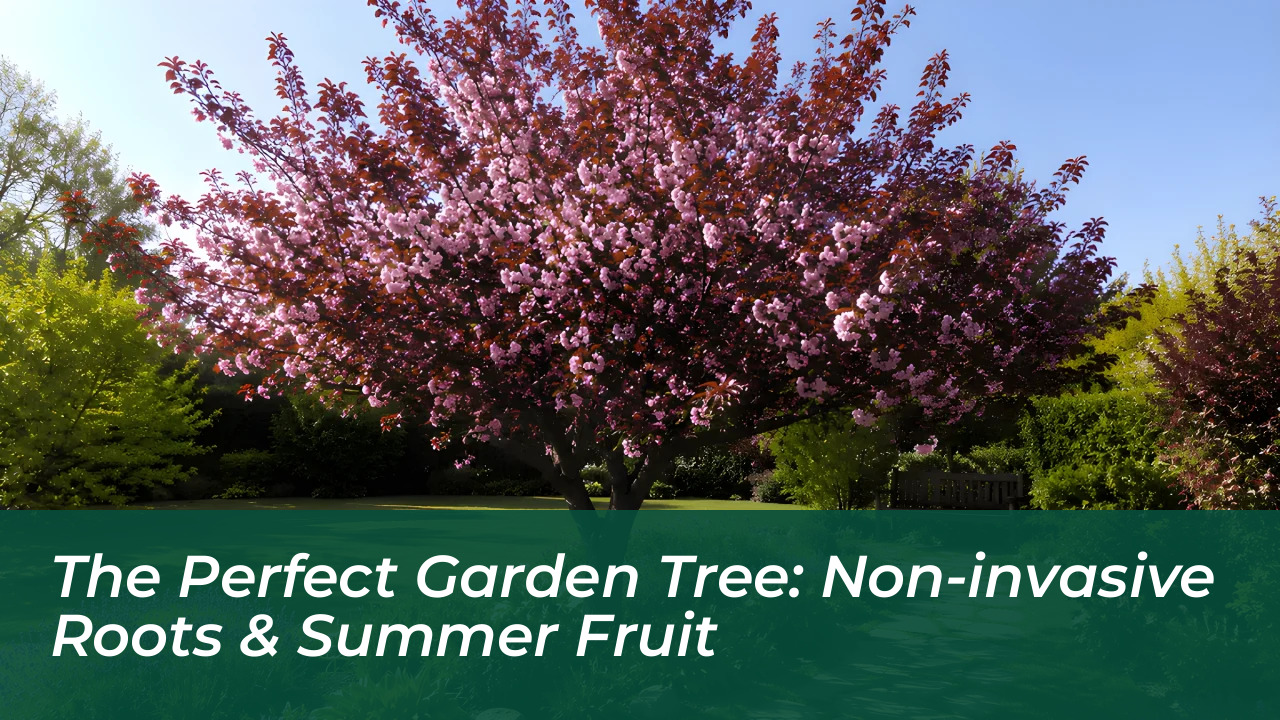

Finding the ultimate tree for a residential landscape can feel like an impossible balancing act. Homeowners often struggle to find a specimen that enhances curb appeal without threatening structural foundations, sidewalks, or buried utility lines. Enter the plum tree (Prunus salicina), which has established itself as one of the most sought-after fruit trees for home patios and gardens. Thanks to its manageable size and a root system that does not lift sidewalks or pavers, it solves the classic dilemma of combining edible gardening with hardscape safety.
Why the Plum Tree Stands Out for Modern Yards
Unlike notoriously aggressive trees such as figs, rubber trees, or various maples whose shallow roots frequently heave concrete, the plum tree features a root system that is barely invasive. However, specialists still recommend maintaining a safe precautionary distance of 6 to 10 feet from walls, pipes, and paved surfaces to ensure absolute safety for household infrastructure.
In residential settings, the tree usually reaches between 10 and 16 feet in height. This moderate stature can be reduced even further through annual pruning, preventing the canopy from casting excessive shade over adjacent vegetable gardens or delicate flower beds.
Seasonal Beauty and Harvest
Beyond its structural benefits, the Japanese plum offers incredible seasonal interest. The species displays a dense, eye-catching spring bloom covered in delicate flowers before yielding its abundant harvest during the warm summer months. Homeowners enjoy both the ornamental display and fresh, homegrown fruit without devoting hours to intensive orchard management.
Climate Requirements: Chill Hours and Pollination
A plum tree’s productive success depends heavily on regional winter climate conditions rather than intensive post-planting upkeep. Because it is a temperate fruit tree, it requires a specific accumulation of chill hours-temperatures below 45°F-to successfully break its dormancy period and bloom properly.
- Warm Climate Adaptation: Gardeners in milder zones must purchase specific low-chill varieties selected from certified nurseries.
- Pollination Dynamics: Many Japanese plum varieties cannot self-pollinate. Planting an isolated tree will result in a heavy spring bloom followed by little to no fruit. To secure a harvest, plant two compatible varieties or verify self-fertility with your nursery provider.
Low-Maintenance Planting and Care Guide
Establishing a thriving plum tree requires attention to a few foundational care steps during planting and early growth:
- Timing & Location: Plant in late winter before budding occurs. Choose an area that receives at least six hours of direct sunlight daily with well-draining soil.
- Pruning Practices: Focus on structural pruning during the first few years. Follow up with light maintenance pruning immediately after the summer harvest to remove dead, damaged, or crossing branches.
- Watering Strategy: While mature plants tolerate brief dry spells and seasonal droughts, consistent watering is essential during fruit development. Neglecting hydration at this stage frequently results in undersized fruit.
- Pest and Disease Management: Guard against fruit fly attacks using traps or protective fruit bagging. Routinely inspect foliage for scorched leaf edges, which serve as the primary symptom of bacterial leaf scorch.
Distinguishing Plums from Loquats
Gardeners must take care not to confuse the true plum tree with the loquat (Eriobotrya japonica), which is popularly known in various regions as the “yellow plum.” While both offer wonderful additions to a landscape, loquats feature entirely different botanical dynamics, including distinct heat tolerances and winter-blooming schedules.
Frequently Asked Questions
Will a plum tree really avoid lifting my garden sidewalks?
Yes. Compared to heavy shade trees like willows or maples, the plum tree has a non-aggressive, less expansive root system that safely coexists with pavers and walkways when planted at the recommended distance of 6 to 10 feet away.
How tall do plum trees grow in home gardens?
In residential spaces, they typically reach between 10 and 16 feet tall. This height is easily managed and can be kept even smaller with routine seasonal pruning.
Do I need two trees to get fruit?
Many varieties of Japanese plum are not self-fertile. To guarantee fruit production, it is best to plant two compatible cross-pollinating varieties or purchase a verified self-fertile cultivar.
When is the best time to plant a plum tree?
The optimal time for planting is late winter, just before the tree breaks dormancy and begins its spring budding cycle.
How drought-tolerant are mature plum trees?
Once established, mature plum trees can tolerate brief periods of drought. However, consistent moisture is vital during the spring and summer while fruit is actively developing.