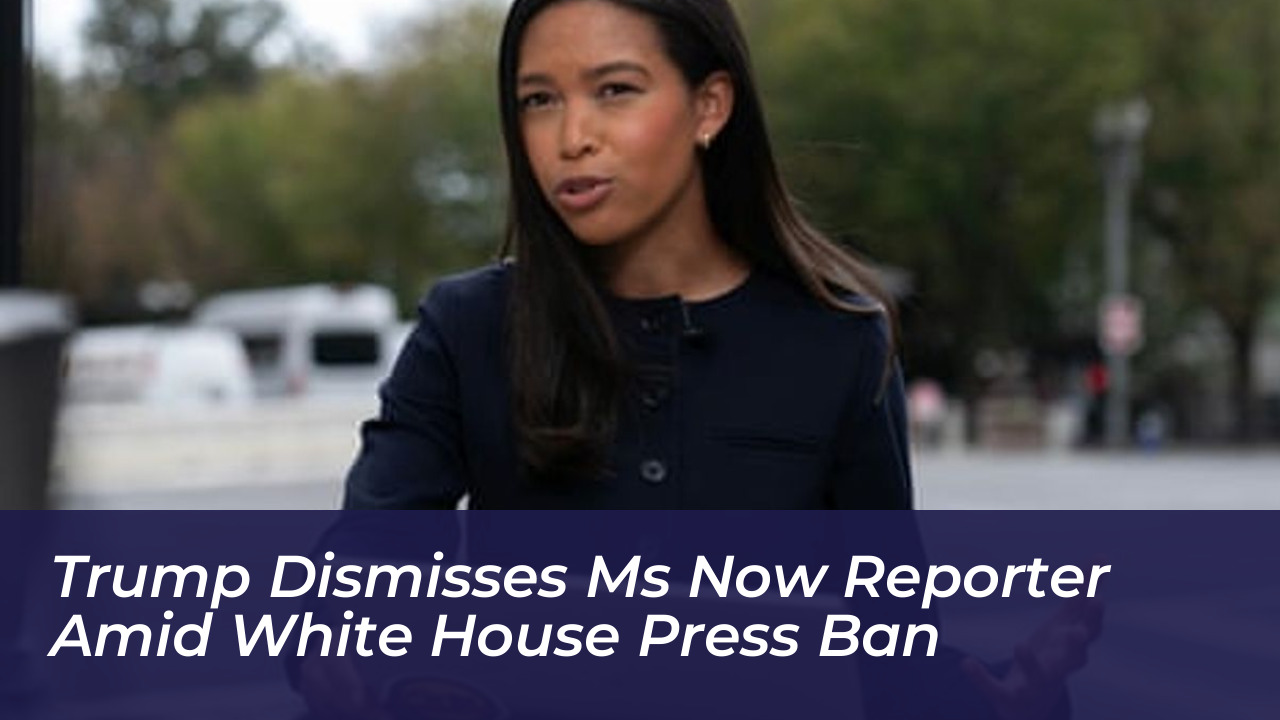
President Donald Trump dismissed questions from MS Now White House correspondent Akayla Gardner outside the Executive Mansion, escalating an ongoing battle over press freedom and administrative control. This confrontation on September 26, 2026, highlights growing friction between the executive branch and major news organizations regarding presidential travel coverage and institutional access.
- The White House Confrontation Outside the Executive Mansion
- Direct Exchange Between Trump and Akayla Gardner
- President Trump Responds to Reporter Questions
- Escalating Tensions Over Presidential Travel Access
- Revocation of White House Press Credentials
- Bypassing Judicial Directives at Official Events
- Shift in White House Press Pool Control
- Breaking Decades of Correspondents Association Protocol
- Replacing CNN with Pro-Administration Networks
- Broader Implications for Media Freedom and Transparency
- Media Analysts and Legal Perspectives
- Ongoing Legal Challenges in Federal Courts
- Impact of Restricted Access on Public Trust
- Frequently Asked Questions
- Why did President Trump tell Akayla Gardner to be quiet?
- What changes were made to the White House press pool?
- Did a court intervene in the press ban?
- How does replacing traditional networks affect news distribution?
The incident reflects a broader strategy by the administration to overhaul decades of established protocol for White House reporting. By revoking credentials and replacing traditional networks with pro-administration outlets, officials are fundamentally altering how the public receives independent information about executive actions.
The White House Confrontation Outside the Executive Mansion
Direct Exchange Between Trump and Akayla Gardner
The morning departure on Saturday set the stage for a tense encounter as President Trump prepared to board Marine One for a college football game in Knoxville, Tennessee. As the president walked toward the helicopter, reporters gathered outside the White House shouted questions regarding the latest administrative directives affecting media access.
Akayla Gardner seized the moment to question the president directly about the motives behind recent press restrictions. She asked whether the administration intended to permit only supportive news outlets into the pool. The question focused on growing concerns that the executive branch is actively weeding out critical journalism in favor of favorable coverage.
President Trump Responds to Reporter Questions
President Trump immediately dismissed the MS Now inquiry, demanding silence while defending his administration against what he consistently characterizes as fake news reporting. Rather than addressing the substance of the press pool restrictions, he reiterated his grievances regarding unfavorable media coverage from mainstream outlets.
This verbal clash underscores a persistent pattern of hostility between the current administration and traditional news organizations. By labeling critical reporting as illegitimate, officials justify bypassing independent watchdogs and reshaping the information ecosystem surrounding the presidency.
Escalating Tensions Over Presidential Travel Access
Revocation of White House Press Credentials
Administrative decisions targeting MS Now, Politico, and CNN have severely strained relations between the press corps and executive staff. Officials abruptly revoked standard press credentials for these organizations, effectively barring reporters from routine access to government officials and official travel.
Federal court interventions followed swiftly as media lawyers filed emergency motions to challenge the blacklisting. A federal judge issued temporary restraining orders designed to restore basic access for the affected outlets, signaling judicial pushback against executive overreach.
Bypassing Judicial Directives at Official Events
Despite judicial directives, administration aides found creative ways to circumvent court rulings by physically blocking reporters and producers from high-profile events. During a state dinner honoring Chinese President Xi Jinping, accredited journalists from blacklisted organizations found themselves locked out of the coverage area.
This defiance highlights the ongoing struggle between the executive branch and the judiciary over public accountability and transparency. Administrative officials continue to test legal boundaries to enforce their own rules regarding who gets to witness official government business.
Shift in White House Press Pool Control
Breaking Decades of Correspondents Association Protocol
For generations, the White House Correspondents Association managed the daily pool rotations that ensure fair and equitable coverage of the president by a cross-section of media outlets. This system guaranteed that television, print, and radio reporters could document presidential movements without political interference.
During his second term, President Trump broke with this historic precedent by seizing unilateral control over executive branch press access. The administration now decides arbitrarily which networks provide daily pool coverage, effectively ending decades of independent journalistic administration over the press pool.
Replacing CNN with Pro-Administration Networks
The consequences of this administrative takeover became evident during the Knoxville, Tennessee trip swap, where Real America replaced CNN in the rotating travel pool. This right-wing network stepped in to cover the president, but it lacked the technical infrastructure required to share live video feeds with other broadcasters.
Traditional pool arrangements rely on shared technical capabilities so that millions of viewers across different networks can access breaking news footage. When partisan networks replace established broadcasters without proper feed sharing technology, the overall quality and distribution of public information suffer.
Broader Implications for Media Freedom and Transparency
Media Analysts and Legal Perspectives
Media analysts and constitutional scholars argue that these restrictions pose a direct threat to transparency and the public right to know. CNN chief media analyst Brian Stelter noted that the administration intentionally picks fights with journalists who report unpleasant truths, thereby chilling independent oversight.
Constitutional arguments center on First Amendment protections that prevent the government from punishing news organizations based on their editorial viewpoints. Legal experts maintain that government property and official travel must remain accessible to the press corps without viewpoint discrimination.
Ongoing Legal Challenges in Federal Courts
News organizations are currently maintaining multiple lawsuits in federal courts to protect their access and challenge the legality of the administration’s actions. These legal battles will determine whether the executive branch can legally dictate which journalists cover the presidency.
Impact of Restricted Access on Public Trust
Limiting official press pools damages the fundamental democratic mechanism of holding elected leaders publicly accountable. When independent journalists face exclusion, citizens receive a heavily curated narrative rather than verified facts. This shift deepens political polarization and degrades public trust in vital government institutions.
Frequently Asked Questions
Why did President Trump tell Akayla Gardner to be quiet?
President Trump told MS Now correspondent Akayla Gardner to be quiet after she questioned him directly about whether his administration only wants supportive media outlets participating in the White House press pool.
What changes were made to the White House press pool?
The administration seized unilateral control of daily pool assignments from the White House Correspondents Association, removing established networks like CNN from travel rotations and replacing them with alternative outlets lacking live broadcast capabilities.
Did a court intervene in the press ban?
Yes, a federal judge temporarily restored press credentials for blacklisted outlets, though administration aides subsequently bypassed the spirit of the ruling by blocking reporters from covering specific high-profile events.
How does replacing traditional networks affect news distribution?
Alternative pro-administration networks often lack the technical infrastructure to share live video feeds with other broadcasters, which prevents seamless coverage sharing across standard industry channels.