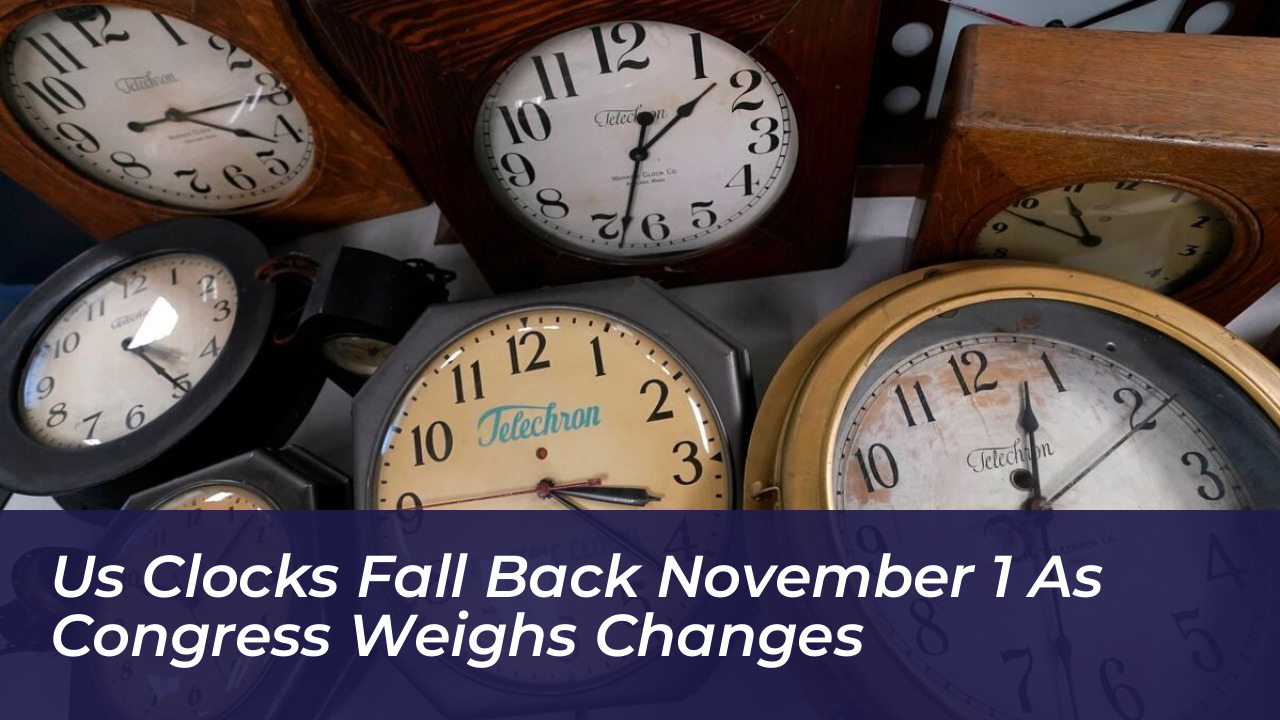


Millions of Americans will turn their clocks back one hour at 2 a.m. on Sunday, November 1, 2026, as daylight saving time officially ends across most of the United States. While the annual tradition restores standard time under current federal law, the impending shift has reignited intense debate in Washington. Congress continues to weigh legislation that would eliminate the twice-yearly clock adjustments altogether, though a legislative solution remains uncertain as lawmakers face a rapidly narrowing window for action.
Under the current schedule, which has been in place since 2007, daylight saving time begins on the second Sunday in March and ends on the first Sunday in November. The November 1 date marks the earliest possible end date under this framework. When the transition occurs, clocks will move backward from 2 a.m. to 1 a.m. local time, gifting people an extra hour of sleep overnight while ushering in earlier sunsets throughout the fall and winter months.
The Status of the Sunshine Protection Act in the Senate
Public frustration with the bi-annual time change has fueled repeated legislative efforts, most notably the Sunshine Protection Act. The bill successfully passed the U.S. House of Representatives by a decisive, bipartisan 308-117 vote on July 14. President Donald Trump has publicly voiced strong support for the measure, urging the Senate to pass it as soon as possible and posting on social media to “FINALLY, GET IT DONE!!”
Despite the momentum in the House and backing from the executive branch, the legislation has encountered significant hurdles in the Senate. Senate Majority Leader John Thune has expressed skepticism about whether there is sufficient support to reach the 60 votes required to advance the bill. With the Senate returning from recess on September 14 and scheduled to break again on October 5 through November 6, lawmakers face severe time constraints. Unless the Senate acts and the bill reaches the president’s desk before November 1, the scheduled fall-back transition will proceed exactly as planned.
Permanent Daylight Saving Time Versus Permanent Standard Time
While the Sunshine Protection Act aims to keep the United States permanently on daylight saving time, the proposal has sharply divided policymakers, economists, and the medical community. Proponents argue that year-round daylight saving time eliminates the disruptive transition weeks, boosts evening tourism and retail activity, and provides extended evening daylight that reduces robbery rates and enhances outdoor recreation.
However, major medical and scientific organizations-including the American Medical Association, the American Academy of Sleep Medicine, the National Sleep Foundation, and the Sleep Research Society-strongly oppose permanent daylight saving time. Instead, these groups endorse permanent standard time.
- Circadian Alignment: Human biological clocks are regulated by morning sunlight, which triggers cortisol surges and properly resets daily rhythms. Standard time keeps solar sunrise earlier and better aligned with natural light cycles.
- Social Jet Lag: Permanent daylight saving time shifts the clock forward relative to solar time, forcing winter sunrises as late as 8 a.m. in certain regions and exacerbating chronic sleep misalignment.
- Health Impacts: Sleep experts link chronic circadian misalignment to increased risks of metabolic disorders, cardiovascular strain, obesity, and cognitive impairment.
- Vulnerable Groups: Adolescents and workers living on the western edges of time zones experience disproportionate challenges, as darker morning commutes raise safety concerns for students and drivers.
Historical Precedent and Public Sentiment
Opponents of permanent daylight saving time frequently point to a cautionary historical precedent. In January 1974, in response to the Arab oil embargo, Congress enacted the Emergency Daylight Saving Time Energy Conservation Act to establish year-round daylight saving time. Although initially popular, public sentiment plummeted by the winter of 1974-1975 as citizens experienced dark, dangerous school mornings and pre-dawn commutes. Bipartisan backlash led Congress to repeal the measure within less than a year.
Despite these health warnings and historical lessons, public polling consistently demonstrates widespread dissatisfaction with the current twice-yearly switching system. Only about 12% of Americans are happy with the status quo. Competing legislative measures, such as the bipartisan Sunshine for Our Kids Act introduced in the House, seek to establish permanent standard time instead, though they face an uphill political battle against the public appeal of long summer evenings.
What You Need to Know for November 1, 2026
Because no federal legislation has successfully altered the schedule, households should prepare for the standard autumn transition. Here is what to expect:
- When to Change Clocks: Turn analog clocks, watches, and vehicle dashboards back one hour before going to sleep on Saturday night, October 31.
- Automated Devices: Smartphones, computers, and smart home appliances will update automatically at 2 a.m. ET on November 1.
- Exceptions: The state of Hawaii and most of Arizona do not observe daylight saving time and will not alter their schedules.
Unless the Senate surprises Washington with rapid, unexpected legislative action before October 5, the United States will turn its clocks back on November 1, preserving the rhythm of seasonal time changes for at least another year.
Frequently Asked Questions About the 2026 Time Change
When do clocks fall back in 2026?
Clocks in most of the United States will fall back one hour at 2 a.m. local time on Sunday, November 1, 2026, marking the official end of daylight saving time for the year.
Will Congress pass the Sunshine Protection Act before November 1?
As of late September, the Senate has not scheduled a vote on the bill. With lawmakers facing a limited legislative calendar before the November deadline, the clock change is expected to proceed as scheduled.
Why do medical experts oppose permanent daylight saving time?
Major sleep medicine organizations argue that permanent daylight saving time causes chronic circadian misalignment-often called social jet lag-by pushing morning sunrise later. They advocate for permanent standard time to protect public health and safety.
Which states are exempt from daylight saving time?
Hawaii and most of Arizona do not observe daylight saving time, meaning residents in those regions do not adjust their clocks in March or November.
What happens if the bill eventually passes in the future?
If Congress eventually passes permanent time legislation and the president signs it, future clock changes would cease. Depending on the exact wording of the final bill, implementation might include a delayed effective date to help transportation, aviation, and software industries adapt.