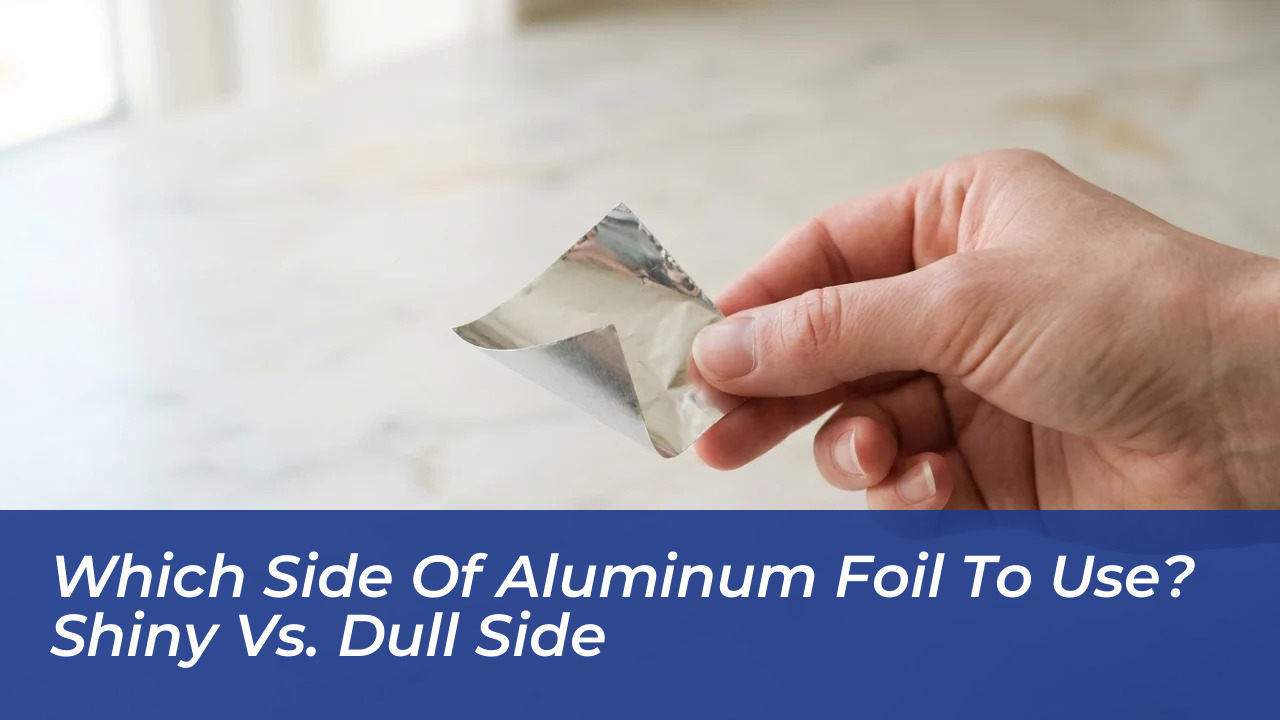

Every home cook has paused at some point over an oven sheet, holding a sheet of aluminum foil and debating a timeless kitchen dilemma: should the shiny side face up or down? Generations of folklore suggest that one side reflects heat while the other traps it, causing widespread confusion when roasting vegetables, freezing casseroles, or wrapping leftovers. Yet, for virtually all everyday kitchen tasks, both sides perform identically, offering the exact same barrier against light, moisture, and air.
The Industrial Reason Behind the Two Different Sides
The visual difference between the shiny side and the dull side has nothing to do with culinary performance or heat absorption. Instead, the contrasting surfaces are simply an inevitable byproduct of the industrial manufacturing process.
Aluminum foil begins as thick metal sheets that pass through heavy steel rollers until they become thin enough for household use. Because pure aluminum becomes exceptionally thin and fragile as it is pressed, mills roll two layers of sheet metal together simultaneously through heavy steel rollers to prevent tearing.
- The Shiny Exterior: The outer side that comes into direct contact with the polished steel rollers gets smoothed down into a reflective, mirror-like finish.
- The Dull Interior: The inner side that presses against the companion sheet of foil retains a matte, textured finish because it touches another layer of aluminum rather than the steel rollers.
No special coating, treatment, or intentional barrier is applied to create this cosmetic variation. The visual difference simply comes down to factory machinery.
Does the Shiny Side Really Cook Food Faster?
A persistent culinary myth claims that placing the shiny side inward reflects radiant heat directly into food to speed up cooking, while turning it outward deflects heat away. In real-world kitchen environments, this heat-transfer variance is so microscopic that it produces zero perceptible difference in cooking time or crust formation.
Whether you line a baking sheet, cover a casserole dish, wrap a sandwich, or freeze meal prep, standard kitchen foil delivers the exact same thermal conductivity and sealing protection on either face. Inside a home oven, heat is transferred primarily through convection (hot air moving around) and conduction (direct contact with the pan), rendering the surface reflectivity largely irrelevant.
| Foil Characteristic | Practical Kitchen Reality |
|---|---|
| Shiny Exterior | Polished by steel rollers; reflects an indistinguishable amount of radiant heat in everyday cooking. |
| Dull Interior | Created by sheet-to-sheet contact; provides the exact same barrier against light, moisture, and air. |
The Rare Exception: Specialty Non-Stick Foils
While standard kitchen rolls perform universally on either side, specialty foils represent the single exception to this rule. Certain manufacturers produce foil coated with specialized non-stick treatments specifically formulated for sticky, delicate baked goods like cookies, cinnamon rolls, or cheese-topped dishes.
In these dedicated products, the non-stick release agent-usually a food-safe silicone-based polymer-is applied exclusively to one side, which is typically marked clearly on the packaging box. Manufacturers will explicitly print usage guidelines whenever a specific surface must contact the food. If you are using specialty non-stick foil, you must ensure the designated treated surface rests directly against your ingredients; otherwise, food will still adhere to the metal.
Practical Takeaways for Everyday Cooking
The next time you line an oven tray, you do not need to overthink your setup. Keep these quick rules in mind:
- Standard Foil: Pick whichever side you prefer to face upward. Neither orientation alters cooking times or baking quality.
- Non-Stick Foil: Check the packaging box and make sure the specially treated non-stick side faces your food.
- Food Storage: Focus on achieving a tight, crimped seal to lock in moisture rather than worrying about which face touches your leftovers.
By understanding how aluminum foil is manufactured, you can save yourself time and effort in the kitchen, leaving you to focus on the actual recipe rather than the myths of the metal roll.