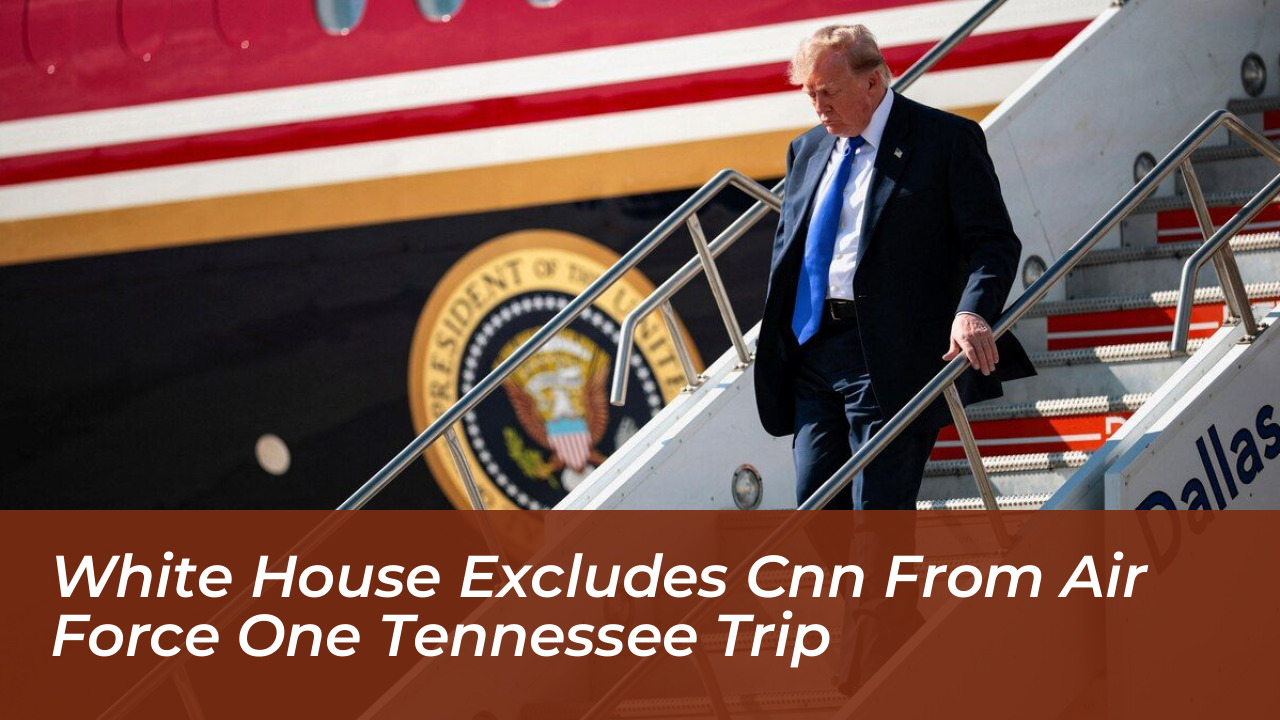
The White House recently blocked news network CNN from traveling on Air Force One during a weekend trip to Knoxville, Tennessee. Official press schedules confirmed the omission of the network from the presidential rotation. This move highlights escalating tensions between the executive branch and major media organizations. Recent federal court rulings regarding press credentials and First Amendment protections frame this ongoing conflict. Logistical shifts and constitutional questions continue to shape executive branch media relations as new digital broadcasters enter the rotation.
- The Tennessee Trip and Press Pool Replacements
- Exclusion from the Air Force One Rotation
- Alternative Outlets on Board
- Legal Battles and the First Amendment
- Federal Court Intervention
- Operational Hurdles Despite Judicial Orders
- Industry Solidarity and Network Blackouts
- Major Broadcast Responses
- Statements From the Administration
- Historical Precedents of Presidential Media Friction
- Comparison With Past Administrations
- Key Media Conflicts in Modern Politics
- Future Outlook for White House Press Credentialing
- Ongoing Litigation and Legal Boundaries
- The Changing Landscape of Presidential Communication
- Frequently Asked Questions
- Why was CNN excluded from the Air Force One trip to Tennessee?
- What alternative outlets were included on the presidential aircraft?
- How do federal courts view press credential revocations?
- What historical comparisons exist for media friction?
The Tennessee Trip and Press Pool Replacements
Exclusion from the Air Force One Rotation
The controversy centers on a weekend trip to Knoxville, Tennessee, where President Donald Trump attended a college football game. Official press schedules released on a Friday night confirmed the absence of CNN from the traveling press pool. This omission broke standard rotation protocols for presidential travel, which typically guarantee shared access among accredited major television networks.
Presidential travel logistics rely heavily on predictability and established protocols managed through the White House Correspondents Association. Excluding a major broadcaster disrupts decades of bipartisan precedent regarding physical access to the commander-in-chief. Journalists covering the executive branch depend on this access to report on official duties without partisan interference from the administration.
Alternative Outlets on Board
In place of traditional mainstream media positions, the administration integrated conservative digital broadcasters Real America’s Voice and Lindell TV into the travel schedule. These alternative platforms covered the Tennessee college football trip from inside the presidential aircraft. Such substitutions signal a deliberate shift in how the executive branch manages travel logistics and distributes official seating.
Integrating digital and alternative broadcasters changes traditional press pool dynamics during domestic presidential flights. Mainstream outlets view these replacements as an attempt to bypass critical questioning. Meanwhile, the administration argues that opening travel slots to diverse digital platforms broadens public access beyond legacy television networks.
Legal Battles and the First Amendment
Federal Court Intervention
The exclusion of CNN occurred despite legal interventions by federal courts regarding press access bans. U.S. District Judge Timothy Kelly issued a temporary restraining order restoring press badges for journalists from CNN, MS NOW, and Politico. These organizations filed joint legal challenges arguing that credential revocations violate their First Amendment rights and constitute viewpoint-based discrimination.
Legal scholars point out that the executive branch maintains broad discretion over property management and event access. However, government entities cannot penalize specific media organizations based on editorial viewpoint or critical coverage. The First Amendment prevents officials from using credentialing power to silence unfavorable reporting.
Operational Hurdles Despite Judicial Orders
Despite judicial orders, targeted reporters faced immediate operational hurdles during subsequent events. When Chinese President Xi Jinping arrived for a state visit, White House staff restricted reporting teams. CNN was limited to a single photojournalist and audio technician while standard reporting teams from favored organizations received full access.
These administrative limits test the boundaries of executive credentialing discretion versus constitutional limitations. Media watchdogs argue that restricting technical crews amounts to a back-door ban. The legal battle continues to test whether administrative hurdles violate active restraining orders issued by federal judges.
Industry Solidarity and Network Blackouts
Major Broadcast Responses
Major television networks demonstrated collective solidarity during high-profile diplomatic visits by staging temporary halts on joint press pool broadcasts. Five major networks previously refused to share feed material during the visit of Chinese President Xi Jinping. This united front aimed to push back against targeted exclusions and defend institutional reporting standards.
Balancing institutional cooperation with individual network exclusion remains a delicate task for news organizations. Broadcasters rely on shared pools to cover events efficiently. However, allowing the administration to pick and choose individual participants threatens the integrity of the entire press corps.
Statements From the Administration
Executive leadership defended credential revocations openly on digital platforms such as Truth Social. Statements posted online accused mainstream reporting of inaccuracy and bias. Media outlets should not be able to constantly write or report fiction and lies, administration officials stated on the platform.
These communications highlight a deliberate pivot toward alternative and digital media platforms. Rather than relying on traditional press conferences, leadership uses direct social media channels to communicate policy and attack critics. This strategy diminishes the influence of legacy media organizations within the Washington press ecosystem.

Historical Precedents of Presidential Media Friction
Comparison With Past Administrations
Tensions between the executive branch and the press corps remain a fixture of modern American politics, though outright bans represent a departure from standard protocol. Past administrations faced aggressive reporting during domestic scandals and foreign policy crises. Richard Nixon expressed intense hostility toward network coverage and investigative print journalism yet retained institutional press access. Similarly, Bill Clinton experienced public frustration with investigative reporting during major domestic scandals but respected the constitutional framework regarding press freedoms.
Donald Trump took a different approach by revoking hard passes and excluding specific outlets from Air Force One travel. This approach triggered active federal litigation centered on First Amendment violations. The historical baseline access maintained by the White House Correspondents Association faces unprecedented pressure in the digital age.
Key Media Conflicts in Modern Politics
| Presidential Administration | Notable Media Conflict | Outcome |
|---|---|---|
| Richard Nixon | Hostility toward network coverage and investigative print journalism | Retained institutional press access despite intense public rhetoric |
| Bill Clinton | Frustration with coverage surrounding major domestic scandals | Respected constitutional framework regarding credentialing freedoms |
| Donald Trump | Revocation of hard passes and exclusion from Air Force One travel | Active federal litigation centered on First Amendment violations |
Future Outlook for White House Press Credentialing
Ongoing Litigation and Legal Boundaries
Long-term uncertainties surround ongoing federal court proceedings regarding press access. Legal watchdogs and media organizations monitor every development to establish firm legal boundaries. The core question involves defining the limits of executive control over government property versus the constitutional rights of journalists.
While temporary restraining orders provide immediate relief, the administration maintains alternative methods to shape on-the-record access during domestic travel. Courts must ultimately decide whether selective credentialing amounts to unconstitutional viewpoint discrimination. These rulings will shape executive branch communications for decades.
The Changing Landscape of Presidential Communication
Alternative media integration permanently alters official reporting dynamics inside the White House. The future of the rotating television pool system depends on how courts resolve current disputes. Balancing executive transparency with administration messaging preferences remains a central challenge for modern governance.
Traditional networks must adapt to an environment where digital and alternative broadcasters share physical press spaces. Executive communications will likely continue prioritizing direct-to-consumer digital channels over legacy media gatekeepers. The outcome of these legal and logistical battles will redefine the relationship between the presidency and the American press.
Frequently Asked Questions
Why was CNN excluded from the Air Force One trip to Tennessee?
The White House omitted CNN from the traveling press pool for a weekend trip to Knoxville, Tennessee. This decision disrupted standard rotation protocols for presidential travel.
What alternative outlets were included on the presidential aircraft?
Conservative digital broadcasters Real America’s Voice and Lindell TV replaced traditional mainstream media slots inside the presidential aircraft.
How do federal courts view press credential revocations?
Federal courts have previously issued temporary restraining orders to restore press badges, ruling that viewpoint-based discrimination violates First Amendment protections.
What historical comparisons exist for media friction?
Past presidents like Richard Nixon and Bill Clinton experienced intense media friction but generally respected institutional press access and baseline constitutional frameworks.