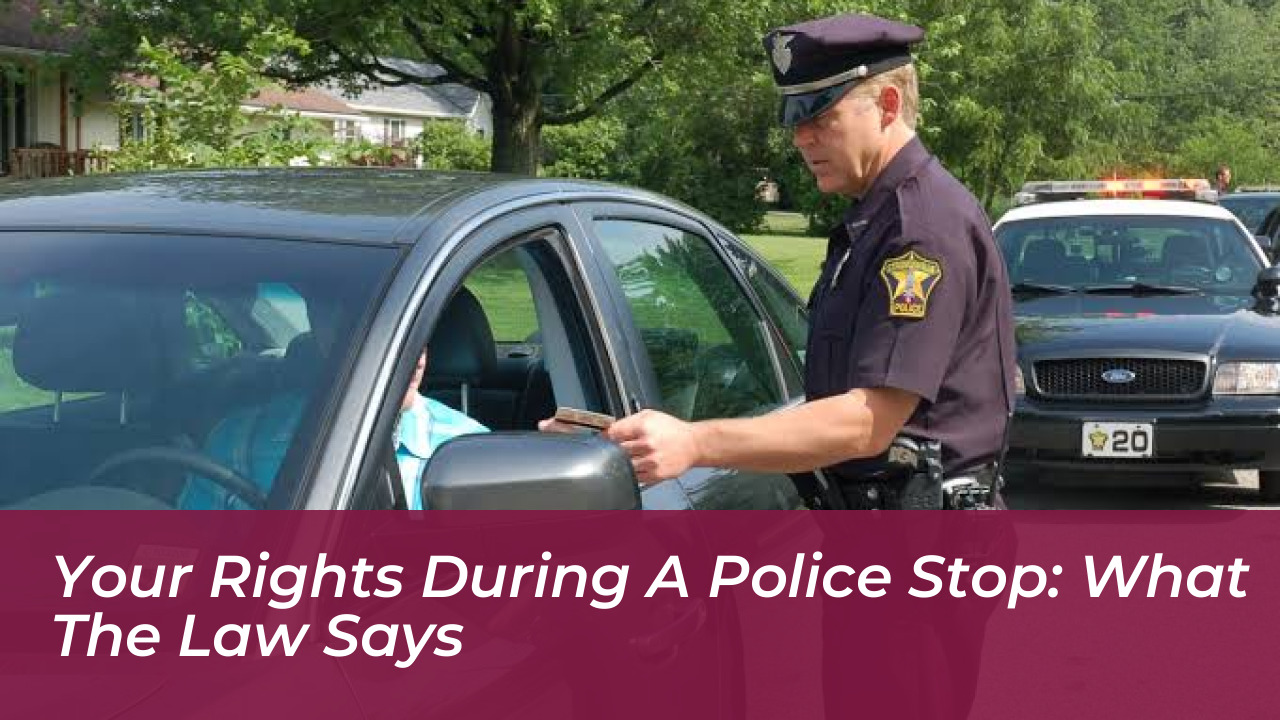
Most police encounters are shaped in the first ninety seconds, long before a lawyer, a judge, or a transcript enters the picture. During a traffic stop or a street encounter, the U.S. Constitution provides powerful protections, but it does not offer a magic phrase that ends an interaction on demand. What you say and do in the opening moments can shape everything that happens next. Understanding your rights means knowing the exact boundaries established by federal law, state statutes, and landmark Supreme Court decisions.
- Decoding the Three Tiers of Police Encounters
- The Fourth Amendment: Searches, Seizures, and Consent
- Refusing Consent to Search
- The Fifth Amendment: The Right to Remain Silent
- Landmark Legal Precedents That Shape Modern Stops
- Your Practical Playbook: A Step-by-Step Script
- What to Do If Your Rights Are Violated
- Frequently Asked Questions
- Do I have to answer police questions during a traffic stop?
- Can police search my car without a warrant?
- What should I do if officers search my car after I refuse consent?
- Are police required to read me my Miranda rights during a traffic stop?
- Can I record the police during a public encounter?
Decoding the Three Tiers of Police Encounters
The law divides police-civilian interactions into three distinct categories. Your rights and obligations shift depending on which tier applies:
- Consensual Encounter: This is a simple conversation. An officer might approach you on the street to ask questions. You have the absolute right to decline to answer and walk away freely. No justification is needed by the officer.
- Investigative Detention (Terry Stop): This is common in traffic stops. You are temporarily seized and are not free to leave. Officers need reasonable suspicion-specific, articulable facts-to justify this detention.
- Custodial Arrest: The highest level of intrusion. Officers must possess probable cause that you have committed a crime to take you into custody, triggering full Miranda protections.
If you are ever unsure of your status, the most effective clarifying question to ask is simple and direct: “Am I being detained, or am I free to go?”
The Fourth Amendment: Searches, Seizures, and Consent
The Fourth Amendment protects individuals against unreasonable searches and seizures. However, it is not a blanket ban on searches; rather, it is a rule governed by the principle of reasonableness.
During a traffic stop, police officers are generally permitted to order drivers and passengers out of the vehicle for officer safety, as established in cases like Pennsylvania v. Mimms and Maryland v. Wilson. However, this authority to secure the scene is entirely separate from the right to search.
Refusing Consent to Search
Police officers frequently ask for permission to search your person, bags, or vehicle. You have a constitutional right to refuse this request. To protect your rights without escalating the situation, use clear, non-argumentative language:
- “I do not consent to any searches.”
- “I am not consenting to a search of my vehicle.”
If officers choose to search your vehicle despite your refusal, do not physically resist or interfere. Physical resistance can create immediate safety risks and lead to additional criminal charges. Your refusal removes the easiest legal justification for the search and preserves your ability to challenge it later in a court of law.
The Fifth Amendment: The Right to Remain Silent
The Fifth Amendment protects you from being compelled to incriminate yourself. While popular culture associates this right primarily with post-arrest Miranda warnings, the underlying protection applies during roadside questioning as well.
On the roadside, most stops do not constitute formal custody for Miranda purposes. This means officers can ask investigative questions without reading you your rights, and requesting a lawyer may not immediately halt their questioning. Nevertheless, you have the right to decline answering investigative inquiries regarding where you are going, where you have been, or whether you possess contraband.
“I am exercising my right to remain silent. I am not answering questions.”
While you must provide required identification documents-such as a driver’s license, registration, and proof of insurance-during a lawful traffic stop, you are not legally obligated to answer open-ended investigative questions. Lying to law enforcement, however, can constitute a separate criminal offense in many jurisdictions, making calm silence or a clear invocation of your rights the safest legal path.
Landmark Legal Precedents That Shape Modern Stops
The rules governing police encounters were forged through decades of judicial review by the U.S. Supreme Court:
- Terry v. Ohio (1968): Established the legal standard of reasonable suspicion, allowing brief investigative detentions and limited weapon pat-downs if an officer believes a person is armed and dangerous.
- Miranda v. Arizona (1966): Mandated that suspects in police custody must be informed of their constitutional rights against self-incrimination prior to custodial interrogation.
- Rodriguez v. United States (2015): Ruled that police cannot prolong a completed traffic stop-such as waiting for a K-9 drug-sniffing dog to arrive-without independent reasonable suspicion.
Your Practical Playbook: A Step-by-Step Script
Having a predictable routine keeps interactions safe and minimizes legal risk. Follow this actionable sequence if you are pulled over:
- Be Predictable: Pull over safely, turn off your engine, lower your window, and place your hands visibly on the steering wheel. Turn on interior lights if it is dark.
- Exchange Required Documents: Provide your license, registration, and insurance when requested. Inform the officer before making any sudden movements to retrieve documents.
- Limit Conversation: If asked probing or investigative questions, firmly state: “I am exercising my right to remain silent.”
- Refuse Consent: If asked for permission to search, state clearly: “I do not consent to any searches.”
- Clarify Status: Ask calmly, “Am I free to go?”
What to Do If Your Rights Are Violated
The roadside is not the place to argue constitutional law. If you believe your rights have been violated, prioritize your immediate physical safety and focus on post-encounter documentation:
- Write down exact details immediately following the stop: timestamps, locations, officer badge numbers, patrol vehicle numbers, and specific dialogue.
- Identify and secure contact information for any independent witnesses.
- Preserve physical or digital evidence, including dashcam footage, photographs, and medical records if injuries occurred.
- Consult a qualified civil rights or criminal defense attorney to evaluate potential suppression motions or civil legal remedies.
Disclaimer: This article provides general information regarding U.S. constitutional principles and police stop protocols. State laws vary significantly, and individual case facts dictate legal outcomes. If you face criminal charges or believe your civil rights were violated, consult a licensed attorney in your jurisdiction.
Frequently Asked Questions
Do I have to answer police questions during a traffic stop?
No. Beyond providing mandatory administrative documents such as your driver’s license, vehicle registration, and proof of insurance, you have the Fifth Amendment right to remain silent and decline to answer investigative questions.
Can police search my car without a warrant?
Often, yes, under recognized exceptions to the Fourth Amendment warrant requirement, such as the automobile exception, consent, or search incident to arrest. However, you can explicitly refuse consent to make your objection legally a matter of record.
What should I do if officers search my car after I refuse consent?
Do not physically resist, interfere, or argue with the officers on the roadside, as physical resistance can lead to separate criminal charges. Clearly state your lack of consent, remain compliant for safety, and challenge the legality of the search later in court through legal counsel.
Are police required to read me my Miranda rights during a traffic stop?
Not usually. Miranda warnings are only legally required during custodial interrogations-meaning when you are formally arrested or restrained to a degree akin to an arrest. Routine traffic stops are generally considered temporary detentions, not custodial interrogations.
Can I record the police during a public encounter?
Yes. In most jurisdictions, courts have recognized a First Amendment right to record police officers performing their duties in public, provided you maintain a safe distance and do not physically interfere with law enforcement operations.