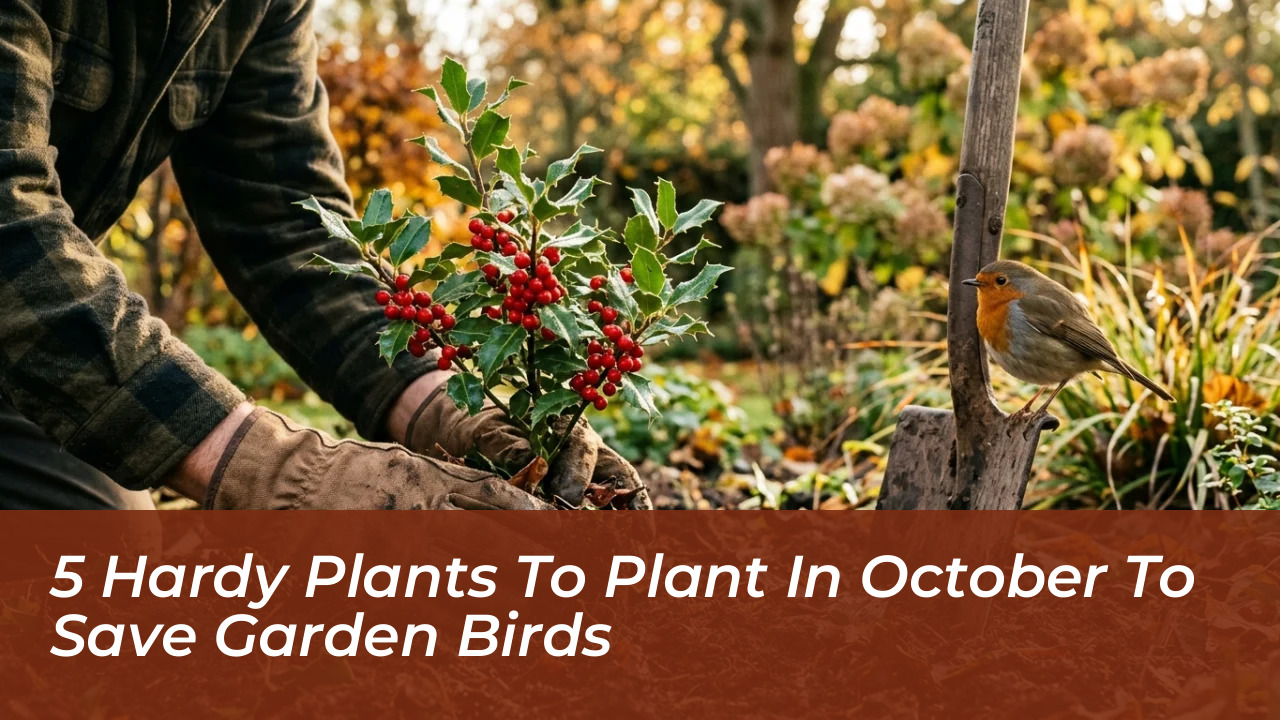

Planting five specific species in October-holly, rowan, hawthorn, crab apple, and ivy-provides British wild birds with the essential fat-rich calories and dense foliage required to survive the freezing months ahead. While many gardeners assume autumn marks the end of outdoor preparations, horticulturists confirm that mid-autumn soil is warm enough to establish resilient life-support systems before frost locks down natural foraging grounds.
As temperatures plunge, local populations of blackbirds, robins, and thrushes face severe food shortages alongside arriving winter migrants like redwings and fieldfares. Artificial feeders frequently run empty, meaning living bushes and trees offer a dependable, long-term pantry that delivers nutrition and predator-safe roosts through February and March.
The Evergreen Bastions: Natural Roosting and Calorie Reservoirs
Broadscale habitat loss makes garden borders vital refuge corridors across the United Kingdom. Introducing tough, berry-bearing varieties creates high-yield nutrition stations that naturally replenish garden borders.
1. Holly (Ilex)
Holly serves a double function during harsh snaps by combining protective structural defence with late-season nourishment. The glossy, spiked leaves construct impenetrable windbreaks where small birds conserve body heat overnight without risking ambush by predators.
‘Holly is a great choice for a bird-friendly garden, offering both food and shelter. Its dense, evergreen foliage gives birds somewhere protected to roost during the colder months, while its berries provide a winter food source for birds such as thrushes, robins and pigeons,’ says Amber Tunney, plant buyer at Cherry Lane Garden Centres.
Varieties such as Ilex aquifolium ‘Argentea Marginata’ or ‘Alaska’ establish quickly when planted before ground frosts solidify topsoil, guaranteeing a robust berry set in succeeding years.
2. Rowan (Sorbus aucuparia)
Often called the mountain ash, rowan yields abundant autumnal fruit clusters that serve as urgent staging fuel for winter migrants. Designers Thomas Cave Saunders, Amie Wheeldon, and Jon Pilling created the Lifted By Birds Garden for the Greenfingers charity at James Hopkins Hos**ce in Gloucester. They point out that rowan produces brilliant clusters of red berries that feed fieldfares, redwings, and blackbirds through early winter. Beyond ecological sustenance, cultivars like Sorbus aucuparia ‘Aspleniifolia’ and Vilmorin’s rowan add vivid foliage colour when neighbouring deciduous beds fade into dormancy.
Protective Hedging and High-Endurance Fruit Trees
Hedgerows offer far greater ecological value than wooden fencing, providing secure pathways through suburban neighbourhoods.
3. Hawthorn (Crataegus monogyna)
Hawthorn forms one of Britain’s most valuable native boundary lines. Its dense framework of branches and sharp thorns shields smaller songbirds from freezing winds and domestic cats.
‘Hawthorn is a great option if you’re planting a hedge with wildlife in mind. Its dense, thorny growth provides sheltered places for birds to rest and take cover, making it a useful addition to a garden over the winter months,’ explains Amber Tunney.
Quickthorn hedging establishes deep root networks when settled in October, transforming simple garden perimeter lines into high-density foraging zones.
4. Crab Apple (Malus)
Native crab apples remain among the most dependable compact fruit trees for domestic gardens, yielding crops that withstand repetitive frosts without rotting prematurely on the branch.
These compact fruits linger through deep midwinter, sustaining song thrushes and incoming redwings when ground foraging becomes impossible under heavy snow. Cultivars like ‘Red Sentinel’, ‘Evereste’, and ‘Golden Hornet’ are celebrated for longevity, holding fruit well into January while guaranteeing ornamental blossoms come spring.
5. English Ivy (Hedera helix)
Despite widespread concerns regarding wall integrity, common ivy provides late-season benefits that few garden climbers can match.
‘Ivy offers valuable shelter for birds, with its dense growth providing cover as temperatures drop. Mature ivy also produces fat-rich berries that ripen later than many other fruits, helping to provide food further into winter when other natural supplies may be running low,’ notes Tunney.
Because ivy berries mature significantly later than orchard fruit, they act as an essential late-winter reserve when natural woodland hedgerows are stripped clean.
Species Breakdown: Berries, Shelter, and Target Wildlife
- Holly (Ilex): Prickly evergreen shelter and midwinter red berries for robins and thrushes.
- Rowan (Sorbus): Early-winter berry clusters targeting migratory redwings and fieldfares.
- Hawthorn (Crataegus): Thorn-heavy protective boundary providing roosting warmth and food.
- Crab Apple (Malus): Persistent hanging fruit that resists freezing, feeding blackbirds.
- Ivy (Hedera helix): Late-ripening fat-rich berries and cold-weather thermal wall cover.
Myth vs Reality: Winter Planting Truths
A persistent gardening myth claims autumn ground is unsuitable for new root balls and that shrubs should only go into beds in April. In reality, October soil maintains residual summer heat while autumnal rain keeps earth naturally moist. This allows roots to settle securely without running the drought risks typical of late spring plantings.
Another misconception is that decorative hedging and fruiting trees attract vermin rather than birds. Clean-feeding songbirds such as thrushes, robins, and finches strip high-sugar branches systematically, leaving little wasted detritus behind.
How to Plant for Maximum Wildlife Yield
- Select sunny to partly shaded positions: Fruit-bearing species like crab apple and rowan require steady sun exposure during summer to maximise autumn berry production.
- Prepare drainage pits: Dig a hole twice the width of the root ball to allow roots to establish quickly before the ground freezes.
- Layer natural mulch: Apply shredded bark or compost around the base to keep root zones warm and retain consistent moisture levels across midwinter.
Have you added any of these bird-friendly varieties to your garden this season? Share your experiences with us in the comments below, including which species visit your garden bushes most frequently. Let us know how your local birds are coping as winter temperatures begin to bite!