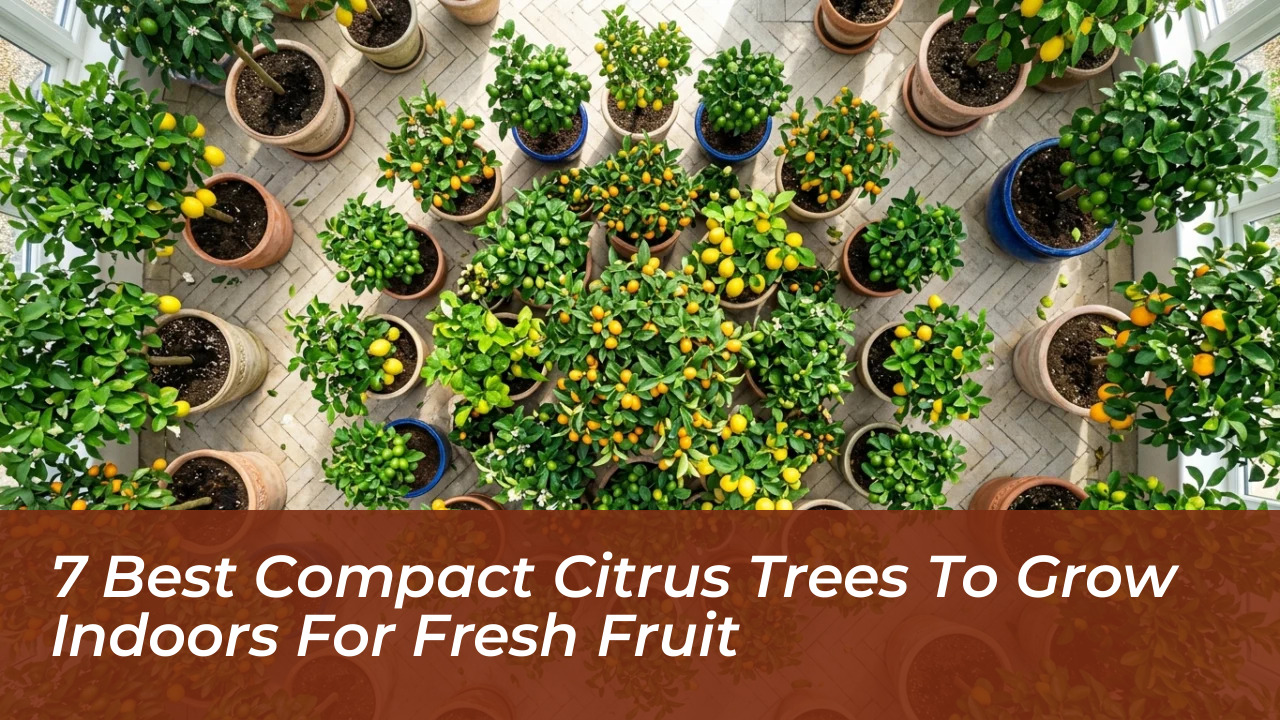

Growing fresh fruit year-round inside your home is entirely achievable by cultivating dwarf citrus cultivars. While standard orchard trees exceed 20 feet in height, containerised miniature varieties stay remarkably compact, with some thriving in pots as small as 10 inches wide. Achieving a reliable indoor harvest simply requires direct sunlight, consistent moisture, and routine hand pollination when fragrant blossoms appear.
A widespread misconception is that fruiting trees require sprawling outdoor acreage or commercial greenhouse facilities. In reality, miniature citrus trees adapt exceptionally well to indoor living rooms, bright conservatories, and sunny apartment windows when matched with the correct soil acidity and light exposure. Understanding the precise needs of each variety makes harvesting homegrown citrus an accessible reality.
Top 7 Dwarf Citrus Varieties for Indoor Growing
Selecting the right tree depends entirely on your available space, home lighting levels, and how you intend to use the harvest in your kitchen. These seven varieties offer distinct flavours, decorative foliage, and manageable container heights.
1. Dwarf Kumquats
Dwarf kumquats remain a premier option for compact indoor spaces, rarely exceeding 3 feet in height. When pollinated, these small powerhouses consistently yield miniature, tart fruits that work beautifully in preserves, marmalades, and drinks. The smaller fruits decorate the plant like little ornaments, and it is usually easier to get a heavy fruit set on these than on larger citrus varieties.
To ensure a reliable yield, position kumquats where they receive at least 8 hours of direct sunlight each day. You can easily facilitate fruit set by transferring pollen between flowers using an ordinary cotton bud or a clean makeup brush.
2. Variegated ‘Eureka’ Lemons
For ornamental impact alongside culinary utility, the variegated ‘Eureka’ lemon stands out. The plant features distinctive foliage patterned with creamy white edges, remaining visually striking even during periods between flowering and fruiting cycles. Like most citrus, it produces delightfully fragrant flowers.
Encouraging this variety to set blossoms requires ample bright light and routine applications of a fertiliser formulated specifically for -loving plants during active growth. Placing the container on a sunny patio or balcony during warm summer spells gives the tree an extra energy boost before it returns inside.
3. Australian Finger Limes
Often termed citrus caviar, the Australian finger lime produces slender, elongated fruits packed with crisp, translucent vesicles that burst with sharp juice. These tart pearls serve as high-end garnishes for seafood and craft beverages.
Start finger limes in containers measuring 10 to 14 inches in diameter, gradually moving them into larger vessels as root systems expand. They demand loose, acidic potting media to prevent water stagnation around sensitive feeder roots.
4. Tangerines and Mandarins
While standard orchard mandarins reach heights between 10 and 20 feet, container-grown specimens typically stabilise at 6 to 8 feet. Cultivars such as ‘Owari Satsuma’ and ‘Tango’ are prized indoor performers because they are self-fertile, meaning a single plant can produce a full crop without a partner tree.
While these trees benefit greatly from summering outdoors in direct sunshine, ensure they are brought back indoors well before autumn chills settle in to prevent sudden temperature shock.
5. Key Limes
Key lime trees are among the most reliable indoor fruit producers, bearing small, aromatic limes that are distinctly sweeter than typical grocery store Persian limes. Trees generally begin fruiting around 3 years of age, often cycling through continuous bloom and harvest periods year-round under warm conditions.
The primary pitfall with key limes is atmospheric dryness. If room humidity drops too low, the tree will shed its delicate blossoms, preventing fruit development entirely. Running a room humidifier to sustain relative humidity between 50% and 70% keeps the blossom set intact.
6. Dwarf Meyer Lemons
A staple among indoor fruit enthusiasts, the dwarf Meyer lemon caps out under 6 feet in height while producing heavy clusters of fragrant flowers. The resulting fruit carries a thinner rind and a naturally sweeter, less acidic profile than standard lemons.
Meyer lemons generally yield more fruit than variegated cultivars, though they produce slightly fewer individual fruits than dwarf kumquats. Pruning wayward shoots with sterilised shears in late winter helps transform this naturally bushy shrub into an elegant, single-stemmed standard tree.
7. Calamondin Oranges
Full-sized sweet orange trees are entirely impractical for living rooms, but the petite ‘Calamondin’ orange tops out around 4 feet tall. Its sour, vivid orange fruits make an exceptional culinary stand-in for lemons or limes in savoury dishes, preserves, and drinks.
Calamondins thrive in south-facing windows with uninterrupted sun. If you move your tree outdoors to soak up summer rays, inspect the stems and foliage thoroughly for common pests like scale insects before bringing the pot back inside for the winter.
Indoor Citrus Cultivar Comparison
Review the primary physical dimensions and characteristics of each variety to decide which tree fits your indoor space:
- Dwarf Kumquat: Under 3 feet; heavy yields of tart fruit.
- Variegated ‘Eureka’ Lemon: Medium container size; white-edged foliage.
- Australian Finger Lime: Starts in 10-14 in pots; pearl-like citrus vesicles.
- Tangerine / Mandarin: 6 to 8 feet indoors; self-fertile.
- Key Lime: Fruits at 3 years; requires 50-70% relative humidity.
- Dwarf Meyer Lemon: Under 6 feet; sweeter flavour profile.
- Calamondin Orange: Around 4 feet; sour lemon alternative.
Essential Steps for Container Success
Regardless of the cultivar you choose, keeping indoor citrus trees productive requires dialling in the potting substrate, watering routines, and pollination habits:
- Formulate an acidic, well-draining soil mix: If commercial acidic potting compost is unavailable, blend equal parts standard potting soil, perlite or vermiculite, and coconut coir to ensure proper root aeration.
- Maximise direct sunlight: Position containers in south-facing windows to deliver a minimum of 8 hours of direct rays daily.
- Maintain target humidity: Keep ambient air between 50% and 70% relative humidity, especially for sensitive varieties like key limes, to prevent bud drop.
- Perform manual pollination: Indoors, natural pollinators are absent. Gently roll a soft artist brush or cotton bud inside each blossom to move pollen between blooms.
- Inspect before seasonal moves: Moving trees outside in summer boosts growth, but always check foliage for scale insects before returning them indoors for autumn.
Choosing a self-fertile cultivar ensures steady crops even if you only have space for a single container on a windowsill. Monitoring humidity levels during winter heating months prevents unexpected flower drop and preserves your upcoming fruit harvest.