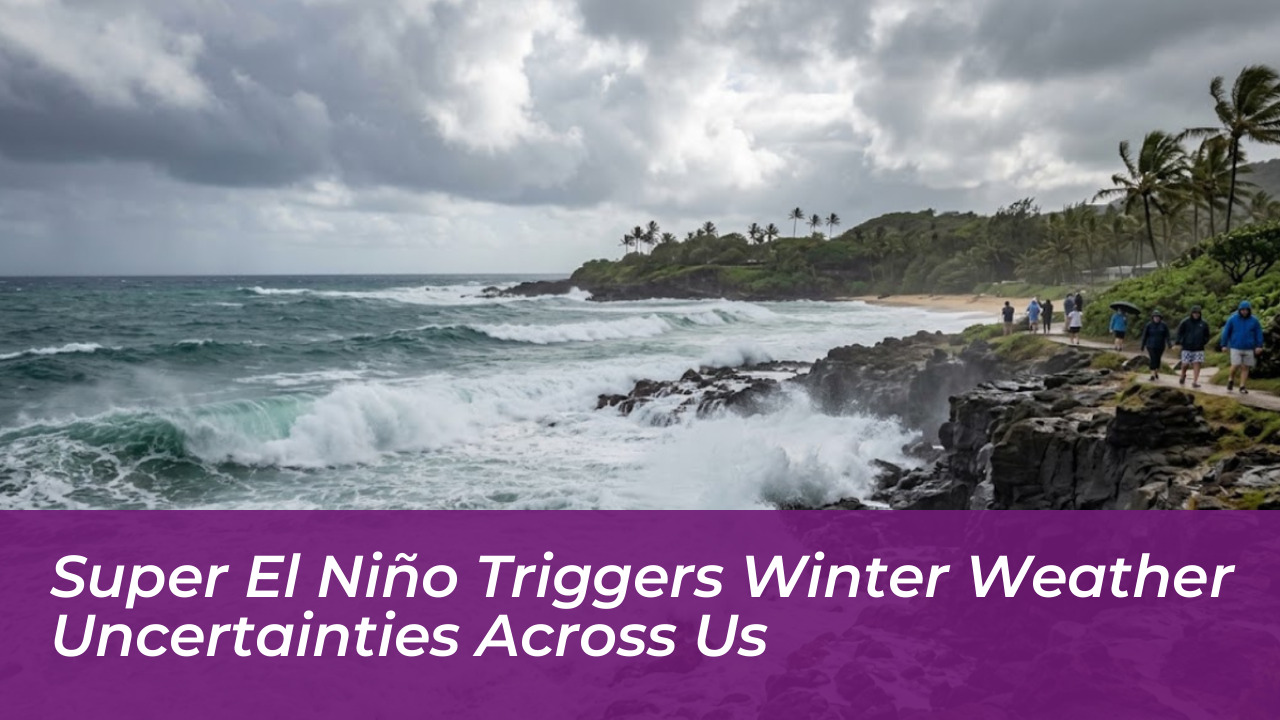

A powerful El Niño developing in the Pacific Ocean could bring warmer temperatures, increased precipitation, and heightened coastal hazards across parts of the United States this winter, according to seasonal forecasts and climate scientists. The National Oceanic and Atmospheric Administration’s (NOAA) December-through-February outlook points to warmer and wetter conditions across Long Island and much of the East Coast. Meanwhile, researchers in California warn that unusually warm ocean waters could intensify flooding and erosion risks.
Despite the seasonal outlook, forecasters cannot yet determine how much snow northeastern communities will receive. NOAA emphasizes that snowfall totals generally cannot be predicted reliably more than a week ahead. This leaves the balance between snow, rain, and mixed precipitation uncertain. In Buffalo, the National Weather Service forecast the possibility of a few wet snowflakes, while broader winter conditions remain highly variable.
Historical Comparisons Highlight Snowfall Volatility
The emerging El Niño has drawn intense scrutiny from meteorologists. This is because of its potential strength and its association with extreme weather events, including flooding, drought, and severe marine heat waves. Past occurrences demonstrate that a strong El Niño does not translate to a uniform winter experience across the country.
Newsday meteorologist Geoff Bansen noted that the three previous very strong El Niño winters comparable to the developing event produced sharply different snowfall totals for the region:
- Winter of 2015-16: Brought 41.4 inches of total snow.
- Winter of 1997-98: Brought 2.6 inches of total snow.
- Winter of 1982-83: Brought 31.9 inches of total snow.
Regional Impacts Across the United States
The wide discrepancy in past seasonal data underscores the difficulty in translating macro-level ocean patterns into localized weather forecasts. While the East Coast prepares for wetter conditions and fluctuating temperatures, western states like California face distinct threats. Coastal communities along the Pacific are bracing for heightened erosion and severe flooding driven by elevated sea surface temperatures and persistent storm tracks.
What is a Super El Niño?
El Niño is a natural climate phenomenon marked by warmer-than-average sea surface temperatures in the central and eastern Pacific Ocean. When these temperatures spike significantly, meteorologists often refer to the event as a “Super El Niño.” This large-scale warming alters global atmospheric circulation. It shifts jet streams and significantly influences winter weather patterns across North America.
Preparing for an Unpredictable Winter
Emergency management agencies and local municipalities are using historical models alongside modern forecasting tools to prepare for potential extremes. Although exact snowfall accumulations remain impossible to lock in months ahead, communities should stay updated with short-term forecasts issued by the National Weather Service as the winter season progresses.