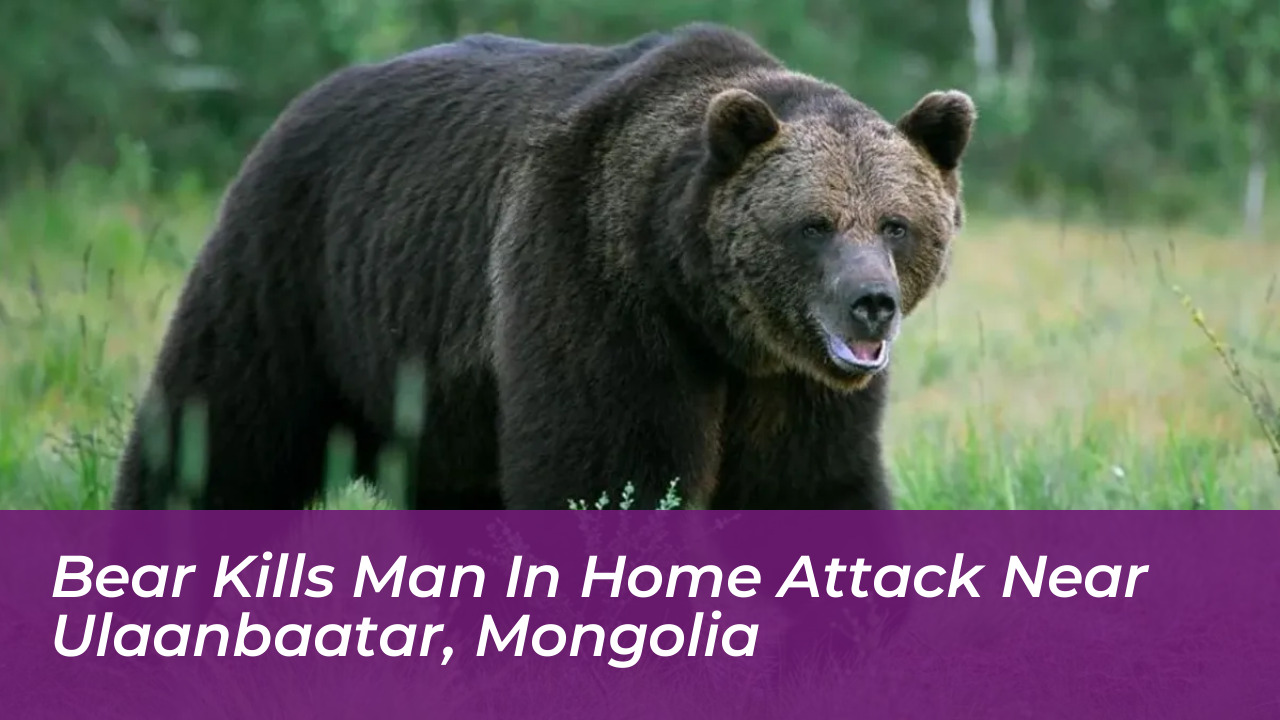


A bear killed a man in his 40s and seriously injured a woman in her 50s after breaking into their traditional nomadic dwelling on the outskirts of Mongolia’s capital, police and local authorities said. The deadly overnight attack occurred in the Bayanzurkh district near Ulaanbaatar, prompting an intensive search by police and wildlife rangers.
According to city official Munkhbayar M., the male resident died at the scene from injuries sustained during the intrusion. The female victim managed to escape the traditional tent-like structure, known locally as a ger, and ran to alert nearby neighbors. She was subsequently transported to a hospital, where medical personnel confirmed she remains in serious condition.
Surge in Bear Sightings and Human Encounters
The fatal incident highlights a dramatic and concerning rise in human-wildlife conflicts across Mongolia. City officials reported that 24 bear sightings have been recorded near Ulaanbaatar this year alone, a steep increase compared to just two sightings in 2018 and one in 2019.
Nationwide data reveals an even broader trend, with 754 bear sightings logged across 11 provinces and the capital. Officials noted that approximately 80 percent of these reported encounters involved either female bears accompanied by cubs or lone cubs.
Recent weeks have also seen numerous videos circulate widely on Mongolian social media platforms, showing bears damaging gers, entering rural properties, and attacking livestock.
Factors Driving the Increase: Food Scarcity and Climate Change
Wildlife experts and government officials have linked the rising frequency of bear attacks to environmental pressures, including climate change and severe food shortages in natural habitats.
During a press briefing, Baljinnyam N., an official at the Environment and Climate Change Ministry, discussed the examination of a bear hunted in the eastern province of Khentii. Autopsy findings revealed an entirely empty stomach, pointing toward acute food scarcity.
In response to the growing crisis, the Mongolian government enacted a ban in September prohibiting the harvesting of nuts and berries from mountainous regions to preserve vital food sources for local wildlife populations.
Government and Emergency Response
Law enforcement, local police, and a specialized team of 35 rangers are currently deployed to track and locate the bear responsible for the Bayanzurkh district attack. Authorities have strongly urged residents living on the capital’s fringes and in rural areas to remain highly vigilant and report any animal sightings immediately.
To bolster public safety measures, the government has issued bear-hunting permits across eight provinces. Additionally, officials are actively working to procure tranquiliser dart guns to equip rural rangers, allowing them to manage dangerous wildlife encounters without resorting strictly to lethal force.
Frequently Asked Questions
Where did the bear attack take place?
The attack took place in a traditional Mongolian ger located in the Bayanzurkh district on the outskirts of Ulaanbaatar, Mongolia’s capital.
What were the casualties of the incident?
A man in his 40s was killed during the home invasion, while a woman in her 50s sustained serious injuries but managed to escape and seek help from neighbors.
How many bear sightings have been reported near Ulaanbaatar?
Authorities reported 24 confirmed bear sightings near the capital, a significant increase from just two sightings recorded in 2018.
What is causing the increase in bear encounters in Mongolia?
Officials attribute the rise in bear and human interactions to climate change, rural depopulation, and severe food scarcity affecting the animals’ natural foraging habits.
What measures are authorities taking to address the issue?
The government has issued bear-hunting permits across eight provinces, deployed ranger teams to track dangerous animals, banned nut and berry harvesting in mountainous areas, and sought tranquiliser dart guns for rural wildlife management.