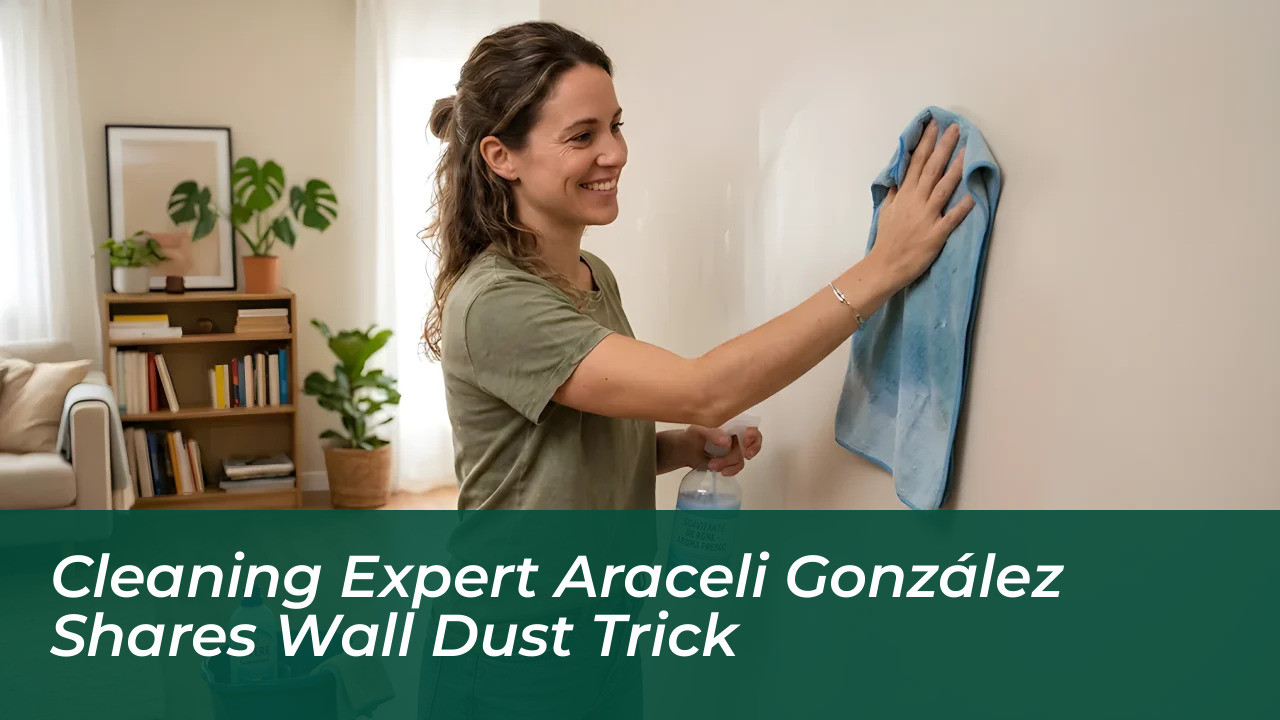

Dust remains one of the most persistent enemies in any household. No matter how frequently a home is cleaned, microscopic particles and dust bunnies inevitably reappear in unexpected spots. These include high corners, ceilings, walls, and beneath heavy furniture. To combat this ongoing challenge, cleaning expert Araceli González has shared a surprisingly simple and effective trick to streamline the process: utilizing everyday laundry fabric softener.
The specialist recommends preparing a straightforward mixture combining the household product with warm water inside a standard bucket. “Ever since I discovered this trick, I no longer let dust build up in my home,” González noted, highlighting how the method tackles high-reach areas that usually require strenuous effort.
How to Prepare and Apply the Fabric Softener Mixture
Executing this cleaning method requires just a few basic household items. By following a structured approach, homeowners can safely clean high-up spaces without risking damage to interior finishes.
- Fill a container or bucket with warm water.
- Add a small, measured amount of liquid fabric softener to the water.
- Dip a clean microfiber cloth into the solution and wring it out thoroughly so that it remains damp rather than dripping wet.
- Secure the damp microfiber cloth to the end of a standard broom using clips or rubber bands.
- Gently guide the tool across elevated surfaces, such as ceilings, crown moldings, and upper wall corners.
This same technique adapts well to clean hard-to-reach areas under low furniture, beds, and couches. Just ensure the cloth slides smoothly across the floor without catching on uneven surfaces.
Targeting Forgotten Areas Where Dust Accumulates
Daily cleaning routines often prioritize accessible spaces like tables, countertops, shelves, and floors. However, dust continually settles on less visible surfaces that require periodic attention. González stresses the importance of not overlooking these neglected zones:
- Tops of tall wardrobes and storage units
- Door frames, window sills, and decorative moldings
- Baseboards running along room perimeters
- Kitchen surfaces where airborne dust mixes with cooking grease to form a stubborn film
In the kitchen, the combination of dust and grease can create a sticky layer that regular dry dusting cannot lift. The surfactant properties in fabric softener help break down these light residues while leaving behind a pleasant fragrance.
Important Precautions When Using Fabric Softener for Cleaning
While the trick offers notable benefits for loosening dust, cobwebs, and light grime, experts advise caution. Fabric softener is specifically formulated for laundry care rather than general home surface cleaning. Overuse on certain surfaces can leave behind a chemical film that actually attracts fresh dirt or makes slick surfaces dangerously slippery.
González warns that homeowners should always adapt their cleaning tools to the specific material they are treating. On delicate, antique, or freshly painted walls, it is crucial to test the mixture first on a small, hidden area to ensure the finish remains uncompromised.
Frequently Asked Questions About Dust Removal
Can I use any type of fabric softener for this cleaning trick?
Yes, standard liquid fabric softeners work. However, it is best to use small amounts to prevent excessive residue buildup on walls and ceilings.
Does fabric softener damage painted walls?
When diluted properly and applied with a well-wrung microfiber cloth, it is generally safe for washable latex paints. Always test a hidden spot first.
How often should walls and ceilings be dusted?
High-reach dusting should ideally be performed once a month. Homes located in dusty environments or heavy traffic areas may require cleaning every two weeks.
What is the alternative to using fabric softener?
Plain warm water mixed with a few drops of mild dish soap or white vinegar serves as an effective, residue-free alternative for cleaning dust off walls.