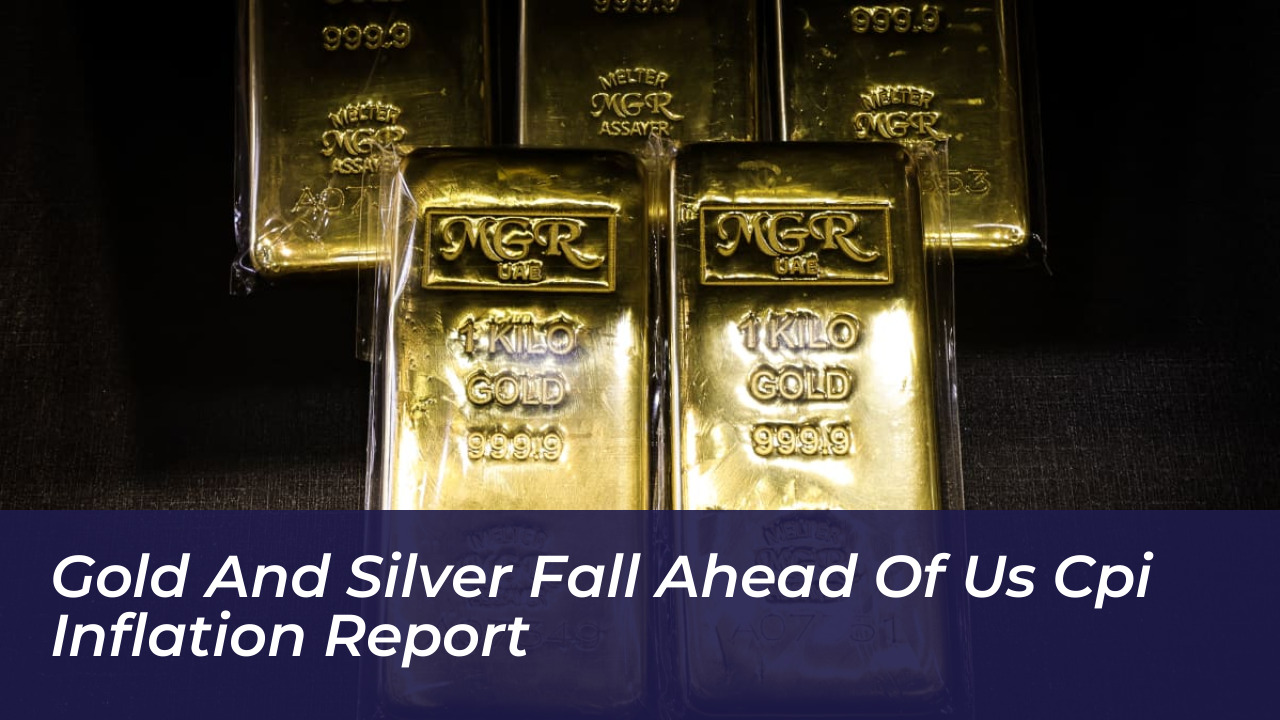

Precious metals weakened in US trading on Tuesday, October 13, as investors reduced exposure ahead of key inflation reports and Federal Reserve remarks. According to Kitco NewsWire, spot gold traded near $4,160.80 an ounce, down 0.24%, while spot silver fell 1.82% to $59.090. These declines were pressured by elevated short-term Treasury yields and expectations of another interest rate increase in December.
Market participants monitor upcoming economic releases to gauge the future path of monetary policy. The Consumer Price Index (CPI) report arrives on Wednesday, followed by the Producer Price Index (PPI) figures on Thursday. These reports will influence expectations for Federal Reserve policy and determine whether interest rates remain restrictive for longer.
Market Sentiment and Treasury Yields
Kitco reported that traders have priced in approximately a 19% probability of an October rate increase and an 88% probability of a December hike. This shifting outlook has created distinct movements across the yield curve. The two-year Treasury yield climbed above 4.81%, the 10-year yield retreated toward 5.22%, and the 30-year yield fell below 5.58%.

Higher short-term yields increase the opportunity cost of holding non-yielding assets like precious metals, prompting short-term traders to scale back positions. Analysts note that market sensitivity remains high as traders await concrete data from the inflation prints.
Key Economic Data Awaited by Investors
- September Consumer Price Index (CPI): Releasing Wednesday, this report provides critical insight into consumer-level inflation trends.
- Producer Price Index (PPI): Releasing Thursday, this metric offers data on wholesale price pressures influencing the broader economy.
- Federal Reserve Rate Expectations: Current market pricing reflects an 88% probability of a rate hike by December.
Broader Market Implications
The recent pullback in gold and silver highlights the delicate balance between safe-haven demand and macroeconomic pressures. While long-term fundamentals driven by central bank buying and institutional investment remain robust, short-term positioning is heavily dictated by incoming macroeconomic data and central bank policy signals.
As investors position themselves ahead of the mid-week inflation figures, trading volumes in both spot and derivative markets are expected to stay reactive to incoming economic indicators.