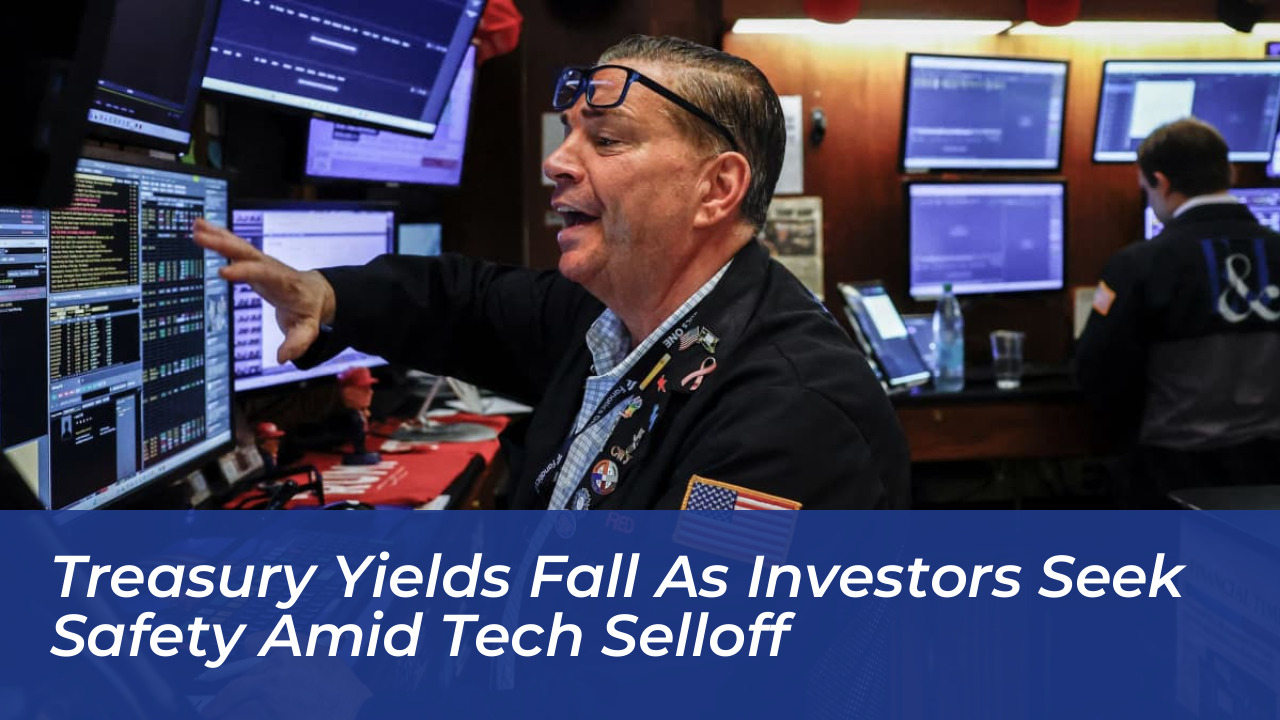

U.S. Treasury yields fell Thursday as investors moved toward government bonds. This shift came amid a sharp selloff in technology stocks and growing concerns about inflation and interest rates.
The move followed September wholesale price data that exceeded economists’ expectations. The figures reinforced concerns that the Federal Reserve could raise borrowing costs again before the end of the year.
The benchmark 10-year Treasury yield dropped nearly 13 basis points to 5.066%. The 30-year Treasury bond yield declined to 5.40%, according to market data from CNBC. Meanwhile, the two-year Treasury note yield fell more than 6 basis points to 4.74%. One basis point equals 0.01 percentage point, and bond prices move inversely to yields.
Wholesale Prices Exceed Expectations
Wholesale prices rose 6.3% year over year in September. This marked the largest annual increase since 2022, according to the Bureau of Labor Statistics. Economists surveyed by Dow Jones had forecast a 5.5% increase.
The bond rally was driven by a flight to safety during a selloff in technology and artificial-intelligence stocks, despite the strong inflation data. Global yields also dropped. German and UK 10-year yields fell 8 to 9 basis points as investors reassessed risk across international markets.
“This is a classic tactical rally,” said Bloomberg cross-asset strategist Ven Ram. He warned against interpreting it as a durable shift toward lower nominal yields while inflation remains high.
Technology and Credit Stress Dominate Market Sentiment
The bond rally occurred alongside significant stress in riskier assets. CoreWeave shares fell sharply, and its bonds traded at levels typically associated with distress. In Asia, South Korea’s Kospi dropped 7.6%. Major technology firms, including Samsung Electronics and SK Hynix, each fell more than 9%.
Corporate earnings failed to offset broader sector fears. While firms like TSMC reported stronger-than-expected profit, their shares remained under pressure. Investors questioned the durability of and return on investment for ongoing AI spending initiatives.
Outlook Hinges on Upcoming Economic Data
Upcoming retail sales, labor market reports, and inflation updates will test whether the safe-haven bond rally can persist. Market analysts note two primary scenarios for the near future:
- Further equity or credit stress could sustain high demand for Treasuries and keep yields lower in the interim.
- Persistent inflation or renewed Federal Reserve tightening expectations could reverse part of the bond rally. This is especially likely if investors demand higher compensation for inflation and fiscal risks.
For existing Treasury investors, falling yields increase the market value of current bonds. Meanwhile, homebuyers and corporate borrowers could see some localized easing in benchmark borrowing costs if the downward trend in yields continues over the long term.