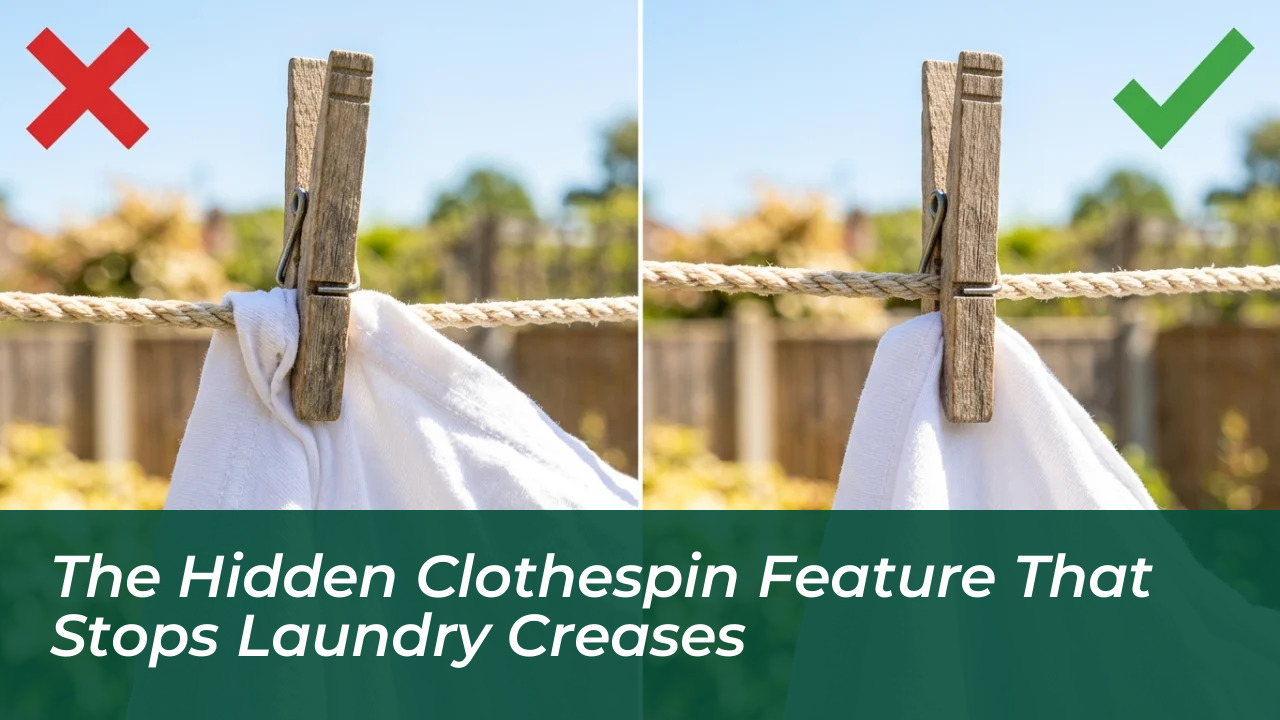

Every standard spring-loaded clothespin features two distinct interior cutouts that serve completely different mechanical purposes. Most households clamp wet laundry haphazardly using whatever groove touches the fabric first. This creates deep dents and persistent fabric creases. By placing the clothesline inside the smaller inner opening and resting the fabric within the larger outer opening, pressure distributes properly across the garment without crushing the weave. This design detail has gained widespread attention among consumers looking to preserve everyday garments without tedious post-wash ironing.
Taking thirty seconds to adjust how laundry rests on the line fundamentally alters how items look once dry. Understanding the mechanics behind this everyday tool helps protect your wardrobe from unnecessary wear while improving drying efficiency.
How the Dual-Groove Clothespin Mechanism Works
A standard clothespin contains a small inner opening near the tension spring and a wider opening closer to the tips of the jaws. When using the tool as engineered, the small slot anchors directly around the clothesline wire or drying rack bar. The broader front opening wraps around the fabric of the garment itself.
This separation creates an intentional distribution of mechanical force:
- Strongest clamp tension: Applied directly to the line, preventing wet garments from sliding or blowing away in the wind.
- Softer, spread-out pressure: Rests gently against the textile fibers without crushing the weave.
Proper pressure distribution requires placing the line firmly in the small inner groove and the fabric gently in the large outer slot. Clamping fabric and line simultaneously at the very tip forces intense mechanical pressure onto a tiny surface area. That localized compression is the direct source of stubborn fabric ridges and distorted weaves that often demand high-heat ironing to remove.
Material Engineering Behind the Openings
The cutouts along the jaw are also vital for product durability and material efficiency. Eliminating unnecessary mass from the core allows mass-produced plastic versions to flex smoothly and rebound without snapping under repeated use. Removing core material also lightens the load across production batches numbering in the millions.
For classic wooden pins, the cutouts provide essential expansion room. Traditional wooden pins rely on birch wood specifically because birch does not easily split or bleed sticky resin onto clean fabrics. The extra interior space gives birch fibers room to expand and contract as pins alternate between damp outdoor air and rapid drying.
Strategic Clipping Techniques by Fabric Type
Mastering the mechanical grooves solves only half of the drying challenge. Strategic placement across different garments keeps items looking crisp right off the rack while preventing uneven seam distortion.
T-Shirts and Light Knitwear
Pin firmly at the bottom hem rather than the shoulders, preventing stretched shoulder peaks and visible dents.
Pants and Denim
Clip along the leg cuffs, hanging the trousers upside down so the heaviest fabric dries unhindered.
Dresses and Skirts
Fasten directly to the waistband or along reinforced side seams where the textile is strongest.
Socks and Undergarments
Fasten securely along apostles or reinforced elastic bands to protect elasticity.
Environmental Factors and Airflow
Drying habits should also account for environmental factors. Vigorous shaking before clipping resets the textile weave after the mechanical spinning cycle. Positioning dark dyes away from direct sunlight shields them from UV fading, while bringing pegs inside after laundry prevents wood rot and keeps outdoor plastic from becoming brittle.
| Pin Opening | Intended Function |
|---|---|
| Small Inner Groove | Grips the clothesline or drying rail securely |
| Large Outer Groove | Cradles garment fabric to prevent pressure dents |
When garments suspend freely from the fabric cutout rather than being crushed against the cord, natural airflow circulates evenly around both sides. This increased airflow accelerates drying times significantly across thick textiles such as denim jeans and heavy cotton towels.
Frequently Asked Questions
Why do standard clothespins have two different holes?
The smaller inner hole near the spring is designed to anchor onto the clothesline or drying rack wire, while the larger outer opening cradles the garment fabric to prevent deep creases and pressure marks.
Does using the inner groove keep clothes from blowing away?
Yes. By securing the inner groove directly to the line, the clothespin maintains maximum holding tension against the wire, preventing heavy winds from shifting or blowing away your laundry.
Where should I clip heavy denim jeans on a clothesline?
Heavy denim should be hung upside down with the clothespins attached to the leg cuffs or reinforced waistbands, allowing the heavy fabric to dry evenly without seam distortion.
How do clothespin cutouts benefit wooden pin durability?
The interior cutouts provide essential expansion space for birch wood fibers to expand and contract as they transition between damp outdoor air and rapid drying.
Can adjusting how I clip clothes reduce ironing time?
Yes. Proper pressure distribution eliminates the stubborn, deep ridges and peg marks caused by single-point clamping, significantly reducing the need for post-wash ironing.