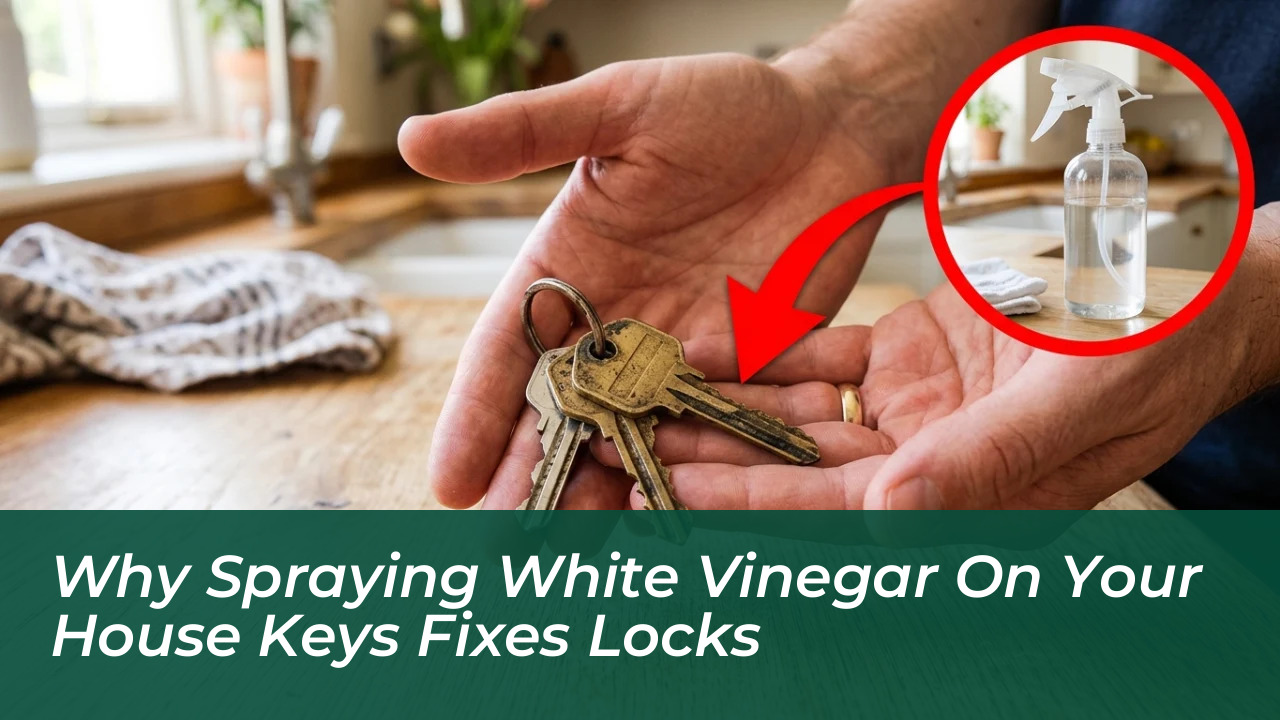

Everyday house keys travel continuously between pockets, purses, kitchen counters, and car cup holders, gathering layers of invisible grime that standard wipe-downs fail to loosen. Over time, that neglect causes sticky organic buildup and oxidation inside the key’s precision grooves. This leads directly to friction, resistance, and premature hardware wear. A quick household treatment using mild 5% acetic breaks that residue loose in minutes without requiring abrasive chemicals.
Because keys are touched constantly throughout the day, they remain among the most neglected metal objects in modern households. When dirty keys enter lock mechanisms, any grease or debris trapped inside their grooves transfers onto microscopic internal springs and pins. This causes jammed deadbolts and sticky lock performance.
The Science of Acetic on Metal Grooves
The effectiveness of this cleaning trick comes down to simple inorganic chemistry. Standard kitchen white vinegar consists of acetic ($CH_3COOH$) diluted in water to a concentration of approximately 5%. This specific dilution produces a low, acidic pH that targets oxidation without damaging the solid metal underneath.
When the liquid contacts surface rust, it reacts directly with the oxide layer, converting stubborn iron oxides into soluble salts that rinse away with ease. At the same time, the mild actively cuts through lipid films left behind by sweat, food oils, and natural dermal secretions.
Three Primary Targets Vinegar Eliminates
- Grease and sweat: It chemically breaks down natural skin lipids and tactile oils that collect on the blade and head.
- Embedded dirt: The liquid seeps into hard-to-reach cuts, pin tracks, and narrow warding grooves where dry particles pack down.
- Light surface rust: It gently dissolves oxidation on older brass, nickel-plated, or steel keys before the rust causes deep structural pitting.
How to Clean Keys with White Vinegar Step by Step
Restoring a dull or sticky keychain requires only a few minutes and basic kitchen supplies. The process works safely on standard house, padlock, and vintage metal cabinet keys.
- Spray the keys thoroughly: Coat the entire metal surface and deep cutouts with household white vinegar using a fine misting bottle.
- Allow the liquid to work: Let it sit undisturbed for a few minutes to penetrate packed grime and break chemical bonds in surface rust.
- Scrub the crevices: Work across the warding lines and cuts using a soft-bristled brush to sweep out loosened residue.
- Rinse off residues: Rinse the metal under a light stream of water to flush away remaining acidic fluid and suspended salt particles.
- Dry completely: Wipe the keys thoroughly with a dry cloth or paper towel, ensuring no moisture remains trapped in internal cuts.
Why Regular Key Cleaning Protects Your Locks
Widespread popular belief suggests that stiff locks always require heavy industrial lubricants or expensive tumbler replacements. In reality, sticky lock performance often stems from foreign residue and loose rust flakes dragged directly inside the lock plug by dirty key blades.
Keeping key blades free of surface rust and gummy grease ensures smooth keyway insertion, accurate rotation, and prolonged hardware life. Adopting this routine maintenance habit every few months prevents the slow mechanical degradation that leads to jammed deadbolts and snapped key tips.
Maintenance Factor Breakdown
- Oxide Buildup: Dissolves surface rust into washable salts.
- Organic Residue: Breaks down natural skin grease and sweat.
- Groove Clearance: Clears debris from deep lock-pin channels.
- Lock Function: Reduces internal friction inside the cylinder.
- Chemical Profile: Non-aggressive formula suitable for regular upkeep.
Important Safety Rules When Using Vinegar on Keys
While vinegar is an exceptional tool for cleaning bare metal key blades, it comes with important restrictions:
- Keep vinegar out of the lock: Never spray vinegar directly into a lock cylinder. Acidic, water-based liquid sitting inside will encourage corrosion and ruin internal components.
- Remove electronic fobs: Detach any remote control housings or transponder chips before applying liquids to avoid permanent electronic damage.
- Avoid vintage or sentimental brass: If you prefer to keep an antique patina intact, skip the treatment altogether.
Frequently Asked Questions
Can I use any type of vinegar on my house keys?
Stick to clear distilled white vinegar. Apple cider or wine vinegars contain sugars and added pigments that can leave behind sticky films or unwanted stains on metal surfaces.
Will white vinegar disinfect my keys completely?
No. While vinegar possesses mild antimicrobial properties, it is not a hospital-grade sanitizer or an EPA-registered disinfectant. If true germ removal is needed, follow up with a safe metal disinfectant wipe after cleaning away physical dirt.
How often should I clean my keys with vinegar?
For standard daily use, a quick spray-and-wipe maintenance routine once a month is more than enough to prevent grease accumulation and light oxidation.
What should I do if my keys are heavily rusted?
For advanced rust pitting, submerge the keys in a pure white vinegar soak for a few hours, scrub with a nylon brush, neutralize in a baking soda solution, dry thoroughly, and apply a very thin coat of light machine oil.
Can I use this method on car keys?
Only if the physical metal blade can be completely detached from any integrated electronic key fobs or smart proximity buttons to prevent water and damage.