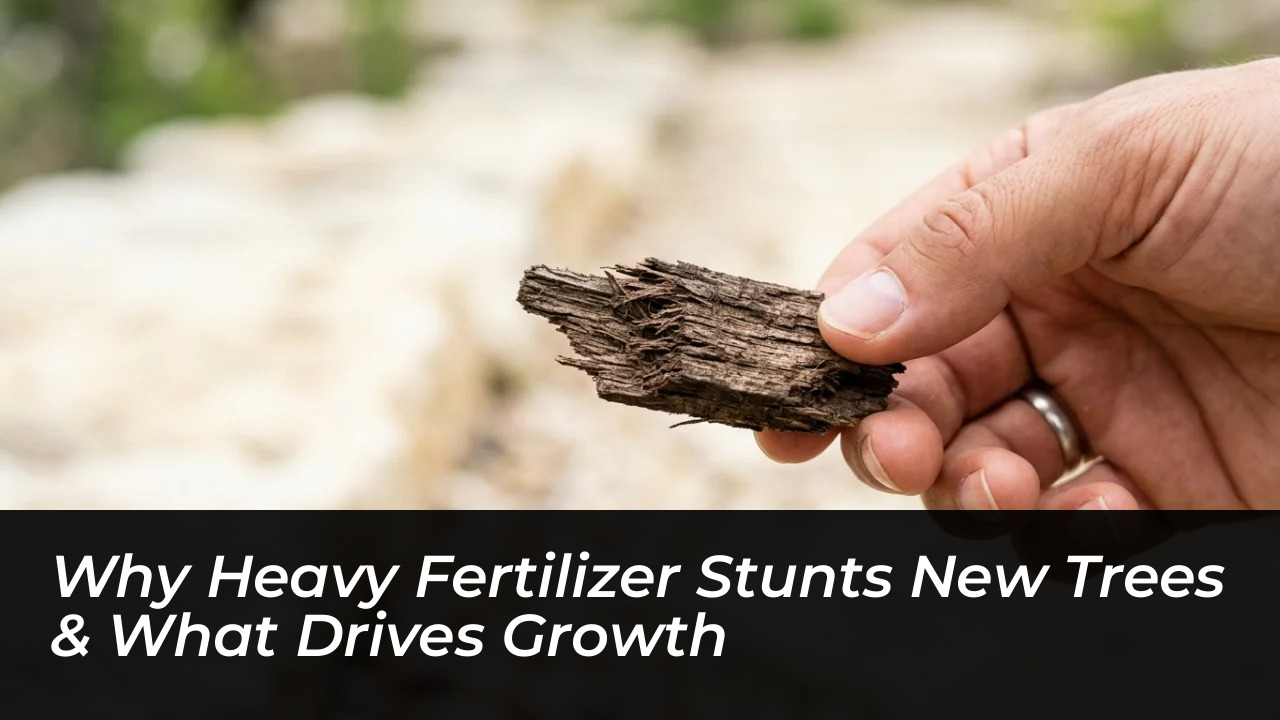

Pumping newly planted saplings with heavy chemical fertilizer does not produce rapid, lush foliage. Instead, excess fertilizer damages developing root systems and disrupts natural development. Achieving sustainable, fast tree growth requires focusing beneath the soil surface, where extensive root networks absorb the water and structural nutrients necessary to power genuine canopy expansion.
Homeowners often plant trees seeking swift shade, visual privacy, or an upgraded yard aesthetic, making rapid growth a natural priority. Yet bypassing root establishment in favor of artificial nitrogen surges leaves saplings fragile, vulnerable to disease, and structurally unstable. Unlocking healthy, accelerated vitality demands proven horticultural practices that prioritize soil structure and root health over artificial shortcuts.
Excavate a Wide Hole to Liberate Roots
A thriving tree begins below the surface, where roots must anchor the trunk firmly and access deep moisture reserves. Soil compaction acts as a physical barrier that restricts water drainage and suffocates delicate root tips, stalling vegetative progress before it can even begin. To give establishing roots immediate access to air and moisture, follow a deliberate excavation strategy during installation:
- Dig the planting site two to three times wider than the root ball diameter.
- Maintain the hole depth strictly level with the root flare to prevent root suffocation.
- Loosen surrounding native soil aggressively so tender root tips can penetrate outward without obstruction.
When surrounding dirt remains loose and aerated, root fibers rapidly expand outward, creating a solid base that sustains substantial above-ground growth.
Ditch Volcano Mulching to Protect Bark Integrity
Organic mulch retains vital soil moisture and moderates extreme ground temperatures, eventually decomposing to supply natural organic matter directly to the topsoil. However, application technique dictates whether mulch acts as a protective shield or a destructive trap.
Before mulching, thoroughly clear away competing turf and aggressive weeds surrounding the base of the trunk. Spread an even layer of wood chips roughly 3 to 4 inches thick in a uniform ring outward toward the canopy edge. Mulch piled against tree bark creates high moisture traps that trigger wood decay and pest infestation.
Avoid the common landscape error known as volcano mulching, where wood chips are piled directly against the trunk. The base collar requires dry airflow, because trapped dampness rots inner bark layers and welcomes wood-boring insects.
Deliver Slow, Deep Watering to Young Root Zones
Immature root systems cannot locate deep subsoil moisture independently during hot, dry spells. Light surface sprinkling merely wets topsoil weeds, leaving core tree roots parched and forcing the plant into defensive dormancy.
Young trees demand slow, thorough soaking that penetrates deep into the soil column. When drought conditions strike, dehydrated trees ration internal moisture by dropping foliage and abandoning branch tips, setting overall development back by entire seasons.
Core Practices for Balanced Sapling Vitality
Balancing moisture, nutrition, and mechanical care determines how rapidly a young specimen transitions from fragile sapling to hardy shade canopy.
Management Factor | Optimal Horticultural Practice
Planting Hole Dimension | Two to three times wider than the original root ball
Mulch Depth & Spacing | 3 to 4 inches deep, kept fully clear of the trunk collar
Watering Technique | Infrequent, slow deep-soaks rather than shallow daily sprays
Soil Enrichment | Organic compost and shredded leaves; avoid early synthetic overload
Pruning Strategy | Target damaged or crossing wood; adhere to seasonal species timing
Rethink Synthetic Fertilizers and Prioritize Soil Biology
A widespread misconception suggests that dousing young trees in concentrated fertilizer forces rapid vertical expansion. In truth, excess chemical salts scorch tender young root hairs and draw critical water out of plant tissues, ultimately stunting growth.
Instead of heavy synthetic treatments, enrich planting areas with compost, leaf mold, or natural organic topdressings. Once saplings pass their initial year of establishment, slow-release balanced formulas provide steady nitrogen without risking salt burn. Mature, established trees rarely demand supplemental feeding unless an official soil test reveals verifiable nutrient deficiencies.
Prune Seasonally to Direct Plant Energy
Strategic pruning channels valuable energy directly into healthy, dominant stems. Removing dead, diseased, or crossing limbs frees up cellular resources, allowing the tree to fortify its central framework. Timing your cuts according to tree biology is crucial for swift wound healing:
- Prune standard deciduous landscape varieties during late winter or early spring dormancy.
- Wait until flowering ceases before cutting spring-blooming ornamental varieties.
- Sanitize cutting tools between cuts to avoid transmitting fungal pathogens.
Prioritize root zone health early to ensure vigorous seasonal canopy development. Check the soil surrounding your yard specimens today to confirm mulch sits safely away from exposed bark. Share your favorite tree-care routines and planting questions in the comments below.