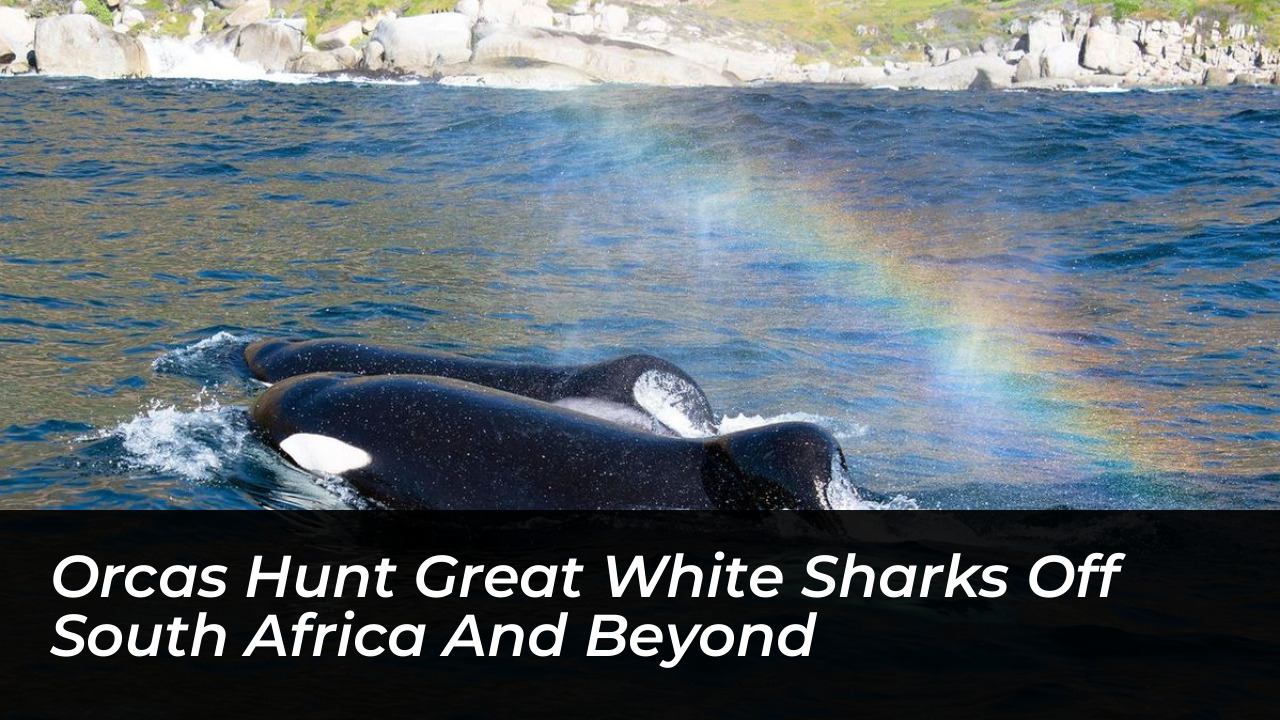

Orcas have been documented hunting great white sharks off South Africa and in other parts of the world, prompting marine scientists to investigate how the ocean’s top predators affect one another. Evidence collected since 2017 has linked two male orcas, nicknamed Port and Starboard, to a series of shark deaths involving distinctive wounds and missing livers. On May 3, 2017, a female great white weighing 1,100kg (2,425lb) washed ashore near Gansbaai, a fishing village close to Cape Town. A necropsy revealed that its 90kg (198lb) liver had been removed through a large wound in its underside. Alison Towner, the shark biologist who led the examination, described the discovery as unexpected.
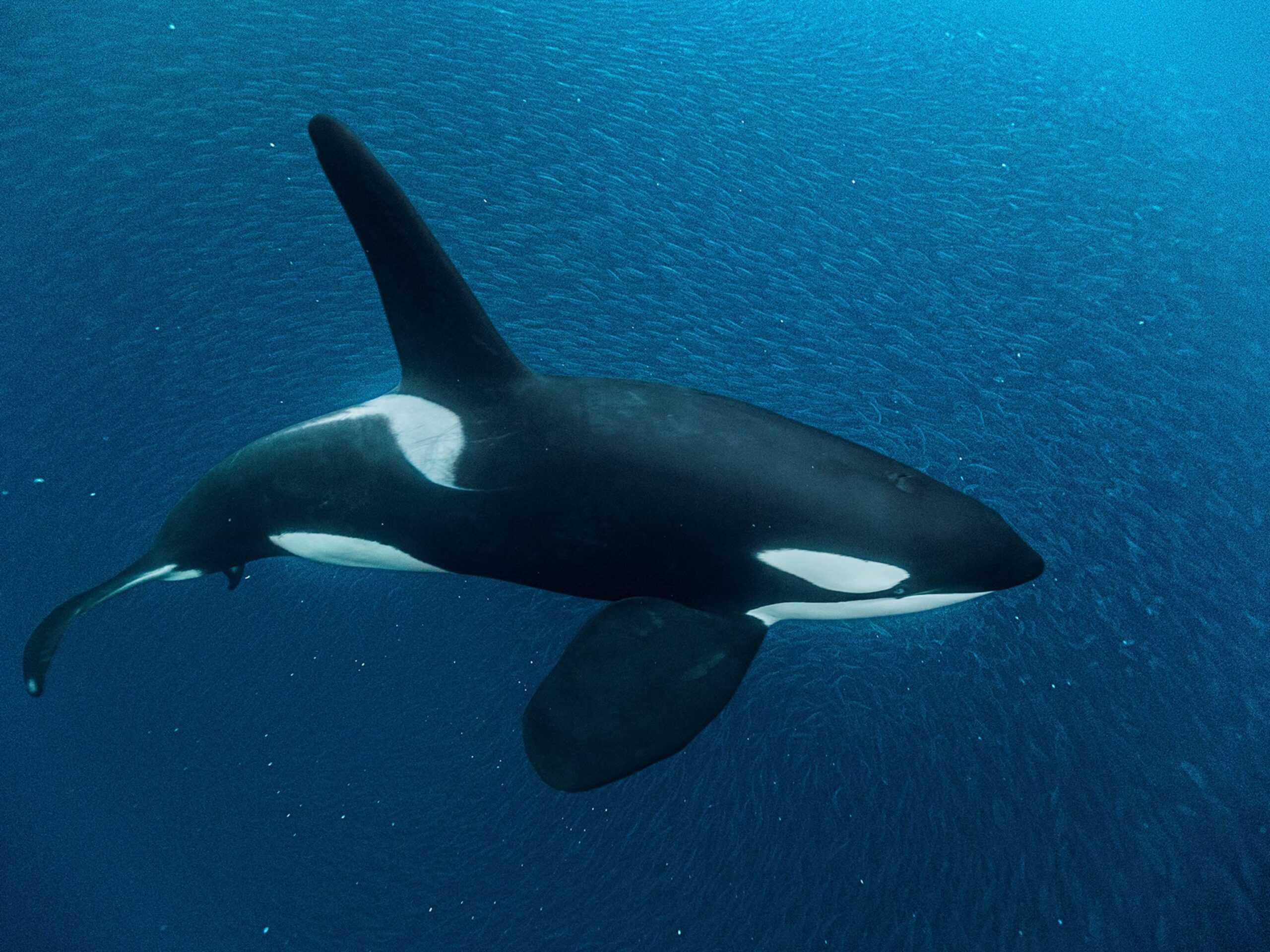
The Rise of Port and Starboard
Port and Starboard are adult male orcas with a rare and distinct physical feature: both possess collapsed dorsal fins, with Port’s folding to the left and Starboard’s drooping to the right. First spotted near Lüderitz, Namibia, in 2009, these killer whales shifted their predation habits away from traditional marine mammals to systematically target coastal sharks.
Before 2015, interactions involving apex sharks were rare. However, the appearance of Port and Starboard transformed South Africa’s coastal waters. By 2017, eight great white sharks had washed ashore following orca attacks, with seven missing their livers. Researchers noted a precise two-stage attack strategy: the orcas ram the sharks to stun them, flip them upside down to induce tonic immobility (a paralyzed, trance-like state), and use their teeth to grip pectoral fins and tear open the body cavity.
A Solo Kill Shatters Scientific Assumptions
For years, marine biologists assumed that subduing an apex predator like a great white shark required cooperative hunting. That assumption collapsed on June 18, 2023, off the coast of Mossel Bay.
During an observation led by Dr. Alison Towner of Rhodes University, an adult orca named Starboard single-handedly ambushed, killed, and eviscerated a 2.5-meter (8.2 feet) juvenile great white shark in under two minutes. Starboard was later photographed carrying the shark’s lipid-rich liver past a tourist vessel. Published in the African Journal of Marine Science, this event provided the first recorded instance of a solitary orca killing a great white shark. It proved that individual hunting techniques are evolving within regional pods.
Targeting the Ultimate Energy Prize: The Liver
Why do killer whales meticulously remove and consume only the shark’s liver while leaving the rest of the massive carcass behind? Shark livers are exceptionally large, oily, and dense with lipids, acting as the primary buoyancy organ for fish that lack swim bladders. In some species, the liver accounts for up to a third of the animal’s total body weight.
According to nutritional calculations, an adult male orca’s daily energy requirements can be directly satisfied by the massive caloric payload packed into a single great white shark liver. This specialized predatory behavior highlights how apex mammals adapt their foraging strategies to maximize energy return.
Ecological Cascades and the Great White Exodus
The presence of these specialized orcas has triggered sweeping ecological changes across South Africa’s Western Cape. Following repeated predation events, long-term tracking and satellite-tagging data revealed a massive retreat of great white sharks from historical strongholds like Gansbaai and False Bay.
With great whites vacating their traditional hunting grounds, marine researchers observed significant shifts in the local food web:
- Mesopredator Release: Bronze whaler sharks and broadnose sevengill sharks moved into areas previously dominated by great whites.
- Target Expansion: Port and Starboard quickly adapted to the new arrivals, famously killing at least 17 sevengill sharks off Pearly Beach in a single day.
- Trophic Ripple Effects: Without great white predation pressure, Cape fur seal populations have expanded more freely, increasing pressure on critically endangered African penguins and local fish stocks.
Global Parallels and Ongoing Scientific Debate
While South Africa remains the most visible epicenter of this phenomenon, similar events have been documented globally. In the Gulf of California, researchers recorded multiple instances of juvenile white sharks hunted by local orcas, with livers shared among pod members, including calves. This confirms that hunting techniques are culturally transmitted across generations.
Meanwhile, marine scientists continue to debate the broader population status of great white sharks in South Africa. Some research groups argue that the sudden disappearance from Western Cape beaches represents a regional eastward redistribution rather than a total population collapse. Other scientists urge caution, pointing to historical sighting declines and calling for standardized, continuous monitoring programs to protect coastal marine ecosystems.
Frequently Asked Questions
Why do orcas only eat the shark’s liver?
Shark livers are massive organs packed with lipids and oils. They provide an extremely high-calorie, energy-dense meal that easily satisfies an orca’s daily nutritional needs compared to muscle meat.
Are orcas hunting great whites alone or in groups?
While orcas typically hunt cooperatively, documented evidence-such as Starboard’s solo kill in Mossel Bay-proves that individual killer whales can dispatch juvenile great white sharks entirely on their own.
Where have South Africa’s great white sharks gone?
Long-term data indicates that great whites have largely abandoned historical hotspots like False Bay and Gansbaai due to the chronic threat of predation, migrating eastward or into deeper offshore waters.
Who are Port and Starboard?
Port and Starboard are two adult male killer whales identifiable by their uniquely collapsed dorsal fins, with one leaning left and the other right. They pioneered systematic shark hunting along South Africa’s coastline.
Does this behavior happen outside of South Africa?
Yes. Similar predation events involving orcas hunting juvenile white sharks and extracting their livers have been documented in other regions, including off the coast of California and near Australia.