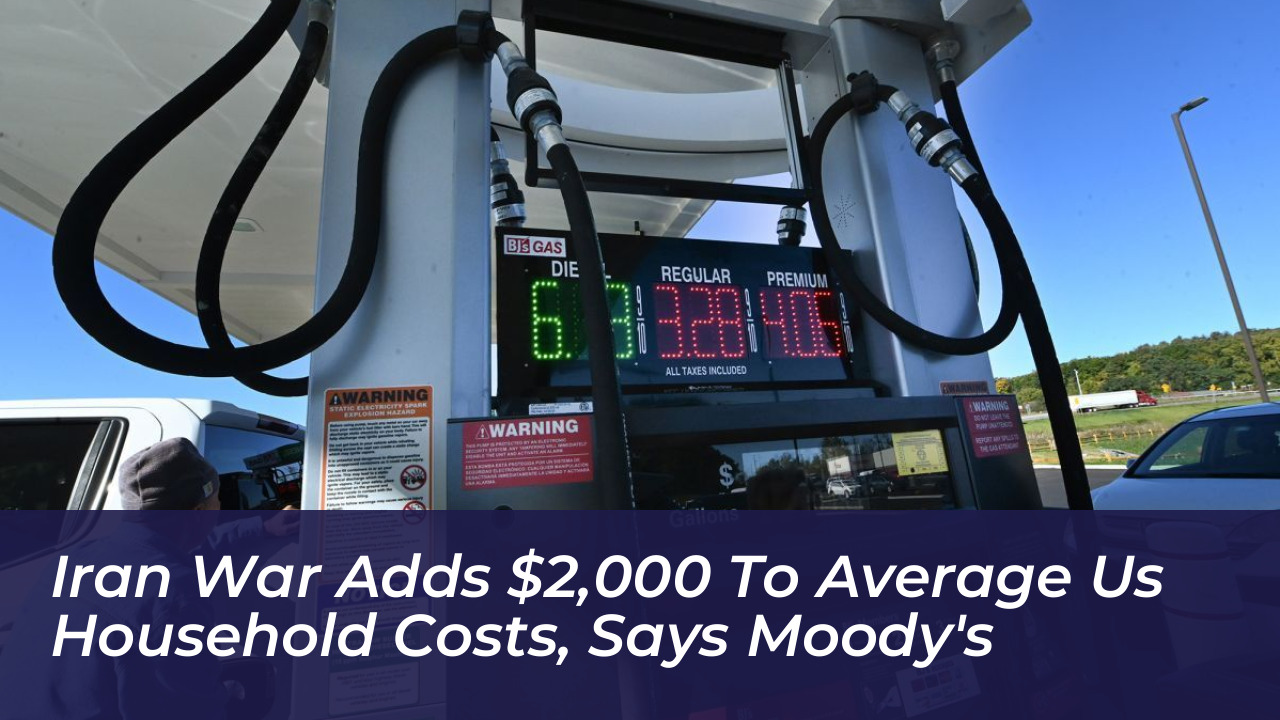

The military conflict involving the United States and Israel in Iran has added an estimated $2,000 in expenses for the average American household since fighting began in late February, according to an economic analysis published in October 2026 by Mark Zandi, chief economist at Moody’s Analytics. This economic fallout has squeezed consumers nationwide. It translates to an aggregate national cost of approximately $265 billion as energy markets, borrowing rates, and household budgets absorb the shock.
A Breakdown of the War’s Financial Burden
The financial impact on everyday Americans is spread across three main areas: energy expenses, higher interest rates, and direct military spending. Zandi’s calculations indicate that energy costs account for the largest share of the burden, altering household budgets as fuel prices and utility bills climb.
- Energy and Transportation: Higher costs for regular gasoline, diesel, and home heating fuel have cost the average household roughly $1,100 since the conflict started.
- Higher Interest Rates: War-driven inflation influenced the Federal Reserve to adjust its key benchmark rate, driving up borrowing expenses and adding an estimated $540 per household.
- Direct Military Outlays: Direct government spending on military operations accounts for approximately $360 per household, based on figures aligned with Pentagon and congressional data.
Surging Energy Prices at the Pump
Energy markets experienced immediate disruptions following the closure and maritime restrictions around the Strait of Hormuz, a critical transit choke point for global oil supplies. Prior to the conflict, national average gasoline prices had dipped below the $3-per-gallon mark. Following the outbreak of hostilities, regular gasoline climbed to a national average of approximately $4.34 to $4.37 per gallon, while diesel prices surged past $6 per gallon.
According to assessments tracked by researchers at Brown University’s Watson School of International and Public Affairs, American consumers paid billions more as gasoline prices jumped by over 46 percent and diesel prices rose by over 70 percent. With winter approaching, home heating fuel expenses have compounded these pressures, pushing the ongoing energy tab higher by roughly $50 per household each week.
Higher Borrowing Costs and Mortgage Rates
The ripple effects of energy inflation extended directly into the broader financial sector. In September, the Federal Reserve raised its key interest rate for the first time in three years, moving it from 3.5 percent to 3.75 percent to counter war-linked inflationary pressures.
While the central bank does not directly dictate home loans, its adjustments influence 10-year Treasury yields. Consequently, the average 30-year fixed-rate mortgage climbed above 7 percent-reaching approximately 7.40 to 7.50 percent-compared to figures below 6 percent prior to the war. This 150-basis-point increase has repriced consumer loans, auto financing, and new home purchases, compounding the financial strain on families dealing with slowing wage growth.
Contrasting Official Military Costs
The economic figures calculated by Moody’s Analytics diverge from initial estimates provided by the Department of Defense. Secretary of Defense Pete Hegseth informed the Senate Appropriations Committee that direct military operations cost the nation approximately $37.5 billion between late February and late July. However, independent budget experts, including Harvard Kennedy School public policy lecturer Linda Bilmes and the Congressional Budget Office, note that official tallies often exclude long-term maintenance, equipment losses, missile-defense interceptor rebuild timelines, and base repair costs.
Zandi summarized the strain on the public, noting that the cumulative financial burden has absorbed roughly half of the average American household’s income gains over the eight-month period following the outbreak of hostilities.
Frequently Asked Questions
How was the $2,000 per household figure calculated?
The figure is a broad macroeconomic estimate compiled by Moody’s Analytics. It aggregates incremental costs across energy consumption, borrowing rates, and tax-funded military outlays, spreading those totals across all U.S. households.
Why are energy prices remaining elevated?
Global oil supply chains were heavily disrupted by maritime restrictions in the Strait of Hormuz. Because a significant portion of the world’s petroleum historically transited this region, the supply shock drove up crude prices, subsequently raising costs for gasoline, diesel, and home heating fuel.
Did the Federal Reserve raise interest rates because of the war?
Yes. Economic analysts and central bank commentary pointed to war-driven inflation as a primary factor in the Federal Reserve’s decision to increase benchmark interest rates, which subsequently pushed long-term borrowing costs and 30-year fixed mortgage rates higher.
What is the total national cost of the conflict according to economists?
Moody’s Analytics estimates that the conflict has imposed approximately $265 billion in additional aggregate costs on U.S. consumers through a combination of higher energy prices, increased borrowing expenses, and deficit-financed military outlays.