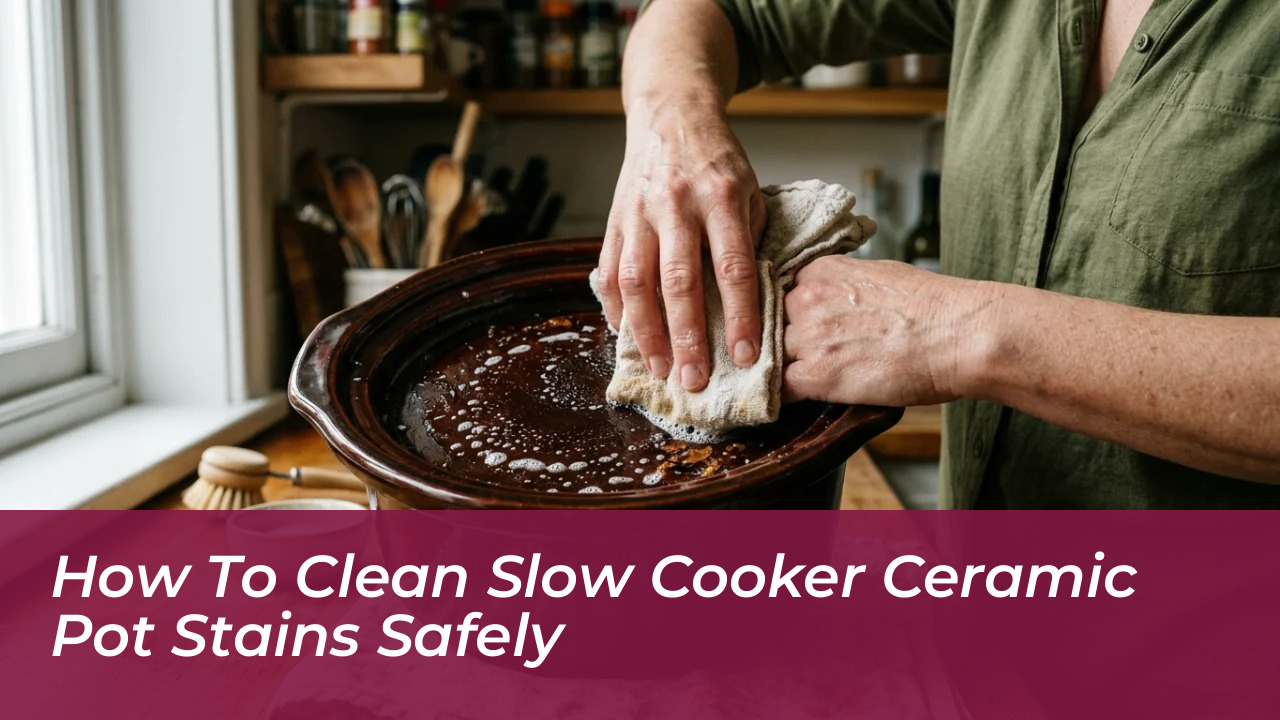

Stubborn, baked-on stains inside a ceramic slow cooker crock can be lifted completely using gentle, non-abrasive kitchen staples such as bicarbonate of soda and white vinegar rather than aggressive scouring pads. Slow cooking involves prolonged exposure to low, continuous heat, which causes natural fats, sugars, and mineral deposits to polymerise tightly against the glazed stoneware. Applying the correct chemical reaction softens this baked residue in under an hour, protecting the delicate surface from micro-scratches that permanently ruin its non-stick quality.
Glazed stoneware and modern ceramic non-stick coatings require careful handling to preserve their structural integrity. Standard washing with washing-up liquid and hot water frequently leaves behind stubborn brown rings or hazy white calcium deposits. Understanding how food bonds to glazed ceramic under steady heat is the secret to restoring a pristine finish without physical strain.
The Chemistry of Burnt-on Ceramic Stains
When cooking stews, curries, or braised meats over six to eight hours, the liquid line steadily evaporates, exposing oils and proteins to radiant heat. This process causes oils to caramelise and adhere strongly to the ceramic glaze. Traditional ceramic crocks, as well as modern multi-cookers featuring ceramic non-stick inserts free from PFAS chemicals, possess smooth surfaces designed to resist chemical interaction, yet microscopic pores in the finish can trap scorched residues.
Aggressive scrubbing with wire wool or harsh scourers strips the microscopic layer of glaze, creating coarse ridges where future meals will stick even harder. Restoring the finish requires targeted pH adjustments: acidic solutions dissolve alkaline mineral scale, while mild alkaline pastes break down greasy, acidic food polymers. A common mistake is attacking baked-on stoneware with heavy abrasive pads, which permanently etches the smooth glaze and guarantees food will stick during future cooks.
Step-by-Step: Safe Methods to Clean Slow Cooker Ceramic
Depending on whether the discolouration consists of charred carbon, baked grease, or a milky mineral haze from hard water, different non-destructive approaches yield the best results.
The Bicarbonate of Soda and Vinegar Soak
For generalised scorching and dark grease rings along the interior walls, mild effervescence and controlled heat do the heavy lifting for you:
- Cool completely: Ensure the ceramic bowl has returned entirely to room temperature to prevent thermal shock, which can crack the stoneware.
- Fill with warm water: Fill the pot with warm tap water up to the level of the highest stain line.
- Add active agents: Pour in roughly 120 ml of distilled white vinegar, followed by 60 g of bicarbonate of soda. The mixture will froth as it neutralises.
- Apply low heat: Place the stoneware back into the slow cooker base, secure the lid, and turn the setting to Low for two to four hours.
- Wipe clean: Switch off the cooker, allow the liquid to cool to a safe handling temperature, and gently wipe away the loosened burnt debris using a soft microfibre cloth or non-scratch sponge.
Direct Paste for Localised Scorching
If small, stubborn scorch marks remain isolated on the bottom of the pot, an overnight spot treatment avoids the need to heat the entire appliance:
- Mix equal parts bicarbonate of soda and warm water until a thick paste forms.
- Spread the paste generously across the stained areas using the back of a silicone spoon.
- Allow the mixture to sit undisturbed for at least four to eight hours.
- Gently rub the area with a soft sponge, rinsing thoroughly with clean water.
Addressing White Mineral Scale and Limescale Film
Many British households in hard water areas notice a dull, chalky film coating the bottom and sides of the ceramic pot after repeated washing. This haze is not burnt food, but rather accumulated calcium and magnesium carbonates that soap alone cannot dissolve. To eliminate this film, pour neat distilled white vinegar into the dry pot until the mineral deposit is fully covered. Let it sit at room temperature for thirty minutes. The mild acetic dissolves the alkaline mineral bonds cleanly, leaving the glossy glazed surface exposed without any scrubbing required.
Ceramic Cleaning Methods Compared
- Bicarbonate of soda paste: Best used for localised burnt food residue, grease rings, and light carbon marks.
- Warm vinegar bath: Best used for chalky white limescale haze and stubborn hard water deposits.
- Low-heat simmering soak: Best used for severe all-over interior scorching and hardened sauce layers.
- Dishwasher cycle (top rack): Best used for routine daily cleaning of fully dishwasher-safe ceramic inserts.
Preventing Long-Term Thermal and Surface Damage
Stoneware provides exceptional heat retention, but sudden temperature shifts remain its greatest physical vulnerability. Submerging a piping hot ceramic pot into cold sink water, or pouring cold stock directly into a scorching, dry insert, causes rapid thermal expansion and contraction that can fracture the bowl entirely. Always allow the pot to cool naturally before running water into it.
For modern multi-cooker pots that feature oven-safe ceramic construction alongside high-wattage heating elements, checking whether the lid and pot are explicitly marked as dishwasher-safe ensures you can safely rely on machine cleaning for routine washes without weakening the seal or coating. Avoid using metal utensils or steel wool on your ceramic inserts, as even tiny scratches degrade the non-stick surface over time. Inspect your pot regularly for fine hairline fractures before cooking, as damaged stoneware should be retired to ensure safety.
Have you found a reliable method for tackling stubborn slow cooker marks? Share your experiences and kitchen tips in the comments below.