
When a heavy cast iron radiator stays cold along its upper sections while the lower columns remain hot, a trapped air pocket is preventing the heating circuit from filling completely. Learning how to bleed a cast iron radiator with a key is essential to release this pressure barrier and restore full thermal output across your room. Failing to purge trapped gas leaves your boiler burning fuel unnecessarily while circulation stalls inside the heavy iron sections. Cast iron units retain heat much longer than contemporary steel panels, yet their massive water capacity makes them uniquely vulnerable to internal air collection. Purging this trapped gas takes only minutes once the system has cooled, requiring nothing more complicated than a standard brass bleed key, an absorbent cloth, and an eye on your boiler system pressure gauge.
Why Trapped Air Collects Inside Heavy Column Radiators
Hot water pumped through a domestic central heating system carries tiny dissolved air bubbles that naturally separate out as water heats up and circulates. Because air is lighter than water, these bubbles travel upward and settle at the absolute highest point inside the radiator castings, creating an invisible air lock. Once air gathers along the top header of a cast iron assembly, hot water from the inlet pipe simply cannot enter those upper channels.
The bottom horizontal pipe and lower column segments remain warm because water takes the path of least resistance across the base, bypassing the chilled upper body entirely. Cast iron units hold significantly more water than lightweight pressed-steel panels, meaning an untreated air pocket can slash operational warmth across an entire living area while keeping fuel demand high. Left unaddressed, the presence of internal oxygen also accelerates the formation of magnetite sludge inside the iron castings, dropping black iron oxide debris to the base where it creates blockages bleeding alone cannot remedy.
Myth vs Reality: Bleeding Radiators While the Heating Is Running
A widespread assumption suggests that bleeding a radiator while the central heating pump runs actively forces air out faster under maximum pressure. In reality, opening a bleed valve with the circulation pump active can suck fresh air back into the heating loop or spray scalding, discolored water across nearby walls and flooring. Shutting the central heating system down completely allows the water pressure to settle naturally. It also prevents the pump from whipping air into a fine froth, ensuring all trapped gas consolidates safely at the top bleed valve where it escapes cleanly in one continuous release.
Step-by-Step Guide: How to Bleed a Cast Iron Radiator With a Key
Antique and reproduction cast iron radiators feature distinct characteristics, but their venting mechanisms function on the same hydraulic principles as modern domestic heat emitters. Following an orderly sequence prevents valve damage and avoids sudden drops in system water volume:
- Shut down the heating: Switch off the boiler or central heating control unit and allow the radiators to cool down completely so boiling water cannot escape during the process. Cast iron retains heat for hours, so wait at least 30 to 60 minutes after shutdown.
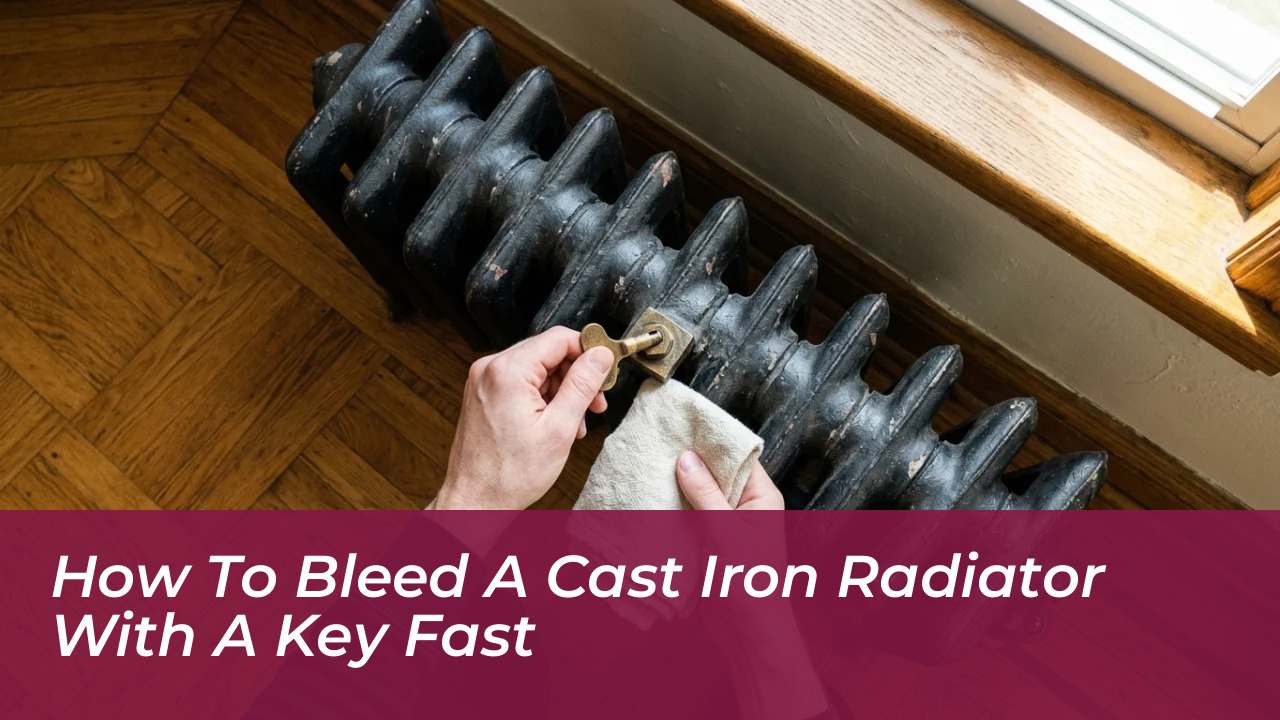
- Locate the air release valve: Look at the top corner of the radiator, typically opposite the primary inlet pipe, to find the small brass or nickel bleed plug housing a square central pin.
- Position absorbent protection: Hold a folded cloth or small container directly beneath the valve outlet hole to catch any sudden drops of dirty system water.
- Engage the radiator key: Fit the square socket of your radiator bleed key securely over the square valve pin, ensuring it sits squarely without wobbling to avoid stripping vintage brass edges.
- Turn slowly anti-clockwise: Turn the key gently by a quarter to a half turn until a steady hissing sound signals the escape of trapped air. Never unscrew the pin fully out of the valve housing.
- Seal the valve on fluid contact: The moment the hissing stops and a steady trickle of water emerges, immediately rotate the key clockwise to close the valve securely without over-tightening.
- Verify system balance: Wipe down the valve body with a clean dry cloth to monitor for weeping threads, then inspect your central heating boiler gauge.
Key Specifications: Cast Iron vs Standard Steel Bleeding
Working on heavy architectural ironwork involves slightly different tolerances than servicing conventional domestic panel radiators installed in recent decades.
- Water Volume Capacity: High; holds several times more water volume per section than modern sheet steel.
- Valve Metal Composition: Often decorative brass, aged bronze, or nickel-plated vintage fittings requiring delicate handling.
- Cool-Down Duration: Substantially longer; thick iron sections retain heat for hours after system shutdown.
- Bleed Key Profile: Standard modern square socket fits most units, though older salvage models may require specialist antique clock-style keys.
- Risk of Thread Stripping: Moderate to high on historic installations; gentle hand-torque prevents snapping old brass stems.
Dealing With Stubborn or Painted-Over Bleed Screws
Decades of decorative gloss paint frequently seal the edges of cast iron bleed screws, making the central pin difficult to turn with standard leverage. Applying excessive brute force with an ill-fitting key risks shearing the brass stem completely, which requires draining the whole circuit to drill out the core. To free a seized pin, carefully clear dried paint from around the square valve neck using a small utility blade or wire detail brush. A drop of penetrating maintenance fluid applied directly to the valve thread joint, left undisturbed for twenty minutes, generally loosens the bond sufficiently for the key to turn smoothly without damaging vintage castings.
Post-Bleeding System Pressure Adjustment
Releasing substantial volumes of trapped gas across multiple heavy cast iron radiators can reduce total system volume. Sealed combi boiler and modern system boiler configurations require an operating pressure typically between 1.0 and 1.5 bar when cold. Check your boiler pressure gauge immediately after venting multiple rooms to confirm the needle remains within its standard operating zone. If the pressure has dipped below the recommended threshold, use the external filling loop beneath the boiler casing to top up the system before turning the heating back on.
Frequently Asked Questions
How often should I bleed my cast iron radiators?
You should bleed your cast iron radiators at least once a year, ideally right before the autumn heating season begins. You should also bleed them anytime you notice cold spots at the top of the columns or gurgling noises in the pipes.
Can I bleed a cast iron radiator without a bleed key?
While some modern valves feature a slot for a flathead screwdriver, true cast iron radiators almost universally require a standard square-socket brass bleed key. These inexpensive keys are readily available at any local hardware store.
Will bleeding my radiators reduce my energy bills?
Yes. Eliminating trapped air pockets allows hot water to fill the entire surface area of the radiator evenly. This improves overall heating efficiency by up to 10 percent, allowing your home to warm up faster and reducing fuel consumption.
What should I do if water keeps leaking from the bleed valve?
If a steady drip continues after you have closed the valve, it may not be fully seated or the internal seal could be worn. Gently tighten the key another eighth of a turn. If the leak persists, the valve insert may need replacement by a professional.
Why is my radiator still cold at the top after bleeding?
If a radiator remains cold at the top after a thorough bleed, you likely have residual air trapped in the system or a blockage caused by magnetite sludge accumulation. Repeat the bleeding process across all home units, and check that your boiler pressure is properly balanced.