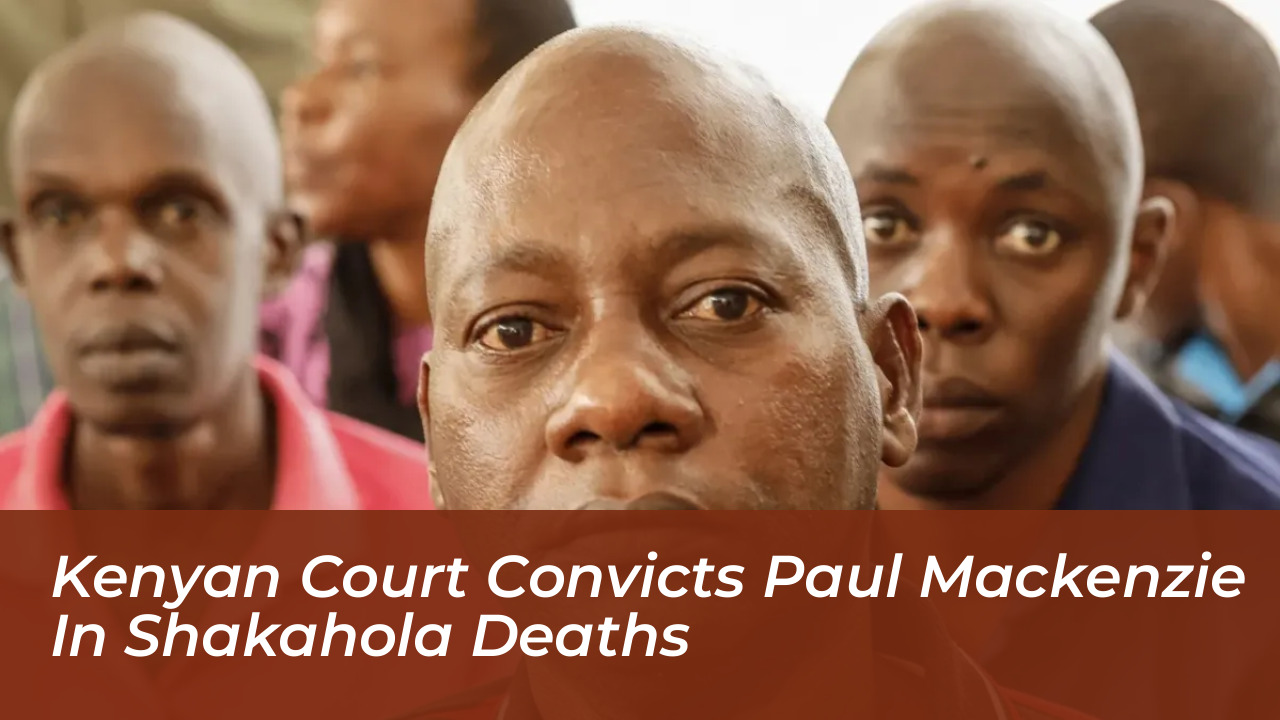

A Kenyan court has convicted self-proclaimed religious leader Paul Mackenzie and 29 other defendants for the murder of 191 people in the Shakahola forest near the country’s southeastern coast. Delivered on October 19, 2026, the landmark verdict by Justice Diana Kavedza-Mochache found the defendants guilty of murder. The case centered on allegations that followers were instructed to starve themselves and their children to reach heaven.
According to Kenya’s Office of the Director of Public Prosecutions, the deaths occurred within a tightly organized system. This system utilized religious teachings and a strict hierarchy to enforce fatal fasting. The court’s decision directly covers 191 victims, the vast majority of whom were children. Meanwhile, parallel investigations into hundreds of other bodies discovered across the expansive forest continue.
The Shakahola Tragedy and Prosecution Evidence
The case stemmed from extensive investigations launched after authorities uncovered mass graves and rescued starving followers in 2023. These followers belonged to a remote settlement linked to Mackenzie’s Good News International Church. Since exhumations began in April 2023, authorities have recovered 429 bodies from the area. Autopsies and forensic reports revealed that many victims died of extreme starvation. Others displayed physical evidence of blunt-force trauma or strangulation.
During the lengthy trial, the prosecution presented 121 witnesses, including survivors, investigators, forensic experts, and grieving relatives. Prosecutors detailed how a structured hierarchy of death was enforced. This hierarchy dictated that children should perish first, followed by teenagers, women, and men. The defense argued that the victims had voluntarily fasted. Justice Kavedza-Mochache decisively rejected this claim during her judgment.
Apocalyptic Teachings and Court Findings
Evidence presented in court demonstrated that Mackenzie anchored his directives on an apocalyptic interpretation of scripture. Witnesses testified that he relied heavily on passages such as Matthew 24. He used these to convince followers that the world was in its final days. He urged them to abandon jobs, withdraw children from school, and relocate to the Shakahola settlement.
Mackenzie allegedly taught that conventional healthcare reflected a lack of faith, discouraging followers from seeking medical treatment. He also labeled government programs like the Huduma Namba system as the “mark of the beast,” instructing believers to reject state institutions entirely. In her ruling, Justice Kavedza-Mochache drew sharp parallels between the Shakahola tragedy and the 1978 Jonestown event in Guyana. She highlighted the devastating consequences of religious manipulation.
Legal Status and Next Steps
Following the conviction of Mackenzie and 29 associates, the court directed Probation and Aftercare Services to assign individual probation officers. These officers will prepare pre-sentence reports for each convict. The court scheduled formal mitigation submissions and sentencing proceedings for November 6, 2026. Meanwhile, separate legal proceedings regarding terrorism, manslaughter, and additional bodies discovered in nearby areas remain active against the cult leader.
Frequently Asked Questions
Who is Paul Mackenzie?
Paul Mackenzie Nthenge is a self-proclaimed Kenyan preacher and founder of the Good News International Church. The church established operations in Malindi and Nairobi before setting up a remote compound in Shakahola Forest.
What were Paul Mackenzie and his co-accused convicted of?
Mackenzie and 29 co-accused were convicted of 191 counts of murder. These charges related to followers-including 190 children and one adult-who died from starvation and physical abuse within the Shakahola forest settlement.
How many bodies were ultimately recovered from Shakahola Forest?
Authorities have recovered 429 bodies from shallow graves across the 800-acre ranch and surrounding areas since police operations and exhumations began in April 2023.
What arguments did the defense present during the trial?
The defense argued that the case relied largely on circumstantial evidence and hearsay. They claimed that the victims had chosen to fast voluntarily. The High Court rejected this defense, ruling that the prosecution proved its case beyond a reasonable doubt.
When is the sentencing scheduled to take place?
Following the review of pre-sentence reports and mitigation submissions, the High Court set the official sentencing hearing for November 6, 2026.